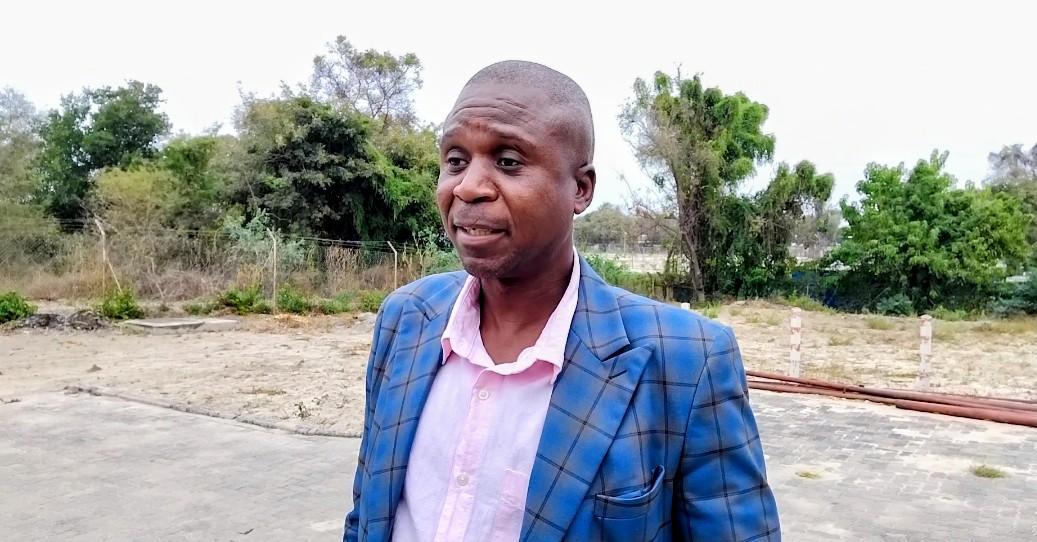
Africa-Press – Namibia. AS part of New Era’s ongoing engagement with newly-elected regional and local authority councillors to unpack their visions and priorities for the year ahead, senior journalist Albertina Nakale (AN) sat down with re-elected Katima Mulilo Town Council councillor of the National Democratic Party (NPD) Simasiku Mukendwa (SM).
Mukendwa speaks candidly about the state of the Katima Mulilo Town Council, outlining internal challenges, including corruption, maladministration and weakened accountability systems.
He outlines his party’s approach to restoring good governance, improving transparency and rebuilding public trust, while also addressing service-delivery backlogs and the need for meaningful community participation in decision-making.
AN: Looking ahead to this year, what are your key priorities as an NPD councillor, and what specific outcomes should residents of Katima Mulilo expect from your leadership?
SM: This year, and indeed during this term, our priority is to address the many challenges currently facing the Katima Mulilo Town Council in an amicable and sustainable manner. Service delivery is important, but we must also be honest with our residents that the institution itself is not in good shape at the moment.
There are serious internal challenges, including labour disputes within the council workforce and a flawed staff realignment process that requires correction. In our communities, we are also dealing with issues such as the wrongful allocation of plots, including cases where plots were sold multiple times to different people.
All these matters must be put in order first so that we can move forward effectively and focus on what is best for our people. It is not an easy start, but residents should expect a period of hard work over the five years. Issues that have troubled residents for a long time will be addressed and resolved progressively.
AN: The town continues to struggle with poor road conditions and recurring sewer problems. How do you plan to work with fellow councillors and town management to address these long-standing challenges in a practical and sustainable way?
SM: As councillors, we have agreed to put political differences and party affiliations aside and work together as one Katima Mulilo Town Council. Decisions are taken through council resolutions, and our focus is on service delivery for all residents.
Challenges such as roads, sewer infrastructure and electricity are not unique to Katima Mulilo. They are national challenges. Residents must understand that it is unrealistic to expect all roads to be upgraded, all sewer networks repaired and all informal settlements electrified within five years.
These projects require billions of dollars, and the council’s revenue alone cannot fund them.
We rely heavily on support from central government, and line ministries to source additional funding. For example, the N$100 million sourced through the City of Windhoek and injected into Katima Mulilo has helped address some sewer, road and electricity issues, but it will only cover part of the town, not every locality.
As the minister [James Samkwasa] rightly said, “you eat an elephant small by small until you finish it”. We will tackle these challenges gradually, but expectations must be realistic, especially given the growing population and expanding urban settlements.
AN: Are there any motions or proposals you intend to table in council this year, particularly those aimed at improving basic service delivery and infrastructure development?
SM: As a political party, it is part of our culture to table motions in council. The NPD has its own local authority manifesto, separate from the national manifesto, which is specifically focused on Katima Mulilo.
The points outlined in that manifesto guide the motions we intend to raise in council. Some of these priorities are already being recognised and implemented by the council due to their importance. Nevertheless, we will continue to push for, and table motions aligned with our manifesto to improve service delivery and development for our residents.
AN: Accountability and good governance remain major concerns for residents. What measures will you support or introduce to ensure transparency and proper use of public funds within the town council?
SM: It is important for leaders to educate residents and remind them that they have the power to hold their leaders accountable. Residents should question decisions and actions when things are not going well and, importantly, also propose solutions.
Corruption and maladministration are our biggest enemies. They undermine justice and harm ordinary residents. Our party’s core objective is to fight for social justice, and that starts with clean governance.
We will closely monitor every department within the council to ensure that operations are conducted properly. Accountability is fundamental, and it is not something we are willing to compromise on. Any corruption or maladministration reported to us will be dealt with accordingly.
NA: Many residents feel the current systems are not working effectively. What changes or reforms do you believe are necessary to create a more efficient, responsive and people-centred town council?
SM: It is true that many residents have lost confidence in the council because the system has been contaminated over time. This is why the task ahead of us is so difficult – we are not only fixing surface problems but the system itself.
As the NPD, we believe that transforming Katima Mulilo requires a radical approach – real reform takes time and resources, but it is necessary. We intend to realign and overhaul the Katima Mulilo Town Council’s entire system to ensure it functions effectively and aligns with modern governance standards.
Public consultation is fundamental. The Local Authorities Act requires that certain decisions be made in consultation with residents and stakeholders. We are committed to engaging communities meaningfully so that residents are part of decision-making processes and are not caught by surprise. When people are informed and involved, better and more sustainable decisions are made.
Source: neweralive
For More News And Analysis About Namibia Follow Africa-Press