Africa-Press – Namibia. SOPHIE TENDANE, ELIASER NDEYANALE and CHARMAINE NGATJIHEUE THE Teachers Union of Namibia (TUN) has described the latest Grade 11 results as pathetic. According to the results, only 18,8% of last year’s candidates qualify to progress to Advanced Subsidiary level subjects.
The union has also called for the current curriculum to be abandoned as they say it favours the elite. Last year’s Grade 11 national examination results for the Namibia Senior Secondary Certificate (NSSCO) were released on Friday.
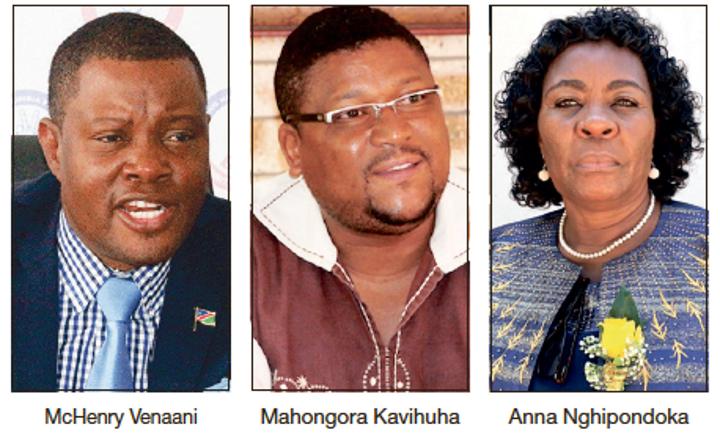
The results indicated that only 8 817 full-time candidates qualified with a C symbol or better in three subjects out of 46 977 who sat for the exams. TUN secretary general Mahongora Kavihuha says the poor performance were due to the challenges the new curriculum created, adding it should be done away with.
“We are not happy with these results. The 18,8% qualification rate is pathetic, and no one should be happy with this performance,” Kavihuha says.
He says while the Ministry of Education, Arts and Culture noted the results as a slight improvement, TUN believes the results are worrying as they come at a time when Covid-19 regulations have been relaxed.
He says the new curriculum is not in line with the United Nations’ resolution on school systems having one exit, which is Grade 12. “We are hoping for a new minister of education to reverse this curriculum. We should not have an education system with two exits,” he says.
The revised curriculum was implemented at junior primary phase in 2015, at junior secondary phase in 2017, and senior secondary phase in 2018. MINISTER SATISFIED Meanwhile, education minister Anna Nghipondoka has defended the results.
“Compared to 5 007 candidates who passed in 2020, this represents an increase of 3 810 pupils. This upward trend is commendable and must continuously be pursued,” she says.
“It was not easy, but looking at situations we went through … we had to close our schools many times, where teaching and learning were interrupted, but we managed to increase the Advanced Subsidiary pupils.”
Nghipondoka says the government aims for all pupils to pass. “This is not what we wanted, but I expected it. In fact, I expected lower. It’s really soothing that despite what they went through, they still made it, and gave us these results,” she says.
The Erongo region came out tops with 25,2 % of candidates qualifying for the Namibia Senior Secondary Certificate, followed by the Khomas, Oshana, Otjozondjupa, and Kavango East regions.
Meanwhile, the Kunene, Omaheke, Zambezi, and Hardap regions performed poorly with a pass rate of less than 15%. “However, the Omaheke, Kunene, and Zambezi regions did not make it in any of the spots in all five subjects,” the minister says.
“With first languages, which are commendable, 99,6% got graded, with only 0,4% ungraded,” Nghipondoka says.
‘WORRYING TREND’ Namibia National Students Organisation (Nanso) spokesperson Esther Shakela says the percentage of students who fell by the wayside is worrying.
“We as an organisation would like to therefore appeal to institutions, such as the University of Namibia to reconsider its decision not to admit pupils exiting Grade 11. It would also aid in the greater integration of these pupils into the higher education system and reduce the number of pupils on the streets,” she says.
Shakela calls on the government to focus on infrastructure development. “More vocational training centres should be built to accommodate the large number of pupils finishing Grade 11,” she says.
Popular Democratic Movement leader McHenry Venaani yesterday said the education system that produces less than a 20% pass rate of its populace is a “joke”.
“We are leaving a generation behind. The education system is collapsing. We cannot explain that we spend so many billions of dollars in in education, but the output is not there. What we are saying there is an indictment on our education system. We need to go back to the drawing board and address the question how our education system is collapsing under our watch.
“It’s unfortunate that we have these results [when] the budget output is so high and the output is very low. This mismatch is a serious concern to the country ,” Venaani said. He called for an education conference to deal with the problems.
For More News And Analysis About Namibia Follow Africa-Press