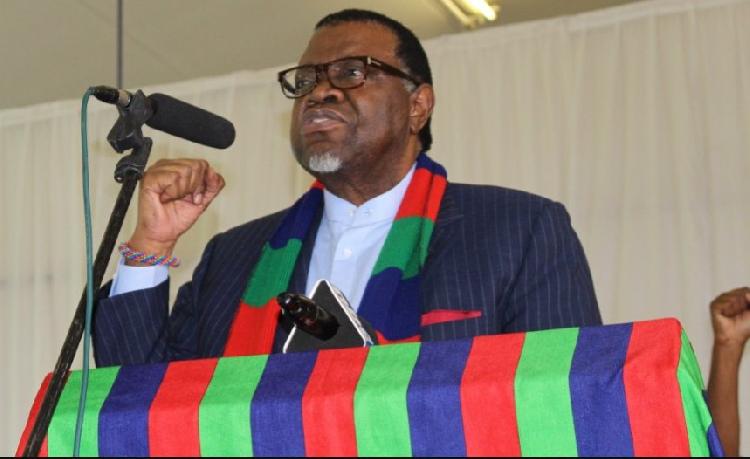
Africa-Press – Namibia. THE Bertelsmann Stiftung’s Transformation Index (BTI) 2022 has highlighted that Swapo losing its two-thirds majority in the 2019 national elections, and its presidential candidate Hage Geingob’s dropping levels of support were proof that there was now greater democracy in the country that had previously been a de facto one-party state.
Namibia ranked 32nd out of 137 countries on the index, which covers the period between 1 February 2019 and 31 January 2021. The BTI assesses the transformation towards democracy and a market economy, as well as the quality of governance. Namibia, with an estimated population of 2,5 million, was ranked 23, 68 and 57 respectively, in these different assessments.
“During the period under review, democracy in Namibia has been strengthened, while economic performance and management deteriorated further,” said the BTI country report, which added that significant changes were witnessed on the political landscape.
The BTI is the result of the collaboration of nearly 300 country and regional experts from leading universities and think tanks worldwide. It aims to identify successful strategies for steering change. The BTI report highlighted Swapo and Geingob’s reduction in votes from the 2014 national elections, where the ruling party had amassed 80% of the vote and its presidential candidate about 87%. In 2019, Swapo claimed 65,45% of the vote and Geingob 56,25%.
“The new Landless People’s Movement emerged as the third strongest party after the Popular Democratic Movement, the official opposition in parliament,” said the report.
Swapo also performed badly in some local and regional council elections, losing control of major towns and cities in the country. This view was echoed by political analysts Ndumba Kamwanya and Fanuel Kaapama.
Kamwanya said Namibia has had free and fair elections, unlike other countries where elections appear to be rigged. “We have a free media that is not afraid to be a watchdog to the government. We have not had any politically motivated arrests, and analysts are free to say what they want to say,” Kamwanya said.
This, however, does not mean all is well as a lot still needs to be done in terms of legislation, like the information bill, he said. “The emergence of new political players, including independents, has strengthened our democracy and broadened the voice of Namibians.
Kaapama agreed that democracy in Namibia was strong and pointed to the freedom of the media in which Namibia has been leading in Africa. He said even during the lockdown, media houses continued functioning as essential service providers.
“Our parliament has been very vibrant, more than at any other time in our history with opposition parties managing to reduce Swapo’s majority and showing that democracy is strengthening in the country,” Kaapama added.
He said the emergence of an independent candidate in the last presidential election was another indication of democracy’s strength in the country. Kamwanya described the economic situation in the country as dire, and said not enough has been done in the last three decades of independence.
“The people need economic empowerment and emancipation.” He said the Chinese economic influence in the country is a double-edged sword. “It is good in the sense that we are not an island and we need to trade with them. However, we should be vigilant of the economic model that the Chinese have.
“China has an authoritarian model of development where the government has all the power and cannot be questioned. We need voices from the people and transparency when engaging in business and must not import a model that is driven by fear and secrecy,” Kamanya said. Kaapama said the Covid-19 lockdown had weakened the economy, resulting in job losses, particularly in sectors like tourism. “This also affected the national budget, because the government no longer had enough revenue for its programmes.”
For More News And Analysis About Namibia Follow Africa-Press