Africa-Press – Namibia.
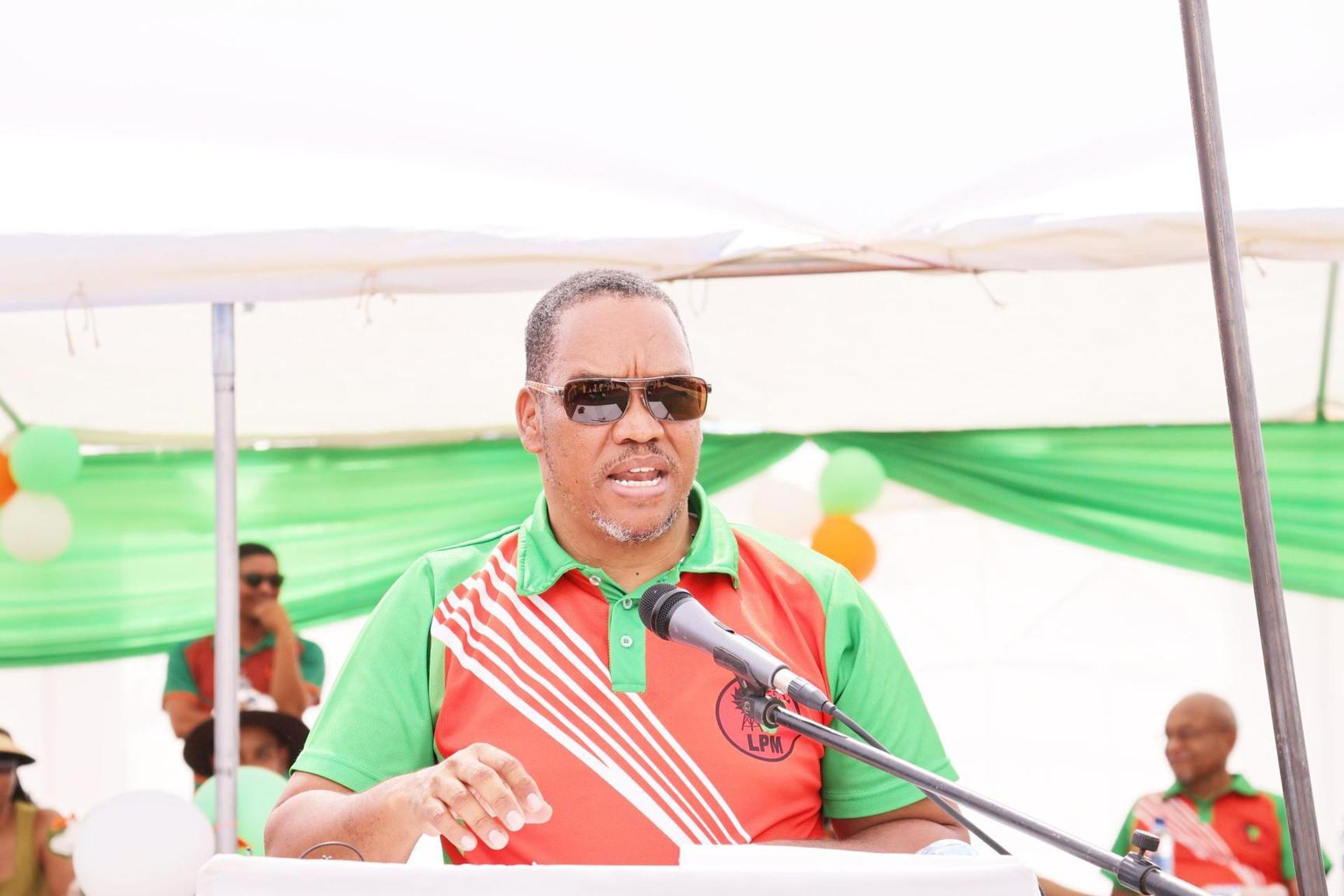
Landless People’s Movement (LPM) leader Bernardus Swartbooi says the government must consider exporting labour to reduce the all-time high unemployment rate in Namibia.
Unemployment hit a soaring 36.9% in the last cycle of the national census.While the government is investing fiscal resources into education and training, Swartbooi, during his contribution to the 2026/2027 budget, said this number only increases as job unavailability remains a concern.
Namibia’s youth unemployment stands at 44.4%.
“There is a programme now, the African labour export programme, and this is something our government must look at,” he said.
The Ministry of Finance allocated N$28 billion for education, innovation, arts and culture.
Of this amount, N$2.8 billion is designated for subsidised tertiary education and for alleviating school congestion.Other African countries, such as Kenya, Uganda and Ghana, combat domestic unemployment by placing citizens in foreign job markets, primarily in the Gulf Cooperation Council (GCC) states, Swartbooi said.
Targeting sectors like construction, hospitality and healthcare, these programmes aim to increase financial remittances but face significant criticism for exposing workers to exploitation and poor working conditions.
“We have got to look at exporting labour since we are not creating jobs here and get to a remittance approach that can be ploughed back into society. You give N$28 billion, which is about 32% of the entire budget, to education, which results in an additional 134 079 students entering the tertiary education sector, and yet we don’t have answers as to where these young people go. We equip them with the skills, and we don’t create the jobs in which they will deploy those skills,” he said.
While commending finance minister Ericah Shafudah for reducing public spending, he said as a result, in this year’s budget, the debt-to-GDP is contracting, “and there seems to be a consistent projection that that contraction will continue.”
However, he stressed that overemphasis on the social sector and underemphasis on the productive sectors that grow the economy are unsustainable.
Shafudah, during the reading of the appropriation amendment bill, noted the N$64.25 million for the Development Bank of Namibia to support industrialisation, SMEs, value addition and productive sectors. The government received financial backing of N$28 million from public enterprises, comprising N$5 million from Namibia National Reinsurance Corporation,
N$5 million from Namibian Ports Authority and N$18 million from the Development Bank of Namibia.
Furthermore, the LPM leader and criticised low investment in agriculture that has the potential to create more jobs.
“The opportunity to unleash the rural economy is a non-negotiable issue; the budget doesn’t address it,” he said.
He underlined that the government promised over 250 000 jobs, on average 50 000 per year, “but they can’t even get to 2 000 jobs because the reality after the manifestos is shelved is that governance now becomes the issue,” he said.
“The operational budget goes up, the development budget goes down, and we are in a cycle of poverty, a cycle of inequality and unemployment,” he underscored.
He urged the government to prioritise job-creating sectors, such as agriculture and energy, which are low on the budget’s priority list.
On the same token, National Democratic Party leader Martin Lukato raised concerns that due to a lack of markets, crop farmers in some parts of the country are unable to sell their products.
“The farmers who managed to harvest last year, their crops are still on their premises, no markets,” he said.
He is worried that as farming continues, the crops will pile up and lead to other challenges.
For More News And Analysis About Namibia Follow Africa-Press