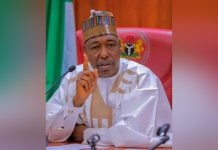


Africa-Press – Nigeria. A constitutional lawyer and public affairs commentator, Justice Osai Ahiakwo, has warned that without insulating the Inspector-General of Police from political pressure, any move toward state-controlled policing may fail to deliver meaningful security.
His reaction followed the resignation of former Inspector-General of Police, Kayode Egbetokun, and the appointment of Assistant Inspector-General of Police, Tunji Disu, as acting IGP by President Bola Ahmed Tinubu.
The President had, a day earlier, met with state governors and reaffirmed his administration’s resolve to pursue the establishment of state police as part of broader efforts to strengthen Nigeria’s security architecture.
In a statement issued in Calabar, Ahiakwo said while leadership change at the top of the police hierarchy was significant, it did not automatically resolve deep-rooted structural and institutional weaknesses within the system.
He urged the President, as the process of confirming a substantive Inspector-General begins, to prioritise discipline, merit and operational independence in the choice of leadership.
According to him, the office of the Inspector-General must function strictly within the confines of the law and remain insulated from undue political interference.
“It must also be accountable to established oversight bodies such as the Police Service Commission and the National Assembly,” he said, warning that without such balance, neither a federal police structure nor a future state-controlled model can guarantee sustainable security.
Ahiakwo argued that Nigeria’s security crisis is fundamentally institutional rather than merely structural, cautioning against treating state police as a political concession or a response to sectional agitations.
He stressed that any alteration of the policing framework must be weighed carefully against constitutional order, national unity and the integrity of command and control mechanisms.
Under the 1999 Constitution (as amended), policing remains on the Exclusive Legislative List, with authority vested in the Federal Government — a centralised design intended to prevent the abuse of coercive power by sub-national actors.
The lawyer maintained that instead of rushing to dismantle the existing framework, authorities should focus on strengthening it through professionalism, adequate funding and clearly defined lines of authority.
He noted that the Nigeria Police Act, 2020 already provides a modern legal framework promoting accountability, community policing, professionalism and improved welfare, but lamented weak implementation, inconsistent funding discipline and wavering political will.
Drawing comparisons with countries such as the United States, Germany and Japan, Ahiakwo said structural reforms alone would not suffice in a country where an overstretched police workforce is expected to secure over 200 million citizens, insisting that institutional discipline and respect for the rule of law must come first.
For More News And Analysis About Nigeria Follow Africa-Press