Africa-Press – Rwanda. Farmers have identified eight seed varieties across six crops as the most climate-resilient and high-yielding, according to the Rwanda Agriculture and Animal Resources Development Board (RAB).
The findings are based on farmer-led trials conducted on individual farms between 2021 and 2025.
Florence Uwamahoro, Acting Director General of RAB, said the crops assessed include potatoes, cassava, rice, maize, cabbage and onions. “In crop production, high-performing varieties with improved yields and resilience were identified through farmer-led evaluations.”
“The potato variety Cyerekezo was ranked highest for pest and disease resistance and productivity, while cassava varieties Nsizebashonje and Biseruka demonstrated superior yields and disease resilience,” she explained.
Climate-resilient maize hybrids, such as RHM1407 and RHM1409, also outperformed traditional varieties.
In rice farming, climate-smart varieties TETA 10-04, TETA 10-03, and Kigoli 13-1 were tested, with farmers ranking TETA 10-04 as the most productive and disease-resistant.
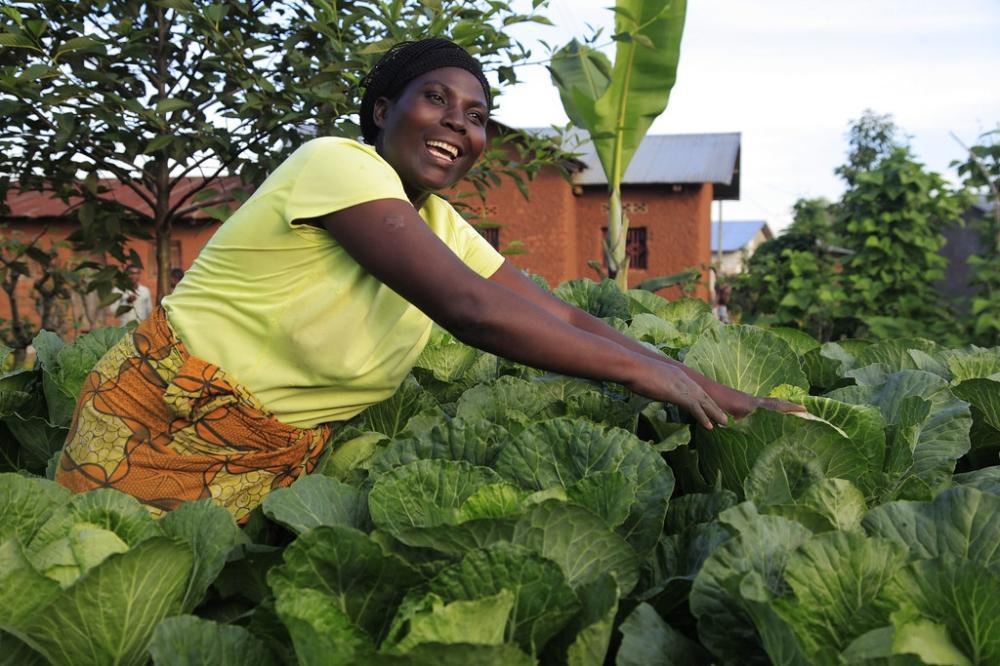
Among vegetables, Baraka cabbage and Neptune onion were identified as the highest-yielding varieties.
Results from the trials show that cassava production increased to 35 tonnes per hectare with the use of Nsizebashonje and Biseruka, compared to an average yield of 13 tonnes per hectare previously.
Potato yields increased to 30 tonnes per hectare, while rice production rose to seven tonnes per hectare, up from just two to three tonnes per hectare in older varieties.
Before adopting new varieties, potato productivity ranged from 10 to 15 tonnes per hectare, below the crop’s yield potential.
Farmers highlighted the performance of maize hybrid varieties RHM1407 and RHM1409, which mature in just 85 days and require less rainfall.
In Eastern Province, maize has yielded 4.4 tonnes per hectare, well above the national benchmark of around two tonnes per hectare.
The climate-resilient, high-yielding seed varieties were rolled out under the project Capacity Development for Innovation in Rwanda: Strengthening Innovation Partnerships in Six Districts, implemented in partnership with the Food and Agriculture Organization of the United Nations (FAO) across Burera, Rutsiro, Gatsibo, Nyagatare, Bugesera and Ruhango districts.
Under the National Strategy for Transformation Phase 2 (NST2), Rwanda targets a more than 50 per cent increase in the productivity of priority food crops, including maize, beans, potatoes, rice, cassava, wheat and bananas.
“To achieve this, the use of modern agricultural inputs, including fertilisers and improved seeds, will be scaled up, with an emphasis on timely supply and availability,” Uwamahoro said.
“In addition, new management models such as Agri-hubs and Food Basket Sites will be promoted to enhance efficiency and maximise returns on agricultural investments,” she added.
The Fifth Strategic Plan for the Transformation of Agriculture (PSTA5) prioritises the adoption of climate-resilient and disease-resistant varieties for key crops, including maize, rice, wheat, beans, cassava, Irish potato, sweet potato, bananas and horticultural crops, alongside improved livestock breeds better adapted to climate stress.
To advance this agenda, the government is rolling out innovative extension approaches, notably the Customised Agricultural Extension System (CAES).
This system leverages Farmer Field School (FFS) Master Trainers and Facilitators, Farmer Promoters (FPs), Livestock FFS Master Trainers, and Community Animal Health Workers (CAHWs).
About 1,000 FFS facilitators were trained to guide farmer groups and the wider community. The project focused on demonstrating climate-smart agricultural best practices for priority value chains across the target districts.
“Specifically, it supported the scaling up of crop varieties developed by RAB for maize, rice, cassava, Irish potato, and horticulture, alongside innovations in animal genetics, health, and feeds for cattle and piggery systems. Capacity development was delivered primarily through the Farmer Field School approach,” Uwamahoro noted.
She added that highly active FFS facilitators now play a central role in guiding farmers within their communities, strengthening local capacity and ensuring sustainability.
What farmers say
Marie Josee Mukampiranya, a farmer and farmer field school facilitator from Burera District, said that before 2024, potato yields were very low. She used to harvest between 70kg and 100kg per Are (10 metres by 10 metres).
With the new varieties, production has increased to between 170 and 237kg per Are. “We have formed a group of 26 members trained in best agricultural practices to improve yields. We now have stores of 2.3 tonnes of seeds.”
Ratifa Musabyimana, an onion farmer from Gatsibo District, reported that the Neptune F1 variety is performing well. “One 10-metre by 10-metre plot yields 209kg, up from 100kg with previous varieties,” she said.
Jean Damascene Uwiduhaye, a maize farmer, said trials of different varieties showed significant improvements.
“RHM1407 produced six tonnes per hectare, RHM1409 five tonnes, and another variety, WH403, can produce seven to eight tonnes during a good season,” he noted.
Speciose Mukashema, a cassava farmer from Bugesera District, said: “Farmers had little knowledge about modern techniques. With good agricultural practices and two varieties, Nsizebashonje and Buryohe, we achieved much higher yields after trying many options.”
Solange Uwituze, State Minister for Agriculture, highlighted the role of FFS facilitators in promoting best practices.
“The 1,000 facilitators trained have reached 1,600 farmers to adopt high-yielding and climate-resilient seeds. By 2050, Rwanda will have 22 million people. Each citizen should earn Rwf14 million per year, and the agriculture sector must create 1.25 million jobs for youth. Agriculture must ensure 88% of households are food secure and generate $1.5 billion in exports,” she said.
For More News And Analysis About Rwanda Follow Africa-Press