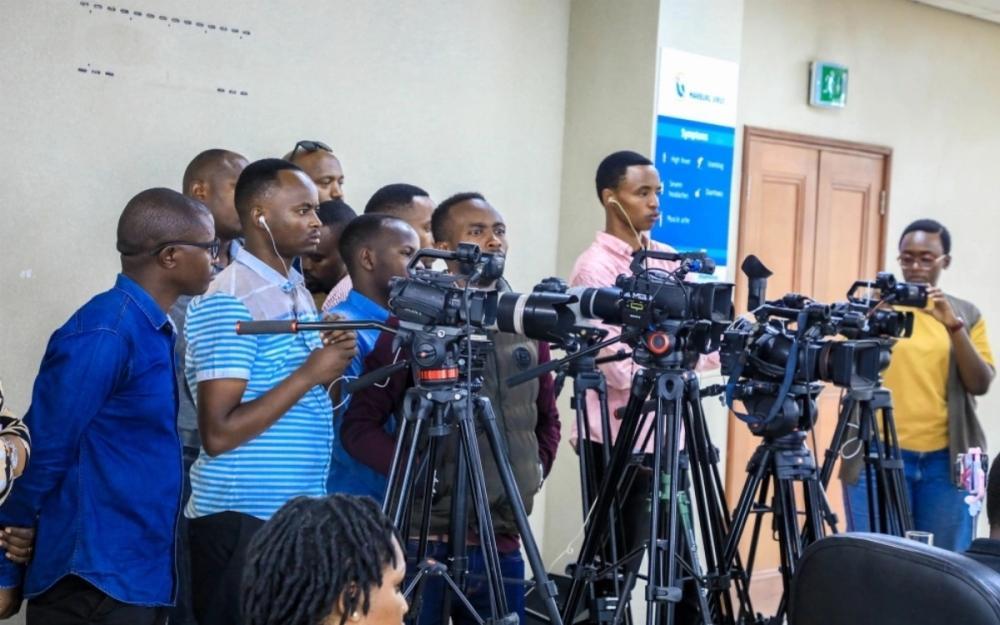
Africa-Press – Rwanda. The Rwanda Media Commission (RMC) has urged media practitioners to uphold responsibility and safeguarding the memory of the Genocide against the Tutsi, ensuring accurate documentation, protecting survivors’ dignity, and promoting unity during the 32nd commemoration of the Genocide against the Tutsi (Kwibuka 32).
AMABWIRIZA AGENGA IMIKORERE Y’IBITANGAZAMAKURU MU GIHE CYO KWIBUKA JENOSIDE YAKOREWE ABATUTSI MU 1994#Kwibuka32 pic.twitter.com/EqgDLOP19o
— RMC (@RMC_Rwanda) April 6, 2026
RMC’s new guidelines, published this week, emphasise that journalists should play a key role in safeguarding the history of the 1994 Genocide against the Tutsi while countering denial and genocide ideology.
The commission stressed that coverage during the commemoration period should go beyond routine reporting, urging media houses to produce content that educates the public on the causes, consequences, and lasting impact of the genocide.
“Media must promote unity and resilience, while ensuring accuracy and respect in the way the history of the Genocide against the Tutsi is presented,” the guidelines indicate.
Protect dignity, avoid harm
A key recommendation focuses on protecting the dignity of survivors and victims, with journalists are urged to avoid sensationalism or content that may retraumatise audiences.
The guidelines caution against the use of disturbing images or emotionally manipulative reporting, noting that such approaches risk exploiting pain rather than informing the public.
Media practitioners are also advised to give clear warnings where content could be distressing, and to respect the privacy of survivors at all times.
Language and accuracy under scrutiny
RMC underscores the importance of using accurate and consistent terminology, specifically the phrase “Genocide against the Tutsi in 1994,” while avoiding language that could distort or minimise the historical reality.
Journalists are encouraged to verify information thoroughly and steer clear of ambiguity or expressions that could fuel division.
Focus shifts during mourning week
During the national mourning week from April 7 to 13, media outlets are expected to adjust programming to reflect the solemnity of the period.
This includes suspending entertainment content and prioritising programmes centred on remembrance, testimony, and dialogue.
The commission also calls for respectful coverage of commemoration activities at national and community levels, without disrupting proceedings.
With social media playing an increasing role in information dissemination, RMC urges media organisations to closely monitor content shared on their platforms.
They are tasked with swiftly addressing misinformation, hate speech, and genocide denial, while ensuring that online spaces contribute to remembrance and education.
Beyond the commemoration period, the guidelines highlight the importance of documenting and preserving testimonies, audio, and visual materials for future use in education and research.
Media houses are encouraged to collaborate with relevant institutions, including RMC and the Ministry of National Unity & Civic Engagement (MINUBUMWE), to ensure that such records contribute to long-term memory and learning.
For More News And Analysis About Rwanda Follow Africa-Press