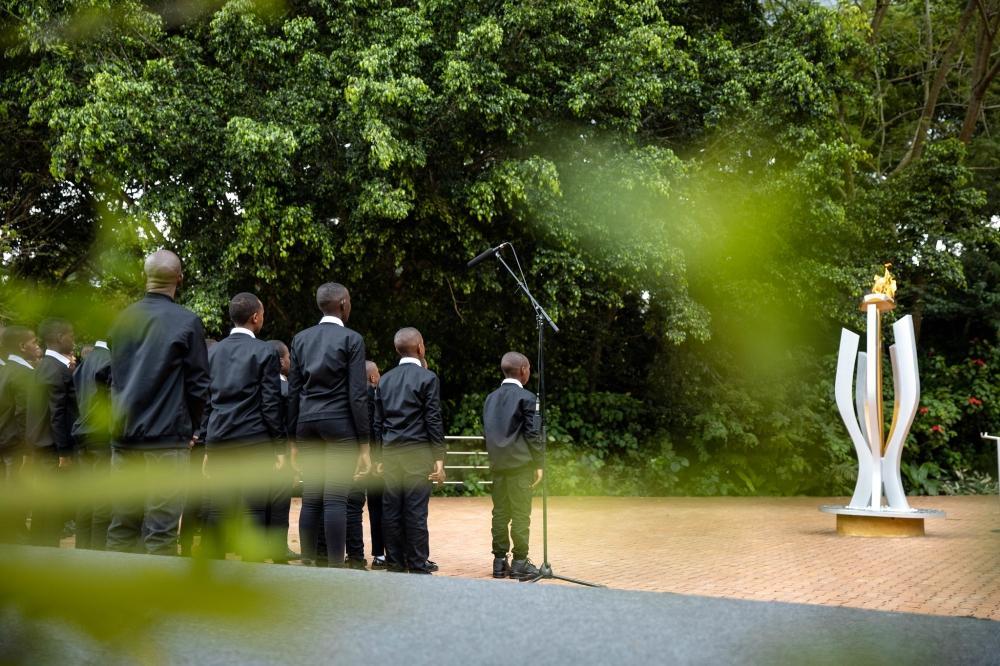
Africa-Press – Rwanda. More than three decades after the 1994 genocide against Tutsi in Rwanda, one might assume that the international community had settled on a clear and historically accurate terminology. Yet in many official statements from the government of the United States, a hesitation remained: the continued avoidance of the precise term “Genocide against the Tutsi.”
This may appear, to some, as a matter of diplomatic nuance or stylistic preference. It is not. In the context of genocide remembrance, justice, and historical truth, words are never neutral. Terminology shapes memory. Memory shapes accountability.
And accountability shapes whether denial finds space to grow.
The genocide that took place in Rwanda in 1994 is internationally recognised as the Genocide against the Tutsi. This terminology reflects both the intent and the primary target of the extermination campaign orchestrated by the extremist regime that governed Rwanda at the time.
The United Nations formally recognises the event as the 1994 Genocide against the Tutsi in Rwanda, and many governments, academic institutions, and international bodies aligned their language accordingly.
Yet official communications from Washington often reverted to broader phrasing such as “the Rwanda genocide” or “the genocide in Rwanda.” At first glance, the difference may appear small. In reality, it carries significant political and historical implications.
Genocide denial rarely begins with outright rejection of facts. It often begins with ambiguity.
The politics of diplomatic language
The United States occupies a unique position in global diplomacy. Its language is studied, echoed, and sometimes imitated by governments, international organisations, and media around the world.
When Washington speaks cautiously about historical atrocities, it sets a tone far beyond its borders.
In the case of Rwanda, this caution is particularly striking given the historical role the United States and other major powers played during the events of 1994, when the international community failed to intervene decisively while the genocide unfolded.
The reluctance today to adopt the most accurate terminology can unintentionally perpetuate the same pattern: hesitation where clarity is required. It also creates space for actors who seek to blur the historical record.
How ambiguity fuels denial
Across parts of the world, genocide denial regarding Rwanda has evolved in more sophisticated ways. Rather than denying that mass killings occurred, some narratives attempt to recast the genocide as a vague or mutual tragedy in which all sides were equally responsible.
This is precisely why naming matters. The term Genocide against the Tutsi is not political rhetoric. It reflects documented historical reality: the organised attempt to exterminate a specific group. When influential governments avoid that terminology, even unintentionally, denialist narratives gain rhetorical leverage.
They point to ambiguity as validation. They argue that if leading powers do not use precise language, the history itself must still be “debated.” That is how distortion begins.
A global standard is emerging
Over the past decade, more countries and institutions moved toward using the correct terminology consistently. Universities, research centers, and international legal scholars increasingly emphasise accuracy in how the genocide is described.
This shift reflects a broader lesson learned from other historical atrocities: clarity in language is essential to preventing revisionism. It is also a matter of respect for survivors and for the integrity of historical record.
Rwanda has made significant efforts to institutionalise remembrance, education, and genocide prevention. These efforts depend not only on domestic policies but also on international recognition of the historical truth.
The responsibility of major powers
For a country with the global influence of the United States, language is never merely descriptive. It is normative. It signals what is recognised, what is prioritised, and what is remembered correctly.
Using the term Genocide against the Tutsi does not diminish the suffering of others who were killed during that tragic period. It simply acknowledges the documented reality of the genocide’s intent and structure. In diplomatic terms, precision strengthens credibility. In moral terms, it strengthens justice.
A moment for alignment
As the world continues to confront genocide denial, historical revisionism, and the rise of extremist narratives, clarity becomes even more important.
The United States has often positioned itself as a defender of human rights and historical accountability. Aligning its official language with internationally recognised terminology reinforces that role.
More importantly, it closes a gap that denialists have quietly exploited for years. History is not only preserved through archives and memorials. It is preserved through the words governments choose to use or avoid.
In the case of Rwanda, those words still matter. And they still shape the future of truth and justice.
As we mark Kwibuka, we honor the victims of the Genocide against the Tutsi and reflect on its unspeakable horrors. The United States stands with Rwanda in unity and reconciliation and firmly rejects denial or minimization of the genocide.
— Bureau of African Affairs (@AsstSecStateAF) April 7, 2026
Coincidentally, and it is never too late to do things right, this change of heart happened during Kwibuka 32 as the world was remembering the genocide against Tutsi for the very 32nd year. It is never too late to do things right. Keep it up USA!
The writer is a political and diplomatic analyst specialising on Africa and countries of the Great Lakes Region.
For More News And Analysis About Rwanda Follow Africa-Press