Africa-Press – Rwanda. On April 11, 1994, more than 3,000 Tutsi civilians who had sought refuge at ETO Kicukiro school were abandoned by Belgian troops serving under the United Nations Assistance Mission for Rwanda (UNAMIR).
They were later killed by government forces and Interahamwe militia after they were marched Nyanza hill Kicukiro, where stands a Genocide memorial today.
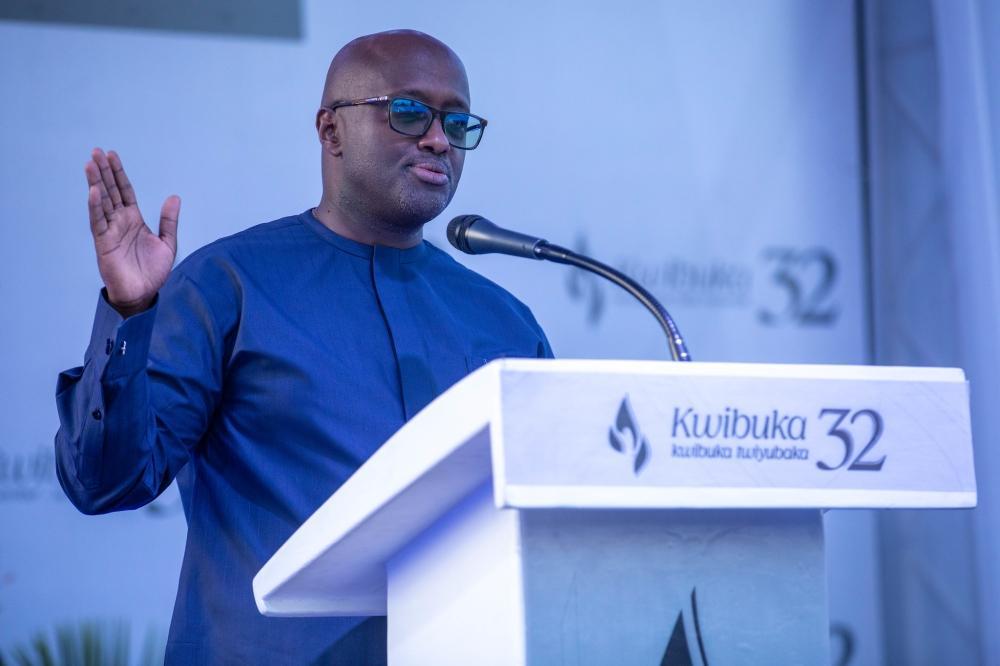
As Rwanda commemorates the 32nd anniversary of the Genocide against the Tutsi, the Minister of Foreign Affairs and International Cooperation, Olivier Nduhungirehe, says the events of that day remain one of the clearest examples of the failure of the international community to stop atrocities.
Speaking on Saturday, during a commemoration event at the Genocide memorial, Nduhungirehe recalled that the Belgian soldiers withdrew from ETO Kicukiro as terrified Tutsi civilians pleaded with them to stay.
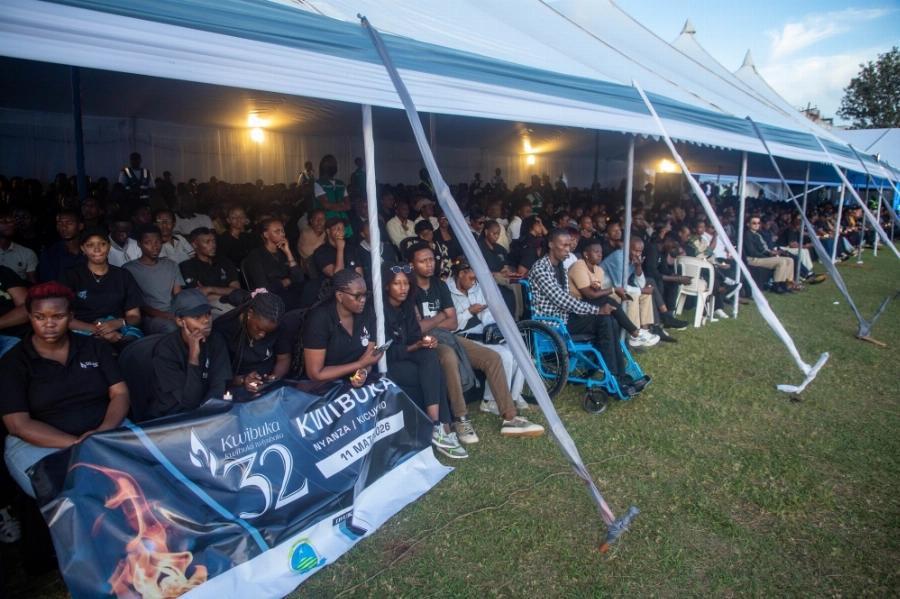
The 32nd commemoration of the Genocide against the Tutsi at Kicukiro-Nyanza Genocide Memorial.
“They packed their belongings, even their dogs, and left, while the Interahamwe and genocidal soldiers stood at the gates with machetes,” Nduhungirehe said.
The civilians were marched from the school to Nyanza hill, where most of them were killed.
“Any professional soldier who leaves civilians to killers with machetes is effectively handing them over to be slaughtered,” he said.
Nduhungirehe stressed that the betrayal at ETO Kicukiro was not an isolated incident but of failures by the international community, before, during, and after the Genocide against the Tutsi.
He pointed to the colonial period, when European powers, particularly Germany and Belgium, institutionalised ethnic divisions among Rwandans, laying the foundation for future violence.
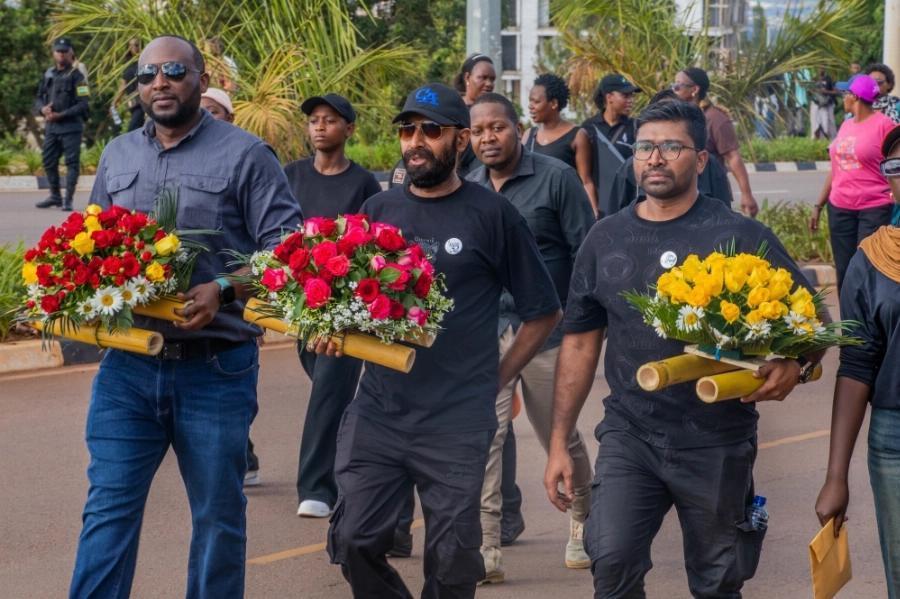
Mourners during the Walk to Remember from ETO KICUKIRO to Kicukiro- Nyanza Genocide Memorial.
In the early 1990s, as genocide ideology spread, warnings were issued, including by the UNAMIR Force Commander Gen Romeo Dalaire, about weapons stockpiles and plans to exterminate Tutsi. Yet, no preventive action was taken, he noted.
When the killings began, international response moved in the opposite direction, the United Nations Security Council adopted Resolution 912, reducing the number of peacekeepers in Rwanda at the height of the Genocide. Belgium, whose troops had been stationed at ETO, pushed for withdrawal amid the killings, a position the UN adopted despite the escalating massacres.
“There were clear warnings, and yet nothing was done. Even as people were being killed, forces were reduced instead of reinforced,” Nduhungirehe said.
He noted that only a few countries, including New Zealand, Nigeria, and the Czech Republic opposed the withdrawal, while some African peacekeepers, particularly from Ghana and Senegal, acted with courage to save lives on the ground.
Controversial interventions and escape routes
The minister also criticised Operation Turquoise, a French-led mission authorised by the UN and deployed in June 1994.
Though presented as humanitarian, Nduhungirehe said, the operation effectively created a corridor that allowed genocidal forces to flee into eastern DR Congo. In places like Bisesero in western Rwanda, he noted, French troops failed to intervene as massacres continued.
“In Bisesero, French soldiers watched massacres unfold without intervening,” the Minister said, “After the genocide, genocidal forces fled to Bukavu and Goma in eastern DR Congo. French forces left them weapons. This was confirmed by a French government official.”
Nduhungirehe further acknowledged that these forces did not disappear.
“The Interahamwe and government soldiers who had carried out the genocide were armed and organized refugee camps in eastern Congo, from where they launched attacks on Rwanda, killing civilians and students, such as in the Nyange school attack of 1997.”
“These groups, now known as the FDLR, still exist 32 years later.”
He said it is incomprehensible that the Genocide is recognized by international courts and the UN, yet its perpetrators remain free in the neighbouring country, “supported by a government whose president openly declares his intention to attack Rwanda and overthrow Kigali’s leadership, in collaboration with FDLR.”
Nduhungirehe said efforts to dismantle these groups have failed over the years.
“Despite the peace agreement signed in December 2025 in Washington between Rwanda and DR Congo that included dismantling the FDLR, the group has instead been strengthened,” the minister said.
“We continue to warn the international community about hate speech in eastern DR Congo. The same language used to prepare genocide in Rwanda is now being used against Tutsi in Congo, yet the world remains silent.”
He added that the consequences of these failures are reflected in how Rwanda is treated today.
“What is most painful is that Rwanda’s army, which stopped the Genocide against the Tutsi and knows the dangers of hate ideology, is punished when it takes defensive measures, while those collaborating with Interahamwe face no consequences.”
While acknowledging progress in justice, including through the International Criminal Tribunal for Rwanda, which tried Genocide masterminds, he pointed to gaps in accountability across countries, noting the limited number of prosecutions and extraditions of genocide suspects.
He noted that while some European countries have prosecuted or extradited genocide suspects, others including the United Kingdom, have yet to do so. Across Africa, despite over 1,100 indictments issued by Rwanda, few suspects have been prosecuted or extradited.
“Within Africa, Rwanda issued over 1,100 indictments for genocide suspects living abroad, most of them in African countries. Yet very few African states prosecuted or extradited suspects. Africa, too, abandoned Rwanda, and Rwanda continues to call on them to deliver justice.”
He urged both the international community and African nations to move beyond acknowledgment and take concrete action, from prosecuting fugitives to confronting genocide ideology wherever it resurfaces.
For More News And Analysis About Rwanda Follow Africa-Press