Africa-Press – Rwanda. The government plans to increase the number of cattle artificially inseminated more than sixfold from 120,000 to 741,274 annually by the 2027/2028 financial year, Minister of Agriculture and Animal Resources, Telesphore Ndabamenye, has said.
Ndabamenye made the remarks on Wednesday, April 1, while representing the Prime Minister before the Senate. He was responding to a summons issued on March 2 during a plenary session that reviewed a report on livestock development, based on senators’ field visits and focused on addressing sector challenges.
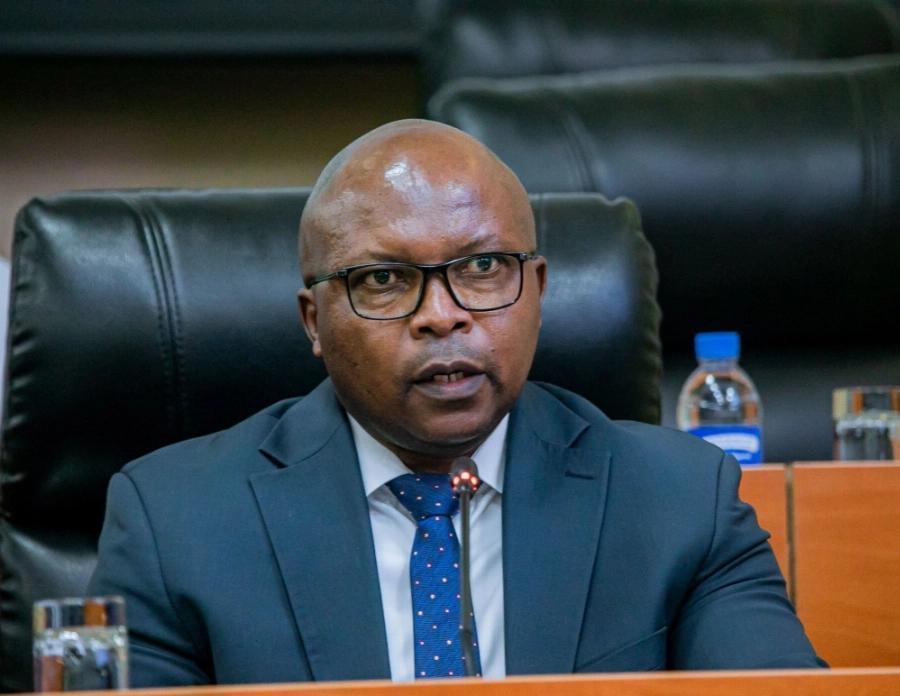
The Minister of Agriculture and Animal Resources, Telesphore Ndabamenye, addresses Senators while responding to a summons issued on March 2 during a plenary session, on Wednesday, April 1.
The report highlighted delays in delivering artificial insemination inputs to farmers, largely due to shortages of nitrogen used for storing and transporting semen.
To address this, the government plans to increase the number of improved breeding bulls producing semen suited to farmers’ needs, including Holstein-Friesian, Jersey, Brown Swiss, Angus, Charolais, and Fleckvieh breeds.
The number of breeding bulls is expected to reach 30 by June 2026 and double to 60 in the 2026/2027 financial year.
Production capacity at the Songa centre is also set to expand significantly. From July 2026, the facility is expected to produce up to 864,000 doses annually. This will allow the number of inseminated cows to rise to 400,000 in 2026/2027 before reaching 741,274 at full capacity in 2027/2028.
The government will also increase the availability of semen that produces calves from 5,000 doses to 80,000 and procure reproductive hormones to be used in at least half of insemination cases to improve efficiency.
On nitrogen supply, Ndabamenye said production will be boosted through new investments.
“We are constructing a third nitrogen production plant in Kayonza, to be completed by December. We also plan to acquire two additional plants in Musanze and Karongi, which will raise production to over 1.3 million litres per year,” he said.
In the long term, the government plans to introduce sexed semen technology and expand the Songa centre to include embryo production, transfer services, and training.
However, access to services remains a challenge in parts of the Western Province. Ndabamenye noted that drone deliveries do not yet reach Rusizi District and some sectors of Nyamasheke District.
The Minister of Agriculture told the senators that the government plans to increase the number of cattle artificially inseminated more than sixfold from 120,000 to 741,274 annually by the 2027-2028 financial year. Photo Sam Ngendahimana
To bridge this gap, a third drone hub will be constructed in Karongi in partnership with Zipline. Construction is set to begin in April 2026, with operations expected to start in August.
The number of artificial insemination technicians will also increase from 1,200 to 2,700 under the Veterinary Sanitary Mandate programme, with 1,500 to be trained in the 2026/2027 financial year.
“Our goal is to bring artificial insemination services and livestock reproduction support closer to farmers, at least at the cell level,” the minister said.
The initiatives are being implemented in collaboration with partners including the Rwanda Council of Veterinary Doctors (RCVD), Zipline, the International Fund for Agricultural Development (IFAD), the Ministry of Finance and Economic Planning (MINECOFIN), and the Ministry of Local Government (MINALOC).
Senators raise concerns
Senators raised concerns about the affordability, accessibility, and suitability of breeding inputs.
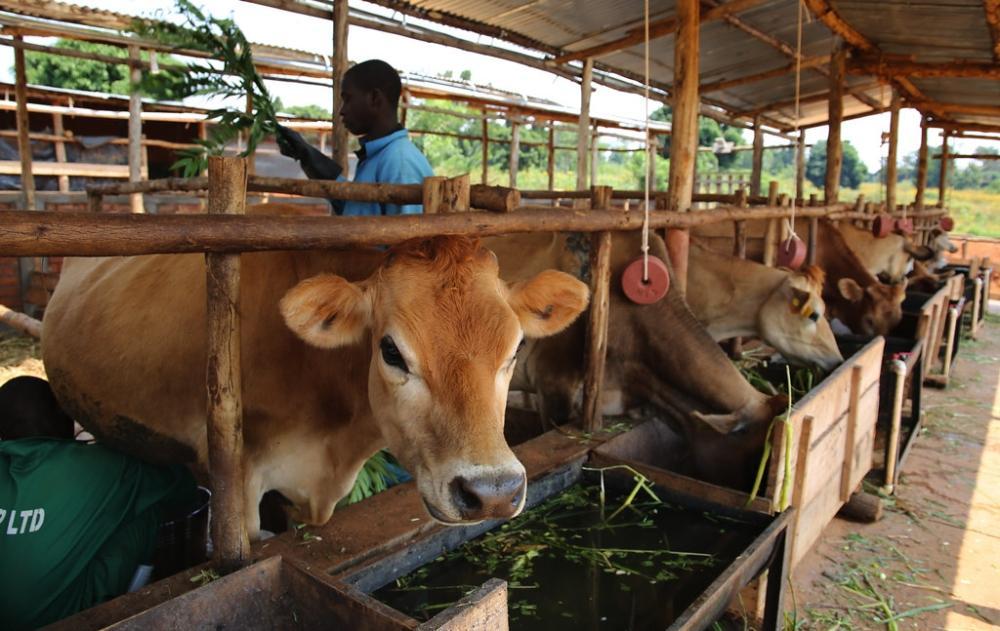
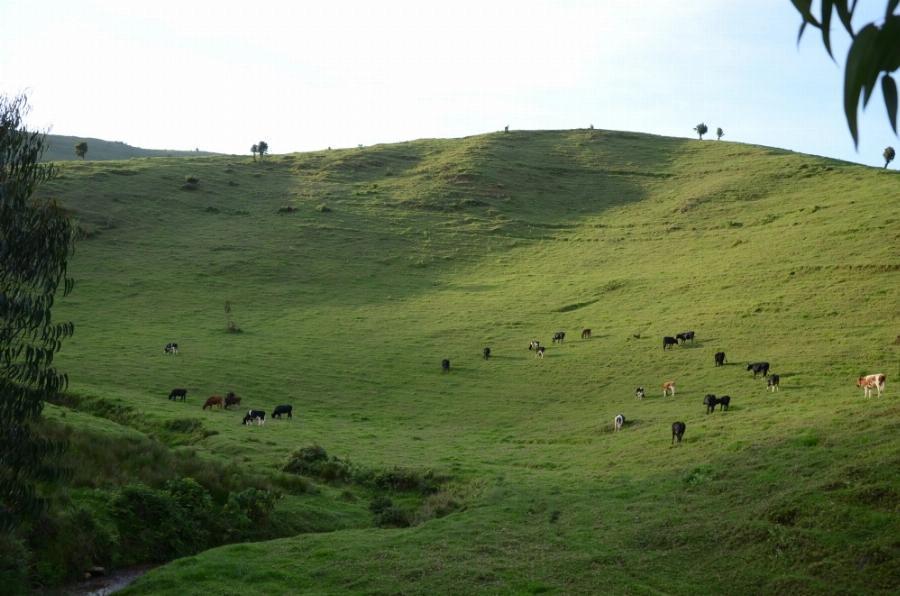
Cows in Gishwati based farm in Muhumyo in Ngororero District. Photo by Sam Ngendahimana
Senator John Bonds Bideri said some farmers are dissatisfied with the semen varieties currently available. He suggested exploring access to more affordable options from neighbouring countries, noting that some previously sourced from South Africa cost more than $3,000 per unit.
Senator Frank Habineza highlighted high prices as a barrier to access and called for targeted support to farmers.
Senator Alphonse Nkubana questioned the suitability of imported livestock, noting that some animals fail to adapt to local climatic conditions and asked whether such factors are adequately considered.
Responding, Ndabamenye said the government is working with international partners to improve both availability and quality of breeding services, including the adoption of advanced technologies.
He cited ongoing collaboration with countries such as Brazil on breeding programmes involving Gyr cattle, where embryos can be imported and developed locally.
“We are working with countries like Brazil on Gyr cattle, where we can import their genetics and use them through embryo transfer here in the country,” he said.
Ndabamenye added that the introduction of sexed semen technology is expected to significantly reduce production costs from about $47 to Rwf10 per unit making services more affordable for farmers, especially those seeking female calves.
He said the government is also engaging private investors to support the initiative, with plans to localise production within three to four years.
On imported bulls, the minister assured senators that animals brought into the country are assessed for suitability to local conditions.
“The imported bulls are fine, and weather-related factors are considered before they are shipped,” he said.
For More News And Analysis About Rwanda Follow Africa-Press