Africa-Press – Rwanda. Nyamagabe District and the current investor in the Gitare Mill wheat processing factory are in talks with a potential new investor who may acquire or buy shares in the business to help secure financing needed to resume operations, The New Times has learnt.
The factory was operational until 2018.
It closed due to the previous owner’s inability to repay a bank loan, leaving farmers without a sustainable market. As a result, it was auctioned.
The move to revive the factory followed concerns expressed by wheat farmers during President Paul Kagame’s citizen outreach in Nyamagabe District in 2022, where he instructed authorities to seek a solution.
Thadée Habimana, the Vice Mayor in charge of Economic Development in Nyamagabe District, told The New Times that the factory requires financing to be revived, upgraded, and resume operations.
“We are in discussions with OCP Africa, which is a joint venture with Rwanda Fertiliser Company (RFC), so that it either acquires the factory or buys shares as two possible options to enable operations to resume. This is because the current investor, Janvier Gasasira, tried but faced financial constraints,” he said.
He noted that the company had visited the factory twice to assess its potential.
“The negotiation process has been slow following changes in OCP Africa’s leadership, but as a district we remain committed as negotiations continue,” he added.
Once negotiations are successfully completed, officials expect OCP Africa to revive the factory and offer a reliable market for local wheat farmers.
Through its OCP School initiative, which provides soil testing and tailored fertiliser recommendations, the company could also help farmers boost yields and improve wheat quality, making local production more competitive with imports.
Habimana said they plan to engage with OCP Africa’s new leadership to confirm the company’s interest in operating the factory.
He noted that OCP Africa has implemented similar agribusiness projects across the continent to strengthen crop value chains, a model that could be replicated in Rwanda.
“We will follow up with the company for updates. Nyamagabe alone has 13,000 hectares of wheat, and Nyaruguru, Karongi, and Nyamasheke also produce substantial volumes. This means the factory can secure enough raw materials to run sustainably,” he said.
Janvier Gasasira, the investor who took over the factory through auction, told The New Times that due to financial difficulties, he began discussions with OCP Africa for possible investment.
“They had several physical visits and discussions with the officials and carried out a benchmark. They can either buy the factory or become shareholders. OCP Africa’s management in Rwanda changed, and I think new leaders were being recruited. We are still waiting and hope the process can be fast-tracked. We need financing to purchase modern equipment,” he said.
He added that there is a need to work with the Rwanda Agriculture and Animal Resources Development Board to promote wheat varieties that are suitable for bread production and the area’s soil, noting that suitable varieties would also increase production per hectare.
Residents around the factory in Tare Sector, Gasarenda Centre, are worried because the factory has not been operating for some time
Dieudonné Niyongira, a resident of Tare Sector, said: “We had a reliable wheat market as farmers. Another benefit was that we used the wheat by-products to feed our livestock, but we have lost all of that.”
Alphonsine Nyiramuhire, another resident, added: “The wheat produce is taken to Rusizi, Kigali, and other places. If the factory were operating, we would have jobs there, and perhaps the price of flour would even go down.”
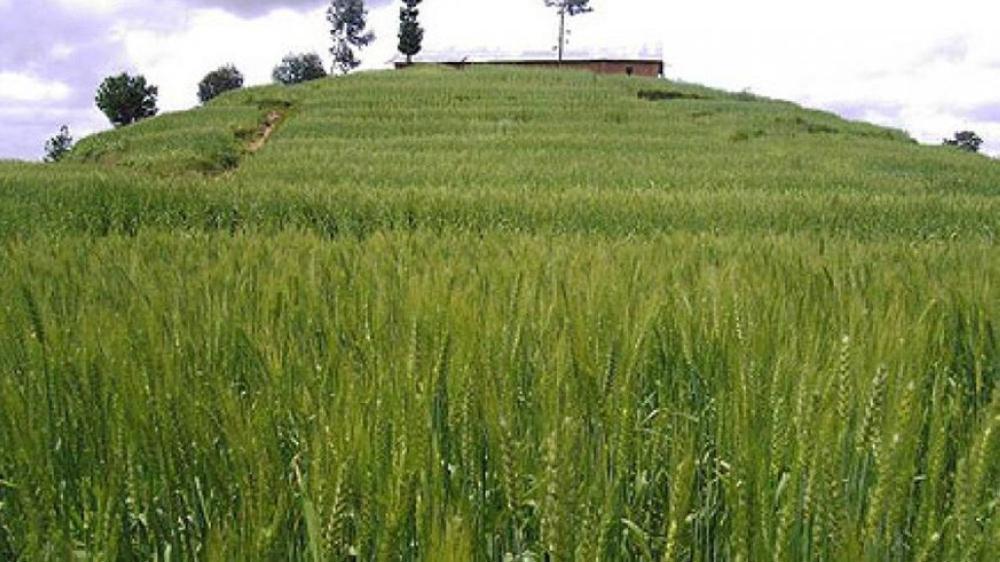
Wheat is one of the top crops grown in Nyamagabe District. The district is one of 11 others that grow wheat. Increasing production could cut the import bill.
Data from the Ministry of Trade and Industry show that in 2020, Rwanda spent over $44 million (about Rwf43 billion) on importing more than 177,740 tonnes of wheat, representing an increase of over 10 per cent compared to more than $40.8 million (about Rwf39 billion) spent the previous year.
For More News And Analysis About Rwanda Follow Africa-Press