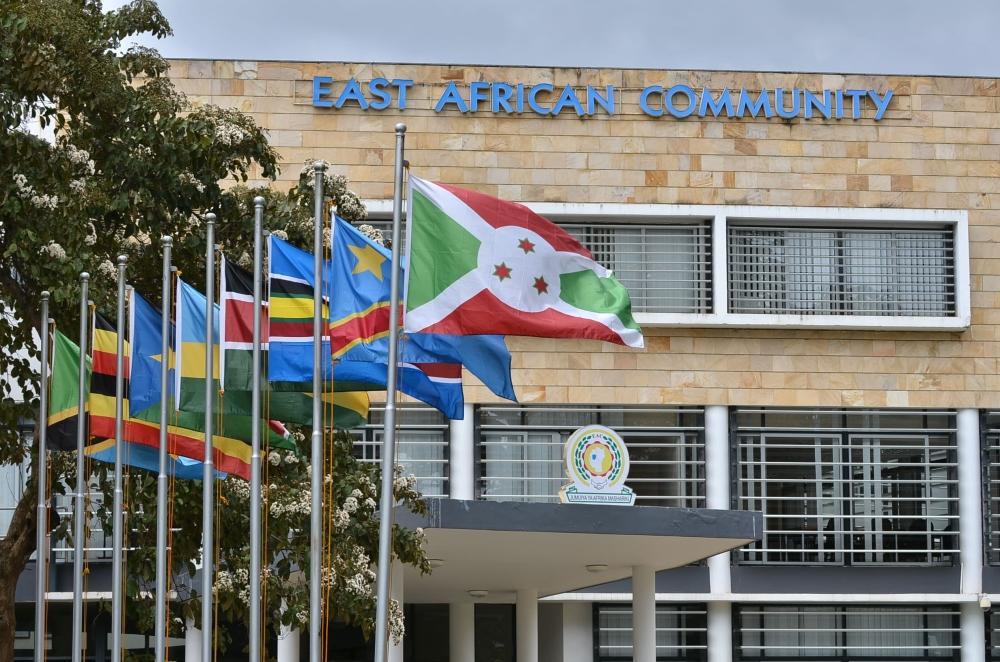
Africa-Press – Rwanda. The Banyamulenge community in eastern DR Congo has filed a case with the East African Court of Justice (EACJ), seeking justice for over alleged abuses committed by Burundian forces in Minembwe, South Kivu province, The New Times has learnt.
The community is represented by Action pour le Développement et la Paix endogènes (ADEPAE), a Congolese non-profit organisation promoting peace and development in North and South Kivu provinces, together with Mutualité Shikama, a mutual aid society representing the Banyamulenge.
Burundian armed forces (FNDB) have been present in eastern DR Congo since at least November 2022 under a bilateral agreement with the Congolese government. Their deployment has continued in the region, with an estimated 20,000 troops fighting alongside the Congolese government coalition in the war with AFC/M23 rebels as of 2025.
In Minembwe, Burundian have reportedly imposed a blockade, restricting the movement of people and goods.
Reports indicate that during the months-long blockade, residents were unable to access food, medicine and other essential supplies. Some people attempting to leave were reportedly killed at roadblocks, while others who managed to escape were forced to abandon their property.
According to Innocent Nteziryayo, one of the lawyers handling the case, the petition seeks to hold the Burundian government accountable for human rights violations allegedly committed by these troops, particularly starting with October 2025.
“These forces committed human rights violations. Women were sexually harassed, the population was denied access to medicine, food and other basic needs,” Nteziryayo told The New Times.
“People were abducted, others subjected to physical violence and persecution, and properties were destroyed. These acts form part of wider war crimes and human rights violations.”
The situation shifted on December 10 when AFC/M23 captured Uvira, dislodging a coalition that included Burundian forces, FARDC, FDLR, mercenaries, Wazalendo and other local militias. However, after AFC/M23 withdrew from Uvira on December 17, the coalition forces returned to the area, committing more abuses, he said.
The petition was filed in October in line with the EACJ requirement that cases be submitted within 60 days of the alleged violations. The complaint cites offences beginning October 17 last year.
On February 2, the Burundian government formally responded to the court through its attorney general, denying the accusations.
“Burundi wrote back to the court denying the accusations. We are preparing our response with facts and evidence. After that, the court will summon the parties to proceed with the case in accordance with EACJ protocols,” Nteziryayo said.
“We have sufficient evidence and testimonies. We believe justice will prevail unless the matter turns political,” he added.
He further noted that cases involving killings could be referred to the International Criminal Court (ICC), as the EACJ primarily handles human rights violations.
“We filed the case with the EACJ because it allows individuals or organisations to sue a state,” he explained.
Other related cases
The New Times has learnt that additional cases are in the process against both the Congolese government and Burundi. Some relate to reported persecution of Tutsi communities in eastern DR Congo, while others concern hate speech and public incitement.
One of the cases is against former Congolese army spokesperson Maj Gen Sylvain Ekenge over discriminative remarks he made on national television (RTNC) on December 27, targeting Tutsi women and families.
In North Kivu, members of the Hema community, another ethnic group that has faced violence and persecution, have also petitioned the EACJ seeking justice.
For decades, Tutsi communities in eastern DR Congo, such as the Banyamulenge, have faced persecution and displacement often at the hands of government-backed militias.
The ethnic violence is driven the FDLR, a militia founded by perpetrators of the 1994 Genocide against the Tutsi in Rwanda.
For More News And Analysis About Rwanda Follow Africa-Press