Africa-Press – Rwanda. The Minister of Foreign Affairs and International Cooperation, Olivier Nduhungirehe, has cautioned that the continued spread of genocide ideology and global inaction risk repeating past tragedies, drawing attention to the ongoing violence in eastern DR Congo.
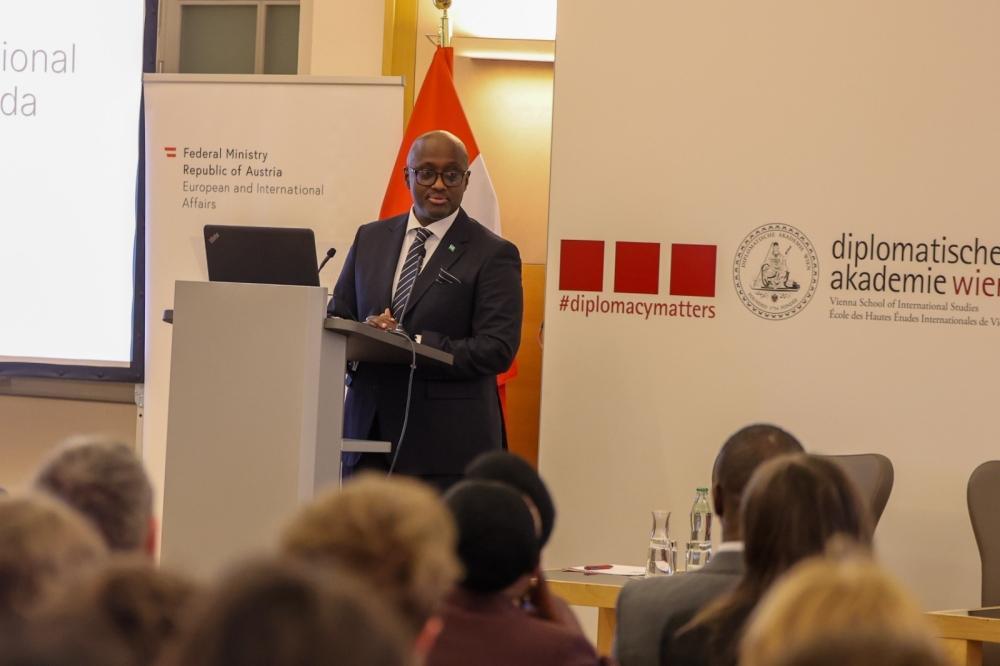
Nduhungirehe was speaking at the International Conference on Learning from the Past, Shaping the Future, hosted at the Vienna School of Diplomacy on Monday, March 23, where discussions centred on remembrance, reconciliation, and reintegration in the context of the 1994 Genocide against the Tutsi.
His concerns come against the backdrop of persistent genocide ideology and insecurity in eastern DR Congo, where Tutsi communities have been targeted by government forces and their allies, including the FDLR, a militia founded by the perpetrators of the 1994 Genocide in Rwanda, Burundian troops, foreign mercenaries, and Wazalendo armed groups.
“We are living in a time when genocide ideology, denial, and distortion are not only persisting, but evolving,” the Minister said.
“They are spreading across borders with alarming speed, amplified by digital platforms and emerging technologies, including artificial intelligence.”
“We are living in a time when genocide ideology, denial, and distortion are not only persisting, but evolving.” | Minister @onduhungirehe speaking at the International Conference on “Learning from the Past, Shaping the Future: Remembrance, Reconciliation and Reintegration – the… pic.twitter.com/L2oFQtOI3J
— Ministry of Foreign Affairs & Int’l Cooperation (@RwandaMFA) March 23, 2026
He warned that such technologies, while beneficial, are increasingly being exploited to manipulate narratives, fuel division, and obscure truth.
“In eastern DR Congo, extremist ideologies targeting Tutsi communities, including Banyamulenge, continue to fuel violence, persecution, and displacement,” Nduhungirehe said.
He indicated that the consequences of ignoring warning signs of atrocities are well documented, urging the international community to at before it’s too late..
“We must be clear: silence in the face of such warning signs is complicity: We have seen before where denial and indifference can lead,” Minister said.
“We cannot afford, as an international community, to repeat the mistakes of 1994.”
He noted that in various parts of the world, including in some Western capitals, genocide denial and distortion are finding new platforms.
The minister called for stronger legal frameworks, better education, and greater accountability to confront these trends.
The conference, organised by the Austrian Service Abroad in partnership with Austria’s Ministry of Foreign Affairs and the Diplomatic Academy of Vienna, brought together delegations from across Europe to reflect on lessons from Rwanda’s history and their relevance to contemporary global challenges, as well as to discuss and learn from one another.
For More News And Analysis About Rwanda Follow Africa-Press