Africa-Press – Rwanda. When ownership of Gahanga Cricket Stadium was formally handed over from Cricket Builds Hope (CBH) to the Rwanda Cricket Association (RCA) on Wednesday, December 31, it marked far more than a legal transfer.
It represents the coming of age of Rwandan cricket, a sport that arrived quietly but has grown into one of the country’s most vibrant and progressive sporting disciplines.
The local cricket governing body, RCA, now headed by Stephen Musale, was founded in 2000 and became an affiliate member of the International Cricket Council (ICC) in 2003, subsequently gaining associate member status in 2017.
Why a home is important
In world sport, having a permanent home matters. Facilities are not just bricks, grass and concrete; they are anchors for identity, development and ambition.
For Rwanda, Gahanga Cricket Stadium has played exactly that role. As the country’s only privately funded, international-standard sports facility, it stands apart in a landscape where major venues such as Amahoro Stadium, BK Arena and Ecology Tennis Club were built through government investment.
Before Gahanga opened in 2017, cricket in Rwanda existed largely on borrowed grounds and school fields, concentrated mainly in Kigali. The lack of a dedicated venue limited visibility, development pathways and international exposure.
The stadium changed that ‘overnight’ (for lack of a better word). It gave the sport a permanent address, a recognisable landmark and a platform to dream bigger for the players, officials and Rwanda as a nation in general.
Today, Gahanga is not only the heart-beat of Rwandan cricket but also one of the busiest cricket venues in the world, having hosted more international T20 matches than any other ground globally.
Teams from Africa, Europe, Asia and South America have passed through Kigali, bringing competition, knowledge exchange and global recognition.
For young Rwandan players, seeing international cricket at home has been transformative, making elite performance feel achievable rather than distant.
Impact of Gahanga Cricket Stadium
Rwandan cricketer Gisele Ishimwe scored a century in the UK, hitting 111 runs off 79 balls in her debut match for Odiham & Greywell Cricket Club against Ropley Cricket Club in the Hampshire Women’s Division 1 league in May last year.
This milestone made her the first Rwandan cricketer to score a century in English domestic cricket. She has since scored another century in the same league.
Ishimwe’s stint in England was aimed at gaining international experience, an opportunity seen as a significant step for Rwandan women’s cricket.
The skill and confidence to score a century on her debut in a high-calibre professional league didn’t come from a vacuum, but rather from a well-laid background at Gahanga.
The impact of the facility, situated about 15km east of Kigali, along Kigali-Bugesera highway, is reflected clearly in the numbers. From just a few thousand participants just over a decade ago, cricket now engages close to 64,000 players countrywide.
Remarkably, around 70 per cent of them are under the age of 18, underlining the sport’s strong grassroots base. Almost half (approximately 48 per cent) are female, a statistic few sports federations here and in the region can match.
These figures did not happen by accident. They are the product of progressive leadership and strategic partnerships.
RCA, working alongside CBH and international allies such as Surrey County Cricket Club, the ICC, Comic Relief and others, invested not just in elite competition but also in schools, community hubs and social programmes.
Inspiring a generation
Today, cricket is not just a sport; it has since become a tool for education, gender empowerment and life-skills development, especially for young women and underprivileged communities.
CBH, along with its partners continue to support local women with life-skills training, confidence-building and leadership development. According to official account of this programme, more than three quarters of the participants started new jobs, education or small businesses, and continue to play cricket.
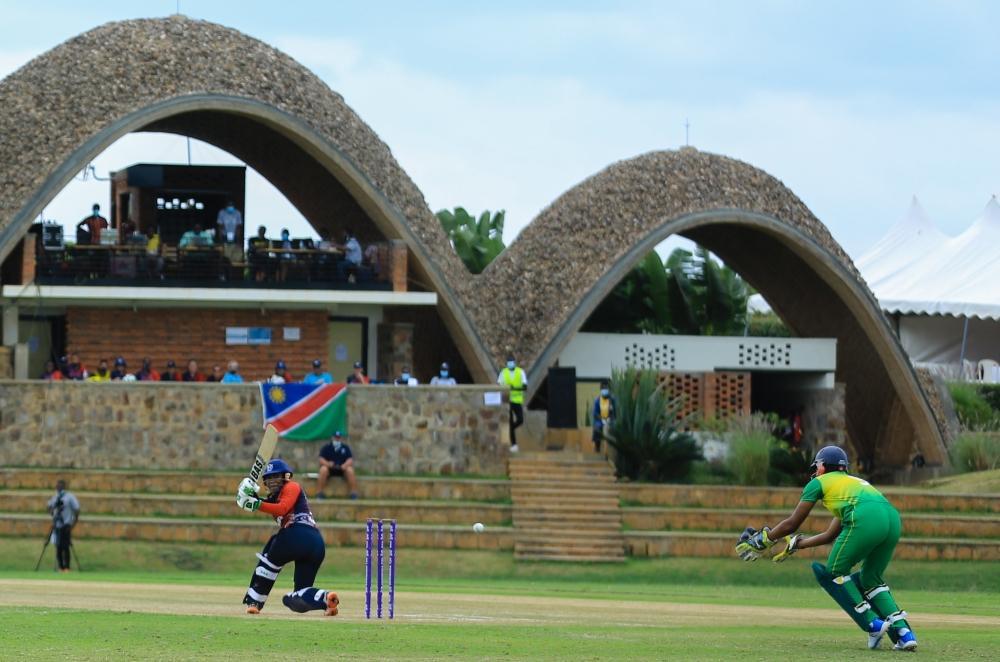
The stadium itself has been central to this ecosystem. It’s international-standard pitches, unique pavilion design and community-friendly environment have made it both a sporting and social hub.
It is a place where children first pick up a bat, national teams prepare for international tournaments, and communities gather around a shared passion.
Rwanda’s qualification for the 2023 ICC Under-19 Women’s T20 World Cup, highlighted by beating established cricket nations like Zimbabwe and the West Indies, stands as one of the clearest indicators of what sustained investment and proper infrastructure can deliver.
Equally important is what Gahanga represents for sports governance in Rwanda. RCA is arguably the only local sports federation with a privately funded, world-class home of its own.
This independence has enabled long-term planning, consistent programming and a strong institutional identity.
It demonstrates how effective partnerships between local leadership and international organisations can accelerate development, even in so-called “third world” sporting contexts.
According to officials, as ownership of the stadium passes fully into Rwandan hands, the move fulfils CBH’s original vision: a national asset owned and managed locally.
It also sets a powerful example for other sports federations. Facilities matter. Vision matters. Leadership matters. When all three align, even a sport that arrived late to the party can grow faster than anyone imagined.
A big thank you to Charles Haba, the lead pioneer and founding president of the RCA, for organising the many heads around him at the time when he and a few young men at the National University of Rwanda, came up with the idea not only to introduce the sport but also carry the dream to see it through to levels never imagined possible.
Consequently, Gahanga Cricket Stadium is not just a success story for Rwandan cricket; it is a case study in how infrastructure, inclusive leadership and strategic partnerships can transform a sport and, in doing so, inspire a generation.
The Abakambwe (former cricket players) deserve special mention, for, it’s their love, commitment and dedication to the sport in those early tough days that birthed the fruits that we’re enjoying today. They laid a firm foundation.
For More News And Analysis About Rwanda Follow Africa-Press