Africa-Press – Seychelles. Most of the time fathers lose out when it comes to gaining custody of their children during separations.
Why is this so?
The outcome of a two-day family separation mediation platform symposium which started yesterday will help come up with answers and at the same time look at ways to get all the different entities involved to work in synergy.
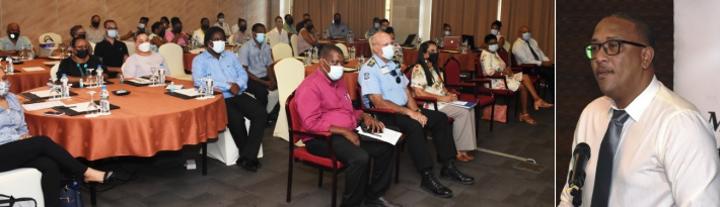
The symposium is being organised by the quality of life division within the family department in the Ministry of Youth, Sports and Family. In attendance were Attorney General Frank Ally; principal secretary for the family department, Clive Roucou; principal secretary for the social affairs department, Linda William-Melanie; and staff from the Ministry of Youth, Sports and Family.
Entering its second and last day today, the symposium sees the collective participation of family tribunal, social services, police family squad unit, Ministry of Health, National Council for Children, prisons services, Ministry of Education, Seychelles National Youth Council, Agency for Social Protection, Attorney General’s office and quality of life division.
In his address, PS Roucou said sometimes certain things do not go well in a relationship and this is where separation occurs.
He explained that most of the time in these situations all parties are affected – the mother, the father and the child. In these situations usually the parents end up butting heads and this is where all the bodies mentioned earlier step in to mediate between the two parties and bring a solution.
PS Roucou said that controversially and it has been proven that most of the time fathers lose out in those situations.
He stressed that he can confirm this through the position he has taken as PS for family and the large number of men he has met and who have approached him in regards to their issues surrounding decisions taken by certain entities according to their mandates.
Statistics for 2021 shows that there were 1,665 newborns ‒ 21% illegitimate, 79% born out of wedlock with 64% acknowledged by the fathers and 14.6% not acknowledged. For the Children Act cases for 2021, there were a total of 2601 cases. Total cases for custody and maintenance was 269 children, 180 total access granted to fathers and 42 total access granted to mothers. For custody, 44 were granted to fathers and 195 to mothers.
Director general for quality of life division, Beryl Naiken, said the aim of the symposium is to bring together the different relevant entities related to separation.
Ms Naiken said when they were setting up the division last year they started a fathers’ support group as they had received a large number of calls from fathers who felt trapped, frustrated and faced difficulties to gain access to their children. She said that wherever these fathers went they did not get a reprieve for their grievances.
For instance, in the case whereby a man pays alimony and fails to pay at some point, actions are taken against the man which can even lead to incarceration. However, in some cases even if the man is paying alimony and the mother has custody, she does not allow the father access to the child and even if the father goes to the respective bodies to explain the situation the mother is not taken to task.
Ms Naiken said this is a commonality that they have noticed and it shows that there are gaps in the regulations, therefore the symposium is to bring together all the parties involved to identify these gaps. Some fathers of the Fathers’ support group were present to see what exists and is working and identify areas that need improving as they put fathers at a disadvantage.
The director general for quality of life division added that they do not want to just talk about these issues but develop a body that will mediate the psychological aspect of the situation. The fathers’ support group so far has about 50 members and Ms Naiken added that they are categorised in different groups, for instance fathers who are raising kids alone after a mother’s death or departure and fathers having a hard time getting access to their children.
Clivy Albert, a member of the father’s support group, said he just joined but they are a group of fathers who are going through these difficulties and they aim to be the voice of fathers who cannot or do not want to come forward.
He added that there is a lot of bureaucracy in these situations and a lot of fathers prefer to stay silent on these subjects even though they are affecting them psychologically.
“What becomes more difficult is that the Family Tribunal makes certain decisions that most of the times are in favour of the mother and it seems as though they have become immune to these things,” he said.
He added that sometimes they believe that you are pushing because the mother has a new partner, but in reality it is because of the child and because you don’t wish the partner to be a negative influence or a disturbance to the child.
Mr Albert added that fathers are at a disadvantage and for instance in his case he only gets to see his two-year-old once every two weeks, adding that it is not supposed to be like this as he is supposed to be part of his child’s upbringing.
He stated that it took 18 months for him to get a court order for a DNA (deoxyribonucleic acid) test. He said it is really sad for fathers who cannot stand for themselves and even see themselves so frustrated and angry that they have to see a psychologist.
Ms Naiken said so far they have received approximately 80 calls from men in different situations who are frustrated, depressed and even suicidal. She explained that is why they are offering psychological support for the whole family ‒ mother, father and children ‒ as their aim is to improve the quality of life of the individuals as a whole and as a family.
She added that they will need to either create new laws or regulations that will bridge the gap between the entities to address these issues.
For More News And Analysis About Seychelles Follow Africa-Press