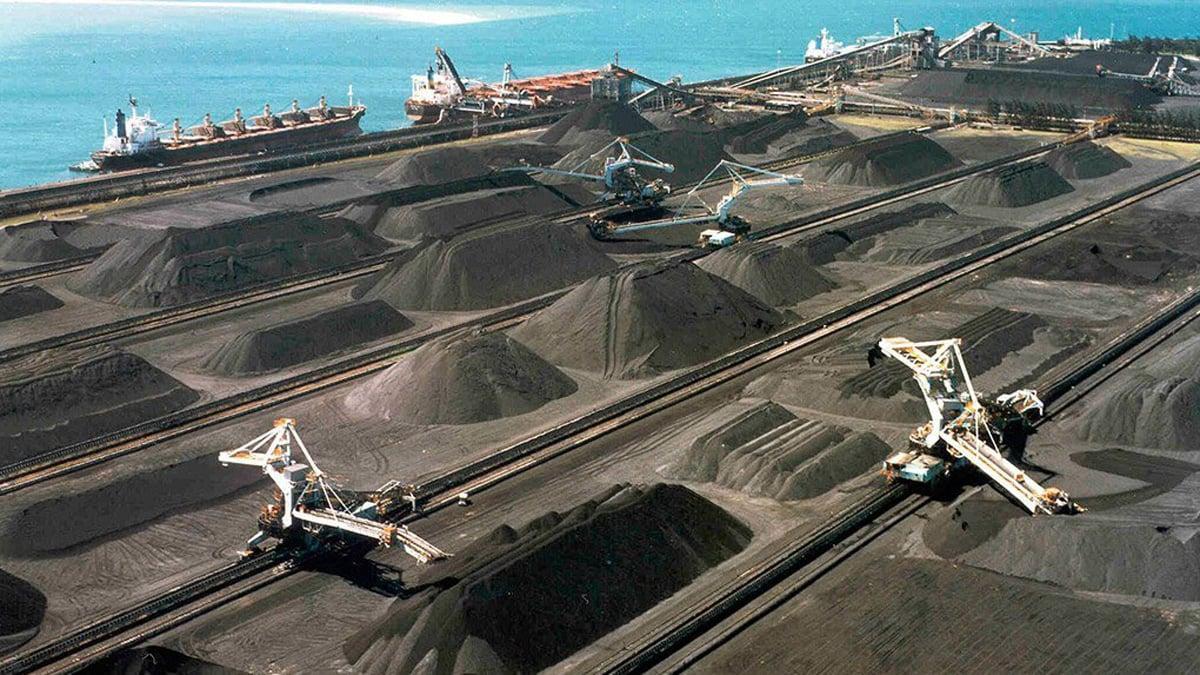
Africa-Press – South-Africa. South Africa’s coal industry appears to have put the worst behind it, with exports improving significantly year-on-year amid a better performance from Transnet.
While there are signs of improvement, there is still a significant way to go before the industry reaches the peak exports seen in 2017.
South Africa exported a record 76 million tonnes of coal in 2017, and despite an 11% improvement in 2025, the country still exported nearly 20 million tonnes less than its peak. This is also below Richards Bay Coal Terminal’s capacity of 91 million tonnes.
For the industry’s exports to fully recover, significant investment in Transnet’s railways will be needed, with Richards Bay Coal Terminal hamstrung by the utility’s lack of locomotives and spares.
Some coal has had to be trucked into the port, creating long traffic jams as the terminal was designed primarily for coal transported via train.
Logistics Professor at Stellenbosch University & Director of Gain Group, Jan Havenga, explained that the improvement has largely been driven by the change in leadership at Transnet.
This leadership change has been coupled with efforts from the private sector to assist Transnet with skills and other resources to improve its performance.
Crucially, the new leadership has been willing and has proven able to implement a significant reform programme at the utility.
“I think the most important change happened at a very low point that we got to in late 2022, when the coal price was very high,” Havenga told 702.
“First, it was business, and the Minerals Council approached the President to assist. But what really changed things was the new leadership at Transnet.”
Transnet’s new leadership team has been led by CEO Michelle Phillips, who was appointed permanently from 1 March 2024 after being the acting CEO since November 2023.
“They have been in charge for less than two years now, and they have overseen a significant improvement since then,” Havenga said.
“In terms of numbers, the coal corridor used to transport 75 million tonnes a year to Richards Bay. It fell to about 50 million tonnes when the new leadership took over. Coming back from there requires a lot of work.”
Havenga explained that the new leadership team did all the right things, such as replacing old equipment, getting locomotives back on the line, and investing in basic infrastructure.
The utility is now looking to take the next step and go beyond stabilising the logistics network and expanding it. However, this will require significant investment.
“They have got coal exports up to over 60 million tonnes per annum. That is a vast improvement. Another 15 or so million tonnes to go, but for that to happen, some major work is required,” Havenga said.
Transnet turning around
Professor of logistics at Stellenbosch University Jan Havenga
Transnet’s new leadership has crucially shown a willingness to engage with key issues that have plagued the utility in the past.
While previous management teams hid behind excuses, such as the inability to get spares from China for its locomotives, the new team has found solutions, Havenga said.
Chief among the issues faced by Transnet was the severe impact of cable theft along its rail corridors, which prevented locomotives from operating effectively.
This has seemingly disappeared since the new leadership team took over, with the utility now constrained by a lack of locomotives.
The most effective way to minimise cable theft, Havenga explained, is simply by ensuring trains are running regularly on major corridors.
This makes it highly dangerous for individuals to try to steal cables as the railway is active. In the past, without trains running, criminals had free rein.
Running trains more regularly is also a far more efficient solution, as it is almost impossible to secure an entire railway and prevent theft otherwise.
Havenga explained that while Transnet’s infrastructure and equipment are ageing and need repair or replacement, many of its issues came down to its inability run a railroad.
“Locomotives are maybe 20% of the problem. Theft and vandalism are maybe another 20% or so. Outside of that, it was an inability to run a railroad which the previous management allowed,” Havenga said.
“This is the basics, such as routing and scheduling and the way in which staff is deployed across the network. Transnet has found some creative solutions to these challenges in the past two years.”
The next step, Havenga said, is a major investment in maintenance of infrastructure and the acquisition of machinery and equipment that Transnet cannot fund by itself.
Havenga said discussions are ongoing between Transnet and business lobby groups as to how the projects will be funded.
For More News And Analysis About South-Africa Follow Africa-Press