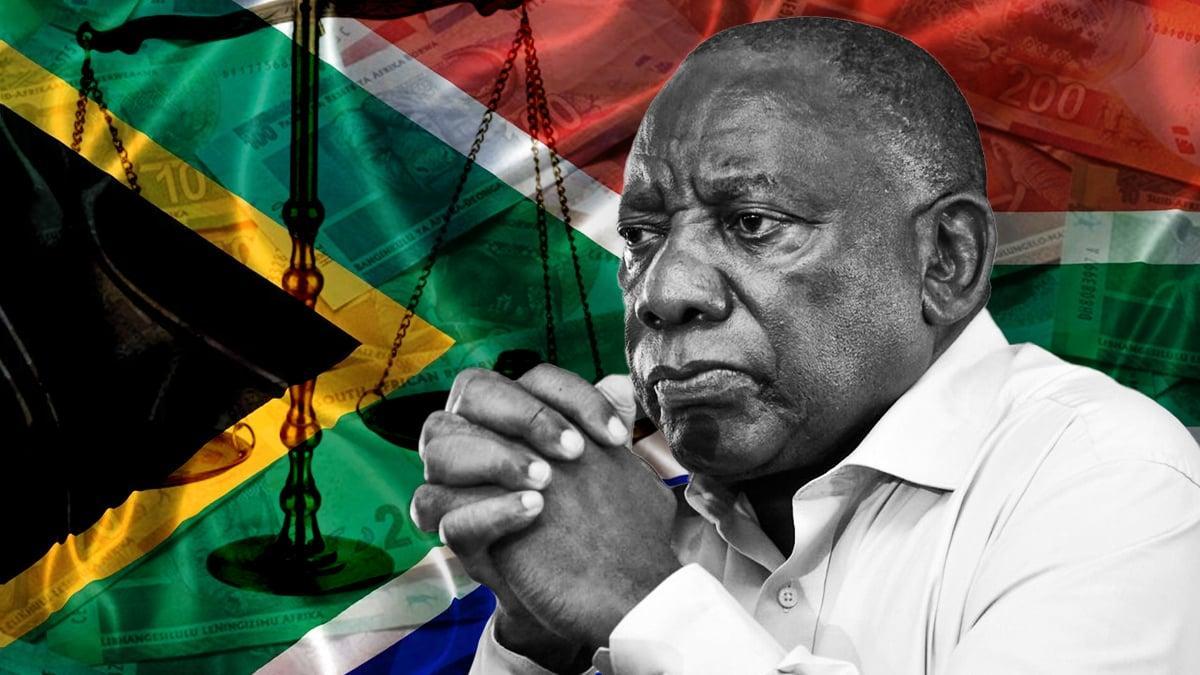
Africa-Press – South-Africa. South Africa’s score in the most recent Corruption Perceptions Index (CPI) stagnated, remaining below the global average, suggesting that the problem is likely not taken as seriously as it should be by the country’s leaders.
This is according to Corruption Watch, the South African chapter of Transparency International, which releases the CPI Report each year.
The 2025 CPI found worsening corruption and a decline in leadership globally, with South Africa no exception.
The CPI measures perceived levels of public-sector corruption across 182 countries and territories on a scale of 0 (highly corrupt) to 100 (very clean).
Corruption Watch explained that South Africa’s anti-corruption efforts, as reflected in the 2025 index, are still found wanting, as the country stagnated with a score of 41.
This is not only the same score it achieved in 2024 and 2023, but also signals that the country remained below the global average of 42 out of 100.
Notably, this is despite a general decline in the global average for the first time in more than a decade. In this year’s CPI, South Africa ranked 81st out of the 182 countries considered in the report.
This shows a notable decline from a few decades ago, when, in 1995, South Africa ranked at number 21, alongside the least corrupt nations in the world, like Japan and Belgium.
In other words, since 1995, South Africa’s corruption score has fallen dramatically, from 57 to its most recent score of 41, reflecting a serious increase in the perception of corruption in the country over the past three decades.
Transparency International explained in the report that the CPI shows a stark contrast in controlling corruption between nations with strong, independent institutions, free and fair elections, and open civic space, and those ruled by repressive authoritarian regimes.
Full democracies have a CPI average of 71, while flawed democracies average 47 and authoritarian regimes just 32.
“Although a very small number of non-democratic countries score relatively well compared to their regional peers, and are perceived as managing a limited range of corruption types successfully, they remain exceptions,” it said.
This means South Africa falls below the average of a flawed democracy as measured by the CPI.
Corruption Watch executive director Lebogang Ramafoko said that South Africa’s score has seldom given cause for celebration, having remained steadfastly below the 50 mark for over a decade.
However, she said the dip over the past three years to 41 is certainly cause for concern, “as it suggests that corruption is not being taken seriously enough by our leaders”.
The tables below show the 182 countries included in the 2025 report, ranked by their CPI scores.
Still room for optimism
Ramafoko said a government’s inability to act against corruption by introducing new laws or strengthening existing ones to combat it makes it more difficult for civil society organisations and whistle-blowers to speak out against corruption freely and safely.
She added that this is made worse by disturbing patterns of restricting freedoms of expression, association and assembly.
“When corrupt officials and politicians continue to abuse their power, the frequent result is poor quality services and fiscal crises, as public funds are mismanaged, contributing to enduring poverty, rising inequality and worsening living standards for millions of people,” she said.
Corruption Watch noted that, despite South Africa’s disappointing result in the 2025 CPI, there is still room for optimism.
For example, it highlighted that South Africa was removed from the FATF grey list in 2025 following consistent efforts from financial governance structures.
In addition, it noted that corruption allegations within South Africa’s criminal justice system are being investigated by two constitutionally supported processes: the Madlanga commission and the ad hoc committee of parliament.
“These developments relate to the important point that the CPI measures perceptions of corruption, not actual reports from the public, which means that sometimes recent developments are not always reflected in the report,” the organisation explained.
The 2025 CPI showed that the majority of countries in the report are failing to keep corruption under control, with 122 scoring under 50, while the number of countries scoring above 80 has decreased from 12 a decade ago to just five this year.
“This reflects a worrying trend of democracies experiencing rising corruption against a backdrop of tensions between major powers, a dangerous disregard for international norms, the deadly impact of the climate crisis and increasingly polarised societies,” the report said.
“These challenges point to the need for strong and principled leaders and institutions with integrity to protect the public interest.”
For More News And Analysis About South-Africa Follow Africa-Press