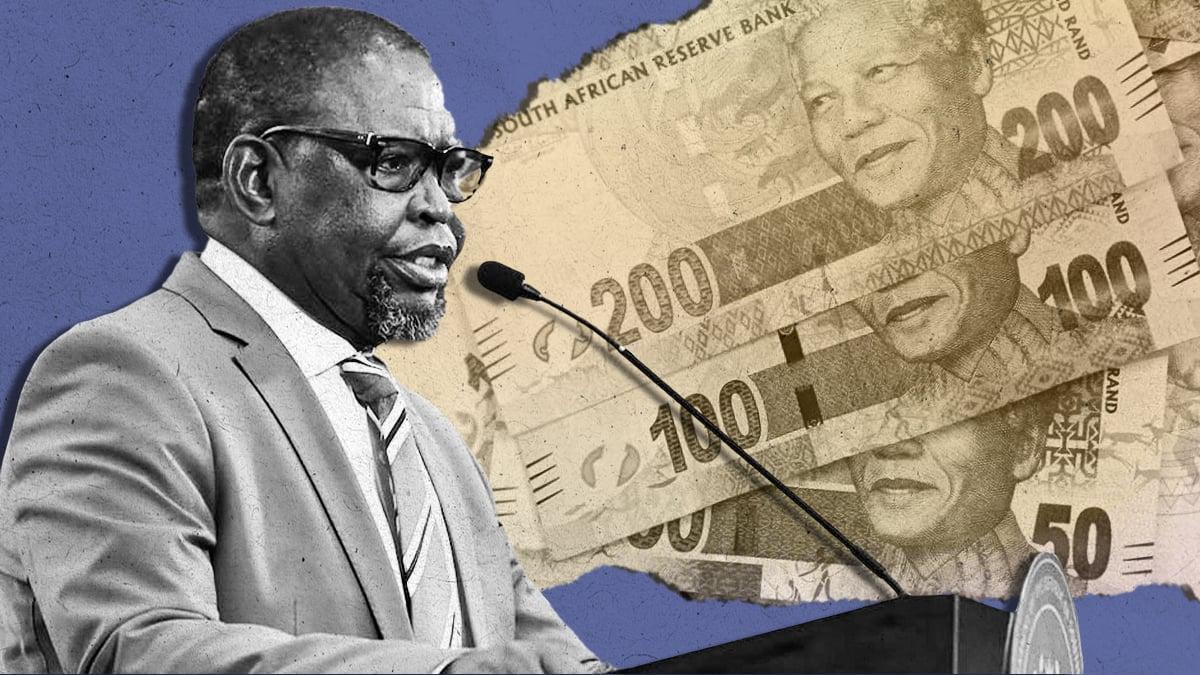
Africa-Press – South-Africa. The National Treasury appears to have lost the fight to implement new or higher taxes to offset the cost of making South Africa’s social relief of distress (SRD) grant permanent.
This comes after President Cyril Ramaphosa announced the indefinite extension of this grant, confirming that it would serve as a basis for introducing a basic income support grant.
The Treasury, headed by Finance Minister Enoch Godongwana, previously said that any extension of the SRD grant, or its replacement, would need to be funded by a new revenue source or by reprioritising other spending.
However, with the Treasury’s options regarding tax hikes now severely limited following the 2025 Budget debacle, it appears that this fight may have been lost.
Bank of America analyst Tatonga Rusike explained that, for the time being, the Treasury has limited options available regarding the SRD grant.
The SRD grant was initially introduced as a temporary lifeline to struggling households during the Covid-19 pandemic.
However, the grant has been extended every year since, with the government looking to use it as the basis to implement a permanent basic income grant.
This was confirmed in Ramaphosa’s recent State of the Nation Address (SONA), in which he extended the SRD grant indefinitely and said it would be used “as a basis for the introduction of a sustainable form of income support for unemployed people”.
Rusike explained that South Africa’s Budget had the SRD grant covered until March 2027 and that it currently costs about R40 billion per year.
While promises to make this grant permanent have been made for years, no concrete plan has been put in place yet.
In its 2024 Budget Review, the National Treasury said any extension of the SRD grant, or any replacement thereof, must be funded by a new revenue source or by reprioritising other spending items.
“Government is still discussing options for a replacement grant and the balance between policy options to support higher employment,” it said.
However, it appears this approach has gone out the window, with Rusike explaining that the 2025 Budget debacle showed the unlikelihood of another major tax increase and very little wiggle room for reallocating spending.
Delaying the inevitable
Rusike said introducing a tax to accompany the permanent expenditure allocation that comes with extending the SRD grant is a fight that National Treasury appears to have lost after the 2025 Budget debacle.
This debacle occurred in early 2025, when the Budget had to be revised three times due to political infighting over the Treasury’s proposal to raise the value-added tax (VAT) rate.
The Treasury proposed hiking South Africa’s VAT rate by two percentage points, split over two years, as a way to increase the government’s revenue and fund its ambitious spending plans.
However, this was met by staunch opposition from members of the ruling coalition party and was ultimately struck down following legal action.
While the revised Budget was ultimately approved, this debacle showed an unwillingness from certain members of Parliament to accept any major tax hikes in the national Budget.
This leaves the Treasury with limited options to increase state revenue, with spending cuts or reallocation the only remaining options to fund additional expenditures, such as the SRD grant.
“So, National Treasury could accept this and find other areas of spending cuts to compensate for the grant,” Rusike said.
However, he added that there is one other option – delay the decision until 2027, after South Africa has held its municipal elections.
South Africa is set to hold municipal elections later this year, and Rusike explained that higher taxes can be unpopular with voters.
Since the SRD grant is still covered in the Budget until March 2027, the Treasury could delay any decision related to the grant’s future funding until after the elections.
An Intellidex study from July 2022 estimated that the cost of a basic income support grant could range from R20 billion a year to R2 trillion.
The study found that, while a basic income support grant will improve inequality, “any attempts to expand the budget with the status quo environment will damage debt dynamics further”.
South Africa is currently on a positive fiscal trajectory, with the government expected to achieve its third consecutive primary budget surplus and state debt projected to stabilise in the current fiscal year.
However, the country’s economic recovery remains fragile, and aside from the SRD grant’s extension, the President also announced numerous other plans in his SONA that will require increased government spending, putting the Treasury in a tough spot.
For More News And Analysis About South-Africa Follow Africa-Press