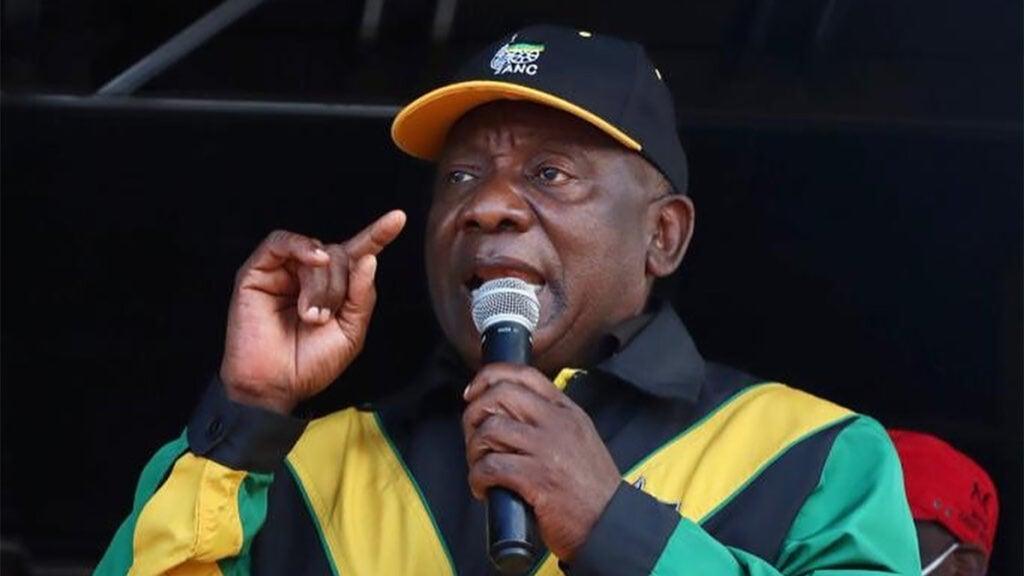
Africa-Press – South-Africa. South Africa’s economy has failed to grow for 15 years, and while President Cyril Ramaphosa has admitted this, he has failed to identify that ANC policies are to blame.
Apart from the ANC’s failed policies, the party has also proven unable to properly manage the state’s finances, deliver services, and put competent individuals in important positions.
The party has also struggled to keep pace with the rapidly shifting nature of South Africa’s economy, away from mining and agriculture towards services.
This is feedback from Efficient Group chief economist Dawie Roodt, who explained why it is so important that Ramaphosa admits the economy has not grown.
In response to Ramaphosa’s 2026 State of the Nation Address, Roodt praised him for publicly acknowledging that the South African economy has been stagnant for the past 15 years.
However, Ramaphosa did not identify why the South African economy has been stagnant, with the responsibility largely lying at the ANC’s feet.
“The President, and I think this is very important, admitted that we have not grown the South African economy for 15 years and that more money will be spent on infrastructure to get it to grow,” Roodt said.
“It is very, very difficult for this President to actually admit the reason why the economy has not been growing is because of the incompetence, corruption, and wrong economic policies of the ANC.”
“At least they are recognising it now, and something will come from that, but I am not holding my breath.”
Roodt previously explained that the ANC has tried to manage South Africa’s economy in the 21st century using 20th-century ideas and frameworks.
He said the ANC does not understand what makes a modern economy work and which policies are needed to make it grow and create prosperity.
“The ideology of the ANC is stuck somewhere in the 1920s. Their ideology is based on Karl Marx’s labour value theory, which does not apply anymore because the majority of people do not work in factories,” Roodt said.
The economy has become increasingly high-skilled and services-based, which requires a different way of thinking about how value is created.
“Flowing from their ideology are their various policies. These policies are based on things like expropriation, centralisation, and redistribution, rather than creation and expansion,” Roodt said.
Another major issue with the ANC is the party’s belief in cadre deployment, which Roodt explained has resulted in elevated incompetence within the state.
This is because people are employed in the state and public companies based on their loyalty to the party and not on basic competence.
Institutional decline
Efficient Group chief economist Dawie Roodt
The ANC’s failed policies and cadre deployment have also resulted in the collapse of South African institutions, ranging from national departments to municipalities.
Most important among these are municipalities, with local government being crucial for all South Africans, as it is the only touchpoint they have with the state and service delivery.
South Africans do not really touch national policy, and while it is important, most of their interactions with the state are at a local level.
Thus, if this sphere of government fails, many South Africans will lose trust in the state and its ability to deliver services.
“The local authorities are the most important institution in South Africa and more than 70% of them got qualified audits in the last financial year,” Roodt said.
“They have been destroyed. It looks like some places have been through war. The implosion of Johannesburg is a case example.”
So far, the government has been unable to take the necessary decisions to reverse the decline of institutions and the collapse of local government.
Political analyst Dr Frans Cronje previously explained that this is due to the fundamental structure of the ANC, which has been the dominant political force in South Africa for 30 years.
“The ANC has a structural immunity against reform. It has immunised itself to reform through its extensive structural processes,” Cronje said.
Even if key leaders within the ANC are aligned on what needs to be done, they cannot get the support of the party to implement these decisions.
“It’s board, the National Executive Committee, has about 100 members drawn from every possible perspective of life you can imagine, from the ideological to the criminal to the just not very good,” Cronje explained.
“The chairman of the board, that is what Mr Ramaphosa is, is a sort of non-executive chairman and he sees his role as facilitating a discussion between the hundred and no decision must be taken until there is complete agreement about what to do.”
Compounding this challenge is the need for consensus on many decisions within the party, which means that very few are actually made and implemented.
“If you ran anything, any company along those lines, you would be in trouble. You have a weak chairman and a board with conflicting objectives, let alone 100 people on it, and your competitors are taking big bites out of you – you will never turn the thing around,” Cronje said.
This prevents the ANC, which is still the dominant political force in South Africa, from taking decisive action regarding the country’s crises and its future.
“I think the ANC immunised itself to reform through its structures, exacerbated by the manner of its leader,” Cronje said.
“Therefore, while it can agree with you and hate what is happening, it can see the consequences, and it knows it is the biggest loser, so it cannot act.”
For More News And Analysis About South-Africa Follow Africa-Press