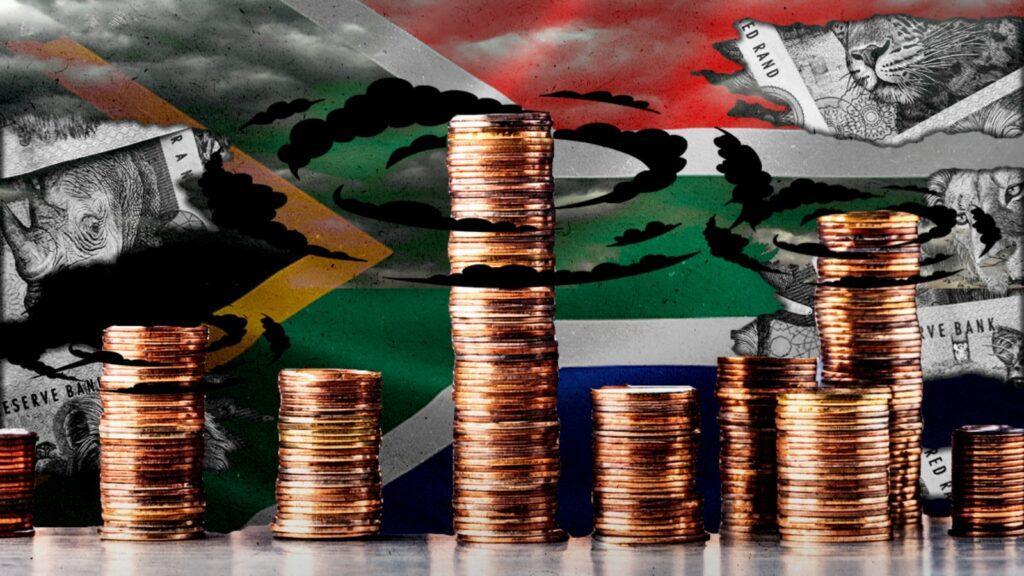
Africa-Press – South-Africa. South Africa’s economic outlook seemed quite positive at the start of 2026, but now the country’s future looks increasingly uncertain.
The conflict in the Middle East has threatened to completely overturn the country’s economic recovery and grind its growth to a halt.
This is according to PayInc’s Economic Index report for March 2026, which tracked all electronic payments made on its platform over the month.
The Index reported an increase of 0.9% month-on-month in March, and is currently sitting at an index level of 104.7. This is 4.6% higher than where the index was around this time last year.
While this upward momentum gives a general indication of improving economic performance across South Africa, PayInc said this is likely to be short-lived.
“Although March’s strong economic performance is heartening, it is likely to be the calm before the storm,” the report said.
“The war between the US and Israel against Iran that started on 28 February 2026 is still ongoing and has abruptly disrupted the economic scenario envisaged for South Africa and the globe.”
The impact of the war and the subsequent closing of the Strait of Hormuz on global oil trade is a significant factor in the country’s downturned economic prospects.
The 1 April fuel price increase of R3.06 per litre for petrol and R7.37 per litre for diesel is the highest single-month price increase South Africa has ever seen.
While the R3 fuel levy cut cushioned the blow somewhat, this is likely only temporary, and PayInc expects at least two more months of price increases if the war does not end soon.
Higher fuel prices are already affecting transport companies and airlines across the country, and are projected to lead to an increase in the general price of goods as well.
In its latest World Economic Outlook report, the International Monetary Fund (IMF) revised its growth outlook for South Africa down to just 1% in 2026, a cut of 0.4 percentage points.
This puts it below the 1.1% economic growth achieved by the country in 2025, with the IMF explaining that the war will likely have a negative impact on inflation across the globe.
Economic recovery remains fragile
Independent economist Elize Kruger
PayInc’s findings and the IMF’s ruling expose the underlying vulnerability that defines South Africa’s road to economic improvement.
The Centre for Risk Analysis has said that South Africa’s growth has relied on higher economic sentiment and increases in consumer spending.
With inflation projected to rise as a result of the war, consumer spending is likely to decrease in the coming months, slowing the country’s growth.
Meanwhile, long-term drivers of economic growth, such as fixed investment and higher business confidence, have similarly contracted in recent years.
Speaking to 702, independent economist Elize Kruger said March’s Economic Index report is likely to be the country’s last indication of positive growth for the foreseeable future.
“March’s numbers are still good,” Kruger said. “It shows the tailwinds that have been supporting the economy were still prevalent in quarter one. But unfortunately, from April onwards, the scenario has changed abruptly.”
Kruger said South African companies will not be able to keep absorbing the increased fuel prices, meaning they will need to recoup higher transport costs further down the supply chain.
Agricultural organisations across the country have warned that spikes in the prices of fuel and fertiliser will likely lead to higher food prices in the coming months.
Kruger explained that the uncertainty surrounding the war’s duration could also lead to a potential loss of jobs across multiple economic sectors.
“Companies typically go into ‘conservative mode’ in these highly uncertain environments, not knowing how long this scenario will play out or what the final economic impact will be,” Kruger said.
“They will not make decisions about investments if they can postpone it, and they will typically not appoint people if they are uncertain about the prospects.”
In a separate interview with Newzroom Afrika, Kruger said a best-case scenario, in which there is a short-term conclusion of the Middle East conflict, could see the country recover relatively quickly.
However, she said this would only come after a round of price increases across the economy, as the current hikes are too large to be absorbed by companies.
“There’s a case to be made that we won’t go back to where the oil price was before the conflict started,” Kruger said. “I think we’re going to be left with higher oil prices for longer than we anticipated.”
For More News And Analysis About South-Africa Follow Africa-Press