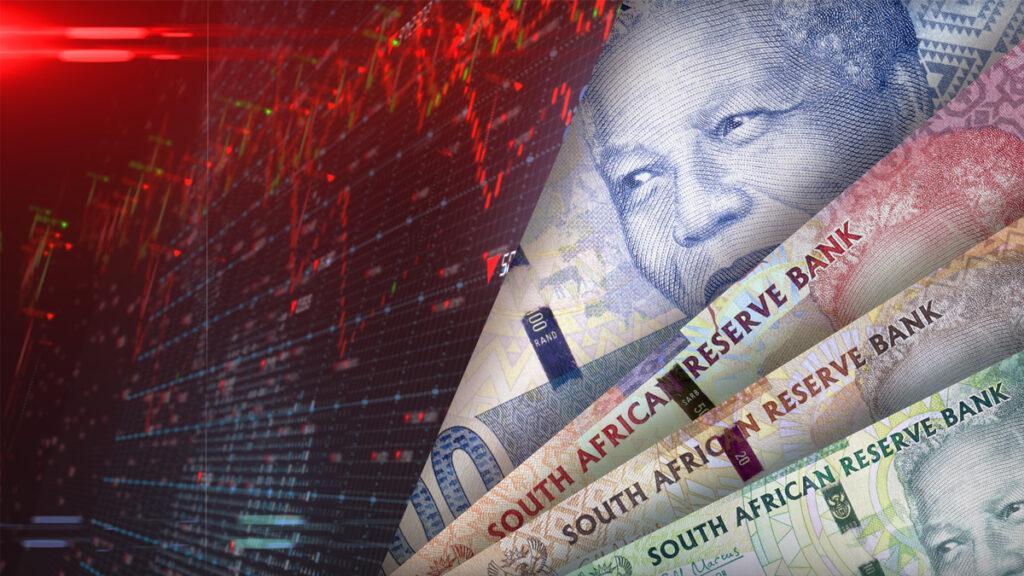
Africa-Press – South-Africa. Despite remaining resilient amid shocks from the Middle East war, South Africa’s rand now ranks among the riskiest emerging-market currencies.
After weakening by 3.5% against the United States dollar, the rand is now ranked near the bottom of 21 currencies based on their perceived risk.
Investec chief economist Annabel Bishop explained that the trade-weighted rand is 2.6% weaker compared to before the outbreak of the Middle East war.
Notably, she said the rand has pulled back from its weak point at the end of March, when it was 5.9% weaker than the US dollar.
In addition, the Credit Default Swap spread has also dropped to 149 basis points, down from 199, as risk aversion has lessened.
Despite these positives, Bishop said noticeable negative sentiment surrounding South Africa has persisted, pushing the local currency close to the bottom of a ranking of risky emerging-market currencies.
South Africa’s rand is typically sold in risk-off periods, and the Middle East war has been no different.
Bishop said foreigners have sold R34.1 billion worth of South African bonds since before the Middle East war started.
This sell-off has weakened the rand to the third-worst-performing emerging market currency in a Bloomberg ranking to date.
“South Africa’s rand is once again being grouped with the riskier emerging market currencies, ranked at the bottom of 21 currencies,” Bishop said.
The rand now finds itself among emerging market currencies like the Philippine peso, Thai baht, South Korean won, Hungarian forint, and Mexican peso.
“These currencies are also the worst-performing in the carry trade, with global financial markets experiencing a negative carry trade return for these exchange rates, influenced also by rand depreciation itself on the return,” Bishop explained.
She said the rand is not only considered the most risky, but has also experienced the greatest volatility among emerging market currencies.
The graphs below show where the rand ranks among other emerging market currencies in terms of risk and volatility.
Source: Annabel Bishop/Investec
Source: Annabel Bishop/Investec
Interest rates to the rescue
Bishop explained that South Africa is on track to hike its interest rate in the coming months, while the United States is expected to either hold or cut in the year ahead.
For South Africa, she explained that the lengthening of the Middle East war is having a negative impact on inflation expectations.
This, in turn, is also affecting investor appetite for South African bonds, with breakeven rates still elevated, though lower than at the end of March.
South Africa’s CPI inflation is expected to reach around 4% in the second quarter of 2026, largely due to the lagged effect of higher oil prices stemming from the Iran war.
“The risk is to the upside for inflation on a longer war in the Middle East, which was expected to have ended at this point,” Bishop explained.
“The risk, therefore, is for higher-than-expected inflation for South Africa, negatively affecting the rand.”
Bishop said the lagged effects of the Middle East war on inflation and South Africa’s other economic indicators will continue over the remainder of the year.
However, the South African Reserve Bank is currently expected to respond to these rising inflation expectations through interest rate hikes. Currently, one 25-basis-point hike is fully factored in for South Africa by June.
In contrast, the United States currently has no interest rate hikes factored in. Instead, Bishop said Fed funds futures have reverted to the possibility of an interest rate cut for the US later this year.
She explained that this gap between South African and American interest rates should strengthen the rand, improving the carry trade and allowing the domestic currency to regain further ground.
Bishop’s base-case scenario sees South Africa’s repo rate end the third quarter at 7%, up 25 basis points from the current level, before declining back down to 6.75% in the fourth quarter.
For More News And Analysis About South-Africa Follow Africa-Press