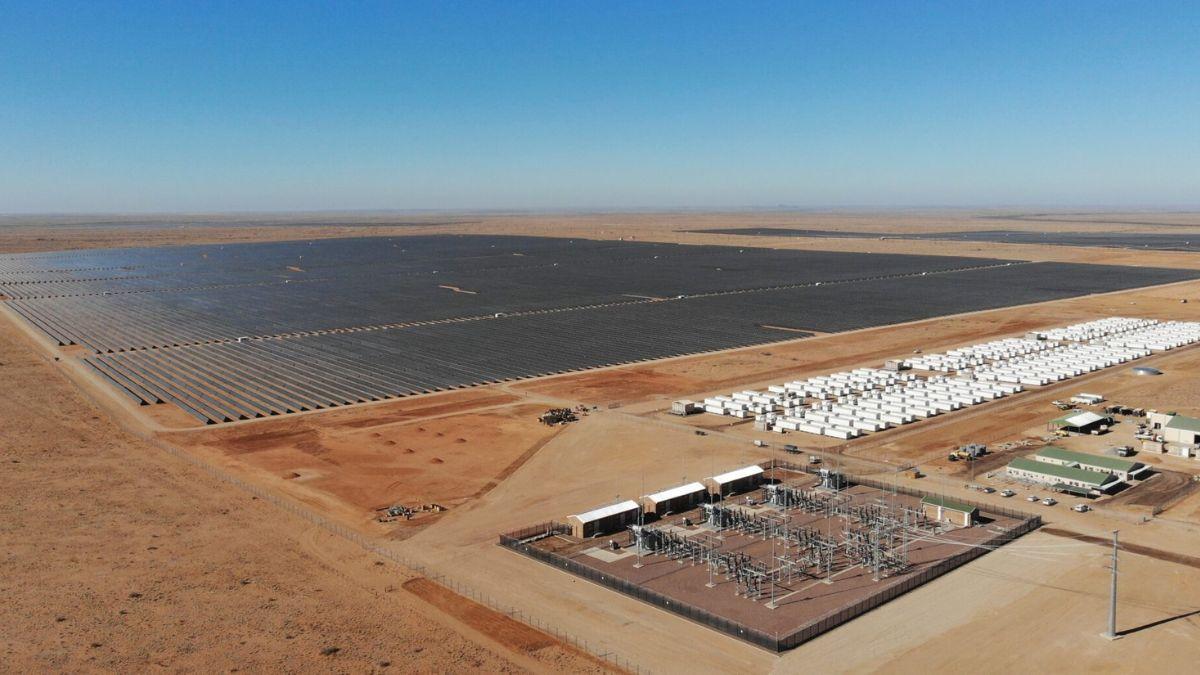
Africa-Press – South-Africa. Officials from the Northern Cape have said the province will focus on renewable energy as a source of economic growth and job creation over the next few years.
The Northern Cape is set to play a key role in South Africa’s move away from fossil fuels towards cleaner alternatives, which will also reduce the country’s dependence on state-owned Eskom.
The Northern Cape’s critical role in this transition was outlined ahead of the inaugural Northern Cape Investment and Jobs Conference (NCIJC), which kicked off on 13 March 2026.
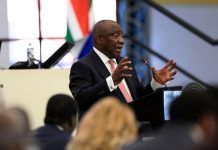
Speaking at a stakeholders’ workshop on 25 March, Northern Cape Premier Dr Zamani Saul said the province serves as a hub for the country’s renewable energy industry, with even more opportunity for growth.
“With solar capacity factors of around 26% and wind at 37%, the province offers performance metrics that continue to attract independent power producers (IPPs) and energy investors from around the world,” Saul said.
Saul said the Northern Cape produces three times more renewable energy than it consumes, accounting for over 60% of the country’s entire green energy sector.
“The province is already central to the country’s IPP landscape,” Saul said. “Roughly 60% of all of South Africa’s IPPs are based in the Northern Cape.”
“This gives the province a critical role in transforming the national grid under the new integrated resource and transmission development plan.”
Saul listed renewable energy as one of six key investment pillars for the province, alongside traditional sectors such as mining, agriculture, industrialisation, infrastructure, and tourism.
At a press conference on the eve of the NCIJC, the Northern Cape MEC for Finance, Economic Development and Tourism, Venus Lorato Blennies-Magage, said the province aims to achieve R200 billion in GDP growth by 2030.
“There’s quite a number of projects that we have secured already in the investment pipeline,” Blennies-Magage said. “The plan is to ensure we get to R200 billion by 2030 in terms of GDP.”
“What that should translate to is sustainable jobs for the people of this province. We’ve set ourselves a target of 60,000 sustainable jobs, and we see that as our medium-term target.”
Transforming South Africa’s energy sector
Northern Cape Premier Dr Zamani Saul
Through greater investment into the renewable energy sector, Northern Cape officials hope to position the province as a driving force in the country’s Just Energy Transition (JET).
Through JET, South Africa aims to shift away from fossil fuels towards cleaner energy production, with a goal of net-zero carbon emissions by the year 2050.
This will also make South Africa less reliant on Eskom, which mainly uses coal-fired power plants to generate electricity, thereby bringing an end to the state-owned utility’s century-old monopoly.
Eskom plans to shut down an estimated 23 GW of electricity generated by five of its coal power stations by 2040, while increasing electricity produced from renewables, gas, hydro and nuclear power.
National Business Initiative CEO Shameela Soobramoney explained how the Northern Cape presents significant opportunities in the clean energy sector.
“The province is endowed with an abundance of critical minerals, particularly manganese and rare earth elements, which are essential for the technologies that will define the global energy transition,” Soobramoney said.
“Combined with the province’s focus on value addition, beneficiation, logistics and industrial development, we see the Northern Cape as a hub for green industrialisation and regional economic growth.”
One of the key projects Saul highlighted was the proposed construction of a deep-water port and railway near the Namibian border.
The Boegoebaai Port Development project aims to create a major exporting hub for green hydrogen and will reportedly cost around R122.9 billion.
The project was first announced in October 2021, with Sasol announced as a key partner in conducting the project’s feasibility study.
Over the next few years, the project seemed to stall with little in the way of updates until the Industrial Development Corporation announced a new tender for the project in November 2025.
This nine-month advisory contract will allow the winner to provide legal advice on capital procurement for the project’s development.
Saul emphasised the importance of projects such as Boegoebaai in developing the economy not only of the Northern Cape but of the whole of South Africa.
“The Northern Cape has some of the best solar and wind resources in the world,” Saul said. “This is not just an environmental advantage, it is also a cost advantage.”
“Our intention is to expand South Africa’s economic footprint – not merely to shift activities from one province to another.”
For More News And Analysis About South-Africa Follow Africa-Press