Africa-Press – South-Africa. South Africa’s tourism industry may see substantial benefit from the war in the Middle East as travel plans are rerouted to the country.
This is according to Business Leadership South Africa CEO Busi Mavuso, who first expressed this view in her weekly newsletter on 19 April 2026.
Mavuso explained that, as travel to the Gulf region has greatly subsided due to the war, tourists have begun seeking alternative destinations.
In an interview with Moneyweb, she said this has made South Africa more attractive to visitors and presents ample opportunities for employment, business development, and economic growth.
“Tourism is one of the key strategic sectors for the country because of its propensity to absorb the majority of the population that is not currently participating in the economic mainstream,” Mavuso said.
The country recorded a record 10.5 million visitors in 2025, contributing roughly 9% to the country’s GDP and accounting for an estimated 1 million jobs.
The government has set a target of attracting 11 million visitors to South Africa during 2026, and hopes to create another 1 million jobs in the sector by 2030.
Mavuso said South Africa can especially benefit from business tourism as companies and expatriate workers seek new bases of operations.
She also emphasised the importance of appealing to conference organisers, many of whom need new venues to host their conferences away from usual hubs like Dubai and Qatar.
However, she said that the country needs to greatly increase its efforts to attract these parties, as other countries are likely to do the same.
“This opportunity will not remain open indefinitely,” Mavuso said. “There are other countries that are seeing this opportunity and wondering how they can benefit from this.”
“Some of the key interventions could include targeted global marketing towards conference organisers. Institutions like BrandSA will have to position South Africa as a destination to benefit from this dislocation.”
Infrastructure remains a hindrance
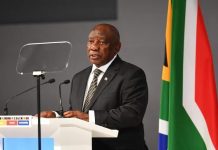
Business Leadership South Africa CEO Busi Mavuso
While there is significant economic opportunity for South Africa’s tourism industry, multiple issues still need to be addressed before the country can fully capitalise.
Infrastructural constraints have placed a significant bottleneck on the passage of visitors in and out of the country, especially at the country’s ports of entry.
Mavuso said that while the country’s visa processing has improved, it remains slower than many competitor destinations and can create capacity issues at airports during peak travel seasons.
Outside of airports, concerns have been growing about deteriorating conditions at some of the country’s most popular tourist destinations.
Writing for SAPeople, travel journalist Mariana Balt explained how potential overtourism can put pressure on the country’s critical infrastructure.
“Kruger National Park receives close to 2 million visitors a year,” Balt said. “Peak periods often stretch facilities, clog roads, and wildlife viewing gets overcrowded.”
“In coastal areas, high-season demand spikes sharply. Municipalities report water shortages and waste backlogs because infrastructure was built for smaller resident populations.”
To address these issues, experts in the tourism sector have called for more diversification to attract visitors away from the current hotspots and reduce the strain on them.
Mavuso similarly stressed this point, saying the country needs to better position provinces outside Gauteng and the Western Cape to benefit from increased tourism.
“You need the Free State and Eastern Cape to benefit,” Mavuso said. “When you look at unemployment numbers in those provinces, that is precisely where we should be positioning this.”
In her newsletter, Mavuso said efforts were being made to promote lesser-known tourist attractions such as Clarens and Cape Agulhas.
She also emphasised the importance of public-private partnerships, such as the Cabinet’s approval of the Tourism Growth Partnership Plan.
Through this initiative, private stakeholders have already injected over R50 million into the tourism sector to develop new tourism projects and infrastructure.
For More News And Analysis About South-Africa Follow Africa-Press