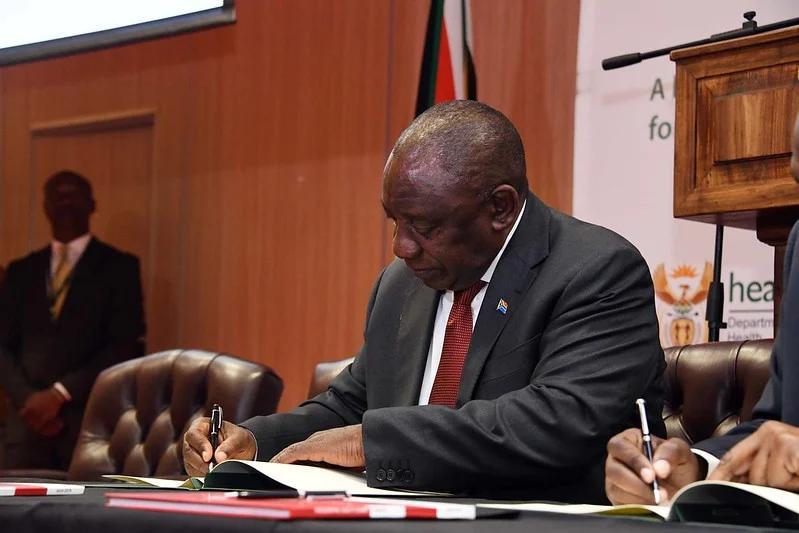
Africa-Press – South-Africa. The National Council of Provinces (NCOP) passed six pieces of legislation during its last plenary session of the sixth term of Parliament on 16 May 2024.
The bills passed by the NCOP which move to President Cyril Ramaphosa’s desk for assent before the end of the sixth administration in two weeks are the:
Electricity Regulation Amendment Bill;
General Intelligence Laws Amendment Bill;
National Water Resources Infrastructure Agency Bill;
Marine Pollution (Prevention of Pollution from Ships) Amendment Bill;
Transport Appeal Tribunal Amendment Bill;
and the Plant Health (Phytosanitary) Bill.
Electricity Regulation Amendment Bill
Proponents of the bill say that aims to revolutionise South Africa’s energy sector, by allowing for a competitive and sustainable electricity industry to meet the nation’s energy demands.
The bill seeks to enhance energy security by diversifying energy production and expanding access to electricity.
Key provisions include transitioning from a reliance on Eskom to a multi-stakeholder energy system, managed by a Transmission System Operator, fostering competition, and modernising the sector.
The bill introduces new roles and regulatory mechanisms to support the unbundling of Eskom and streamline licensing processes under the National Energy Regulator of South Africa (NERSA).
“It further aims to amend the regulatory framework for the electricity industry in response to prevailing conditions in the South African electricity power system and the Department of Public Enterprises’ Roadmap for Eskom in a Reformed Electricity Supply Industry of 2019,” said the NCOP in a media statement.
General Intelligence Laws Amendment Bill
The controversial General Intelligence Laws Amendment Bill (GILAB) is aimed at countering the erosion of the country’s State Security Agency (SSA) by overhauling it.
According to a statement by the NCOP, it “seeks to clarify and introduce new definitions of various national security concepts and terminology relevant to the amendments.”
“The Bill also introduces a robust two-step authorisation process for bulk interception, which requires authorisation within the intelligence service and an independent judicial review [to] ensure that interceptions are conducted within the boundaries of the law based on genuine security concerns,” it added.
However, the bill has been met with fierce opposition.
Media freedom groups have warned that despite several revisions, it “still fails to address its stated aim: to rectify the legal conditions that enabled deeply rooted malfeasance within the SSA and contributed significantly to intelligence services interfering in politics and enabling state capture.”
For More News And Analysis About South-Africa Follow Africa-Press