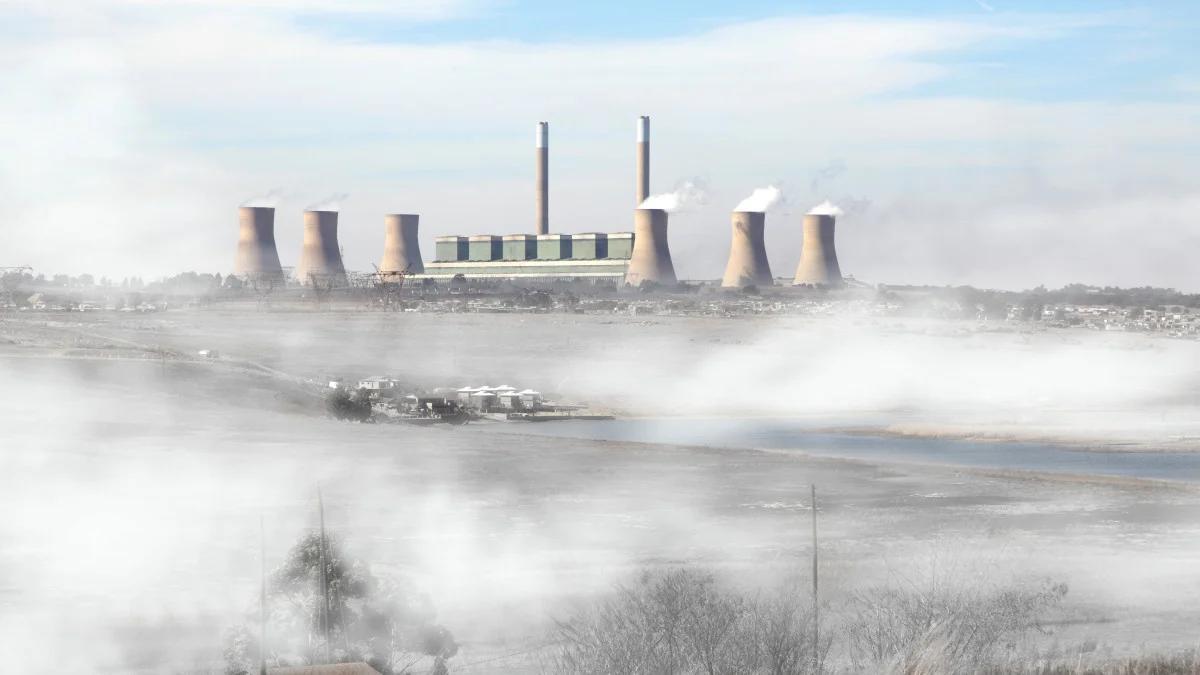
Africa-Press – South-Africa. Power utility Eskom has warned that it will have to raise electricity prices in South Africa if it is forced to implement measures to reduce emissions at the Medupi Power Station.
The group published a draft Cost-Benefit Analysis (CBA) report on flue gas desulphurisation (FGD) at Medupi Power Station for public comment on Tuesday (24 February).
Eskom prepared the CBA to compare the costs of FGD with the ‘saved’ (i.e. prevented) costs of adverse human health effects.
The study posits that the cost of implementing FGD mechanisms at the power station will amount to hundreds of billions of rands over its lifetime, while the health benefits are “orders of magnitude less”.
The utility said the cost of retrofitting so-called wet flue-gas desulfurization units at its Medupi power plant would amount to R383 billion in installation and running costs.
“Unsurprisingly, wet FGD results in the largest health benefit because that alternative removes the largest amount of SO2. Those health benefit values are, nonetheless, orders of magnitude less than the cost of implementing wet FGD at Medupi,” it said.
Even for FGD alternatives, the BCA was well below 1, implying that the monetised health benefit of the reduction in SO2 emissions is substantially less than the capital and operating expenditure for FGD.
By comparison, Eskom noted that an offset programme to supply local communities with clean cooking equipment to replace coal would cost R5.1 billion.
Crucially, being pushed to do FGD, Eskom said the R383 billion cost would have to be recovered through the electricity price.
“The implementation of FGD at Medupi will be expensive…The FGD facility requires a large one-off capital cost and also large operating or ongoing costs,” it said. “The money will be recovered through the electricity tariff.”
South Africans are already paying through the nose for electricity, with tariffs skyrocketing over the past decade or so to account for Eskom’s operational failures.
Energy users will again face another 9% price hike in April, with the same increase expected in 2027.
Eskom risks upsetting the World Bank and activists
While Eskom has put forward a seemingly objective study on the ‘cold maths’ of such a project, there is a long line of stakeholders who will need to be convinced.
Eskom is the world’s largest emitter of the toxic gas sulfur dioxide. Moving away from commitments to cut these emissions now risks breaching a World Bank loan agreement and riling environmental activists.
In 2010, Eskom borrowed $3.75 billion from the World Bank to complete Medupi—one of the world’s largest coal-fired power facilities—on condition that it install pollution-abatement equipment.
In 2021, the utility said it had agreed with the lender to delay the installation to June 2027 from the original 2025 deadline.
Eskom’s reluctance to follow through with the condition now raises serious questions about the agreement. The World Bank and Eskom didn’t immediately respond to queries sent by Bloomberg.
Sulfur dioxide pollution causes respiratory illnesses and acid rain. Environmental and health activists will likely also step in the way of any move to downplay these issues.
Eskom has said that, in addition to being expensive, the FGD equipment would increase water consumption, necessitate the use of large quantities of limestone and produce additional carbon dioxide, a greenhouse gas.
Eskom said the suggested offset program would produce significant benefits.
Clean cooking “delivers pronounced health benefits by reducing household air pollution,” Eskom said. “Estimated health benefits significantly exceed implementation costs by more than 30 times.”
Lauri Myllyvirta, lead analyst at the Helsinki-based Centre for Research on Energy and Clean Air, told Bloomberg that the study is flawed.
“They’ve carefully excluded all significant population centres from the study,” she said. “The benefit of FGD is grossly underestimated.”
The study is open for public comment, with the window closing on 25 March 2026. All documents can be found on Eskom’s website.
Eskom also plans to hold an online public information meeting to discuss the report on 10 March
2026, 14h00 to 16h00.
With Bloomberg
For More News And Analysis About South-Africa Follow Africa-Press