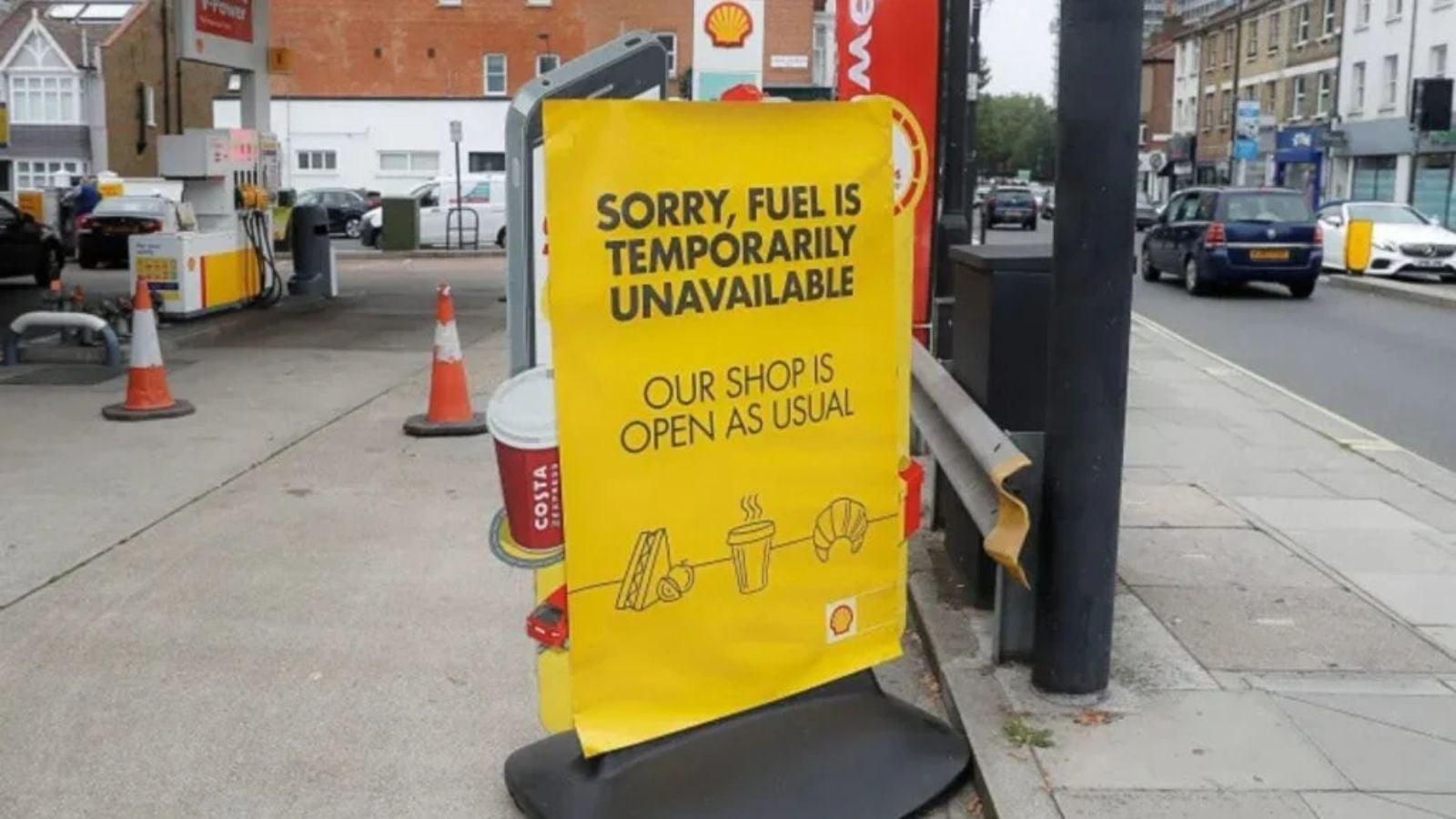
Africa-Press – South-Africa. South Africa’s Cabinet attributed the dry fuel stations across the country to logistics constraints caused by panic buying and fuel hoarding.
The government discouraged South Africans from panic buying and fuel hoarding amid concerns that the country’s fuel reserves would run out as the Middle East conflict continued.
These statements were recently made regarding a Cabinet meeting held on 25 March 2026 and the Special Cabinet meeting on 1 April 2026.
At this meeting, the Cabinet assured the public that South Africa’s fuel supply remains adequate in the immediate term. It explained that South Africa only relies on the Middle East supply for refined products.
According to recent data from Momentum Investments economists Sanisha Packirisamy and Tshiamo Masike, only around a quarter of South Africa’s crude oil imports originate directly from the Persian Gulf.
The majority of South Africa’s crude oil imports come from other African nations, such as Nigeria, Angola, and Ghana.
However, the country has become increasingly reliant on diesel and petrol shipped from Gulf refining hubs, particularly after several domestic refineries were shut down over the past decade.
Therefore, Packirisamy and Masike explained that any disruption to shipping through the Strait of Hormuz could still have meaningful knock-on effects for fuel availability and prices in South Africa.
“As a price-taker in the global oil market, the upward pressure on local fuel prices acts as a significant drag on consumer confidence and raises local transport costs,” they said.
Aside from raising prices, the effective closure of the Strait of Hormuz due to the Middle East war has also led to concerns of a fuel shortage.
South Africa is a net importer of oil, as the country’s domestic refining capacity has been severely diminished over the past decade.
Therefore, should the war continue for much longer, there are concerns that South Africa’s fuel reserves and local capacity may not be sufficient to meet demand.
These fears have been heightened by petrol stations across the country running out of diesel or temporarily limiting sales over the past month.
The charts below, courtesy of Momentum Investments, show the sources of South Africa’s fuel imports.
The reason for dry stations, according to Cabinet
Amid these concerns, the Cabinet assured South Africans that fuel supplies in the country remain stable. It said the current dry fuel stations are a result of “logistics constraints due to panic buying and fuel hoarding”.
“South Africans are discouraged from panic buying and fuel hoarding,” the Cabinet said in its meeting statement.
However, it added that President Cyril Ramaphosa has established a Ministerial Task Team to coordinate the government’s response to the war’s impact on fuel supply to mitigate the impact on the cost of living, fuel and food security.
This Task Team consists of the Ministers of Mineral and Petroleum Resources, Finance, Transport, Trade, International Relations, Agriculture, Energy, Environment, and the Presidency.
“As an immediate intervention, the Task Team recommended the reduction in the fuel levy for the immediate period to alleviate the impact on the fuel price increases that took effect on Wednesday, 1 April 2026,” it said.
In March, due to higher global oil prices and a weaker rand, the Central Energy Fund signalled an under-recovery of around R5.82 per litre for petrol and about R10.27 per litre for diesel in April.
This would have significantly raised the price South African motorists pay at the pumps, especially as it coincided with a fuel price levy hike scheduled to take effect at the start of the month.
However, on 31 March, Finance Minister Enoch Godongwana announced a temporary R3 per litre relief on the fuel levy for April, with additional measures being considered for May and June.
This has brought significant relief to South African motorists, though Packirisamy and Masike warned that energy-led inflation resulting from fuel price hikes could become broad-based and filter into food prices.
It should be noted that a two-week ceasefire between the US and Iran has been announced, and safe passage through the Strait of Hormuz should be possible during this period.
For More News And Analysis About South-Africa Follow Africa-Press