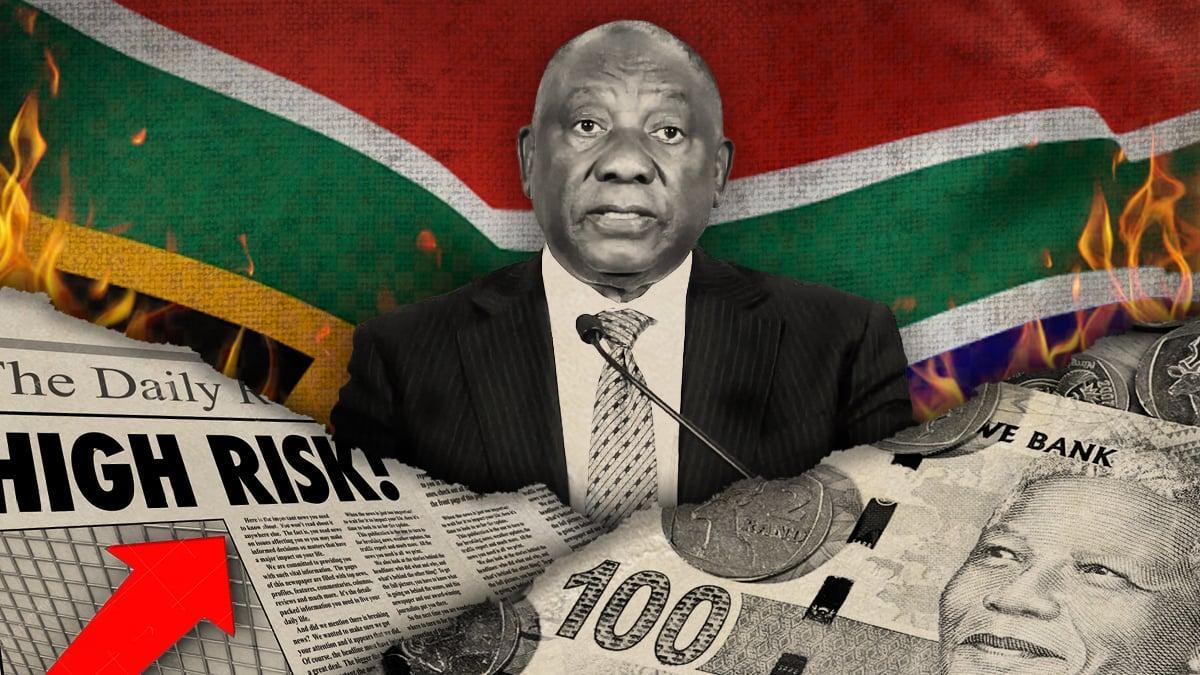
Africa-Press – South-Africa. 2026 is shaping up to be a pivotal year for South Africa, with the country’s reform efforts bearing fruit and putting it on track to achieve 2% growth in the coming years.
However, if reforms stall and political instability returns, the country risks slipping back into weak growth and undoing the gains it has made over the past year.
Citadel chief economist Maarten Ackerman explained that, for South Africa, 2026 could prove decisive. The country is seeing genuine green shoots, backed by positive economic signals, that point toward a turnaround.
South Africa has seen its first credit rating upgrade in over two decades from S&P, has been removed from the Financial Action Task Force’s grey list, and is on track to stabilise its state debt-to-GDP ratio in the current fiscal year.
Ackerman also pointed to the Government of National Unity (GNU) as a positive development, with the coalition government having brought relative political stability.
At the same time, he said improved energy security and private-sector participation are starting to ease long-standing constraints.
“There are genuine green shoots,” Ackerman says. “The turnaround in electricity supply shows what is possible when policy certainty and private capital align.”
However, he warned that many of South Africa’s recent gains were partly supported by favourable global conditions, including a commodity upswing.
Coronation’s head of fixed interest, Nishan Maharaj, has issued a similar warning, specifically with regard to South Africa’s fiscal health.
He explained that while the National Treasury expects South Africa’s debt-to-GDP ratio to stabilise in the current fiscal year, this has been driven by short-term factors rather than sustained financial improvements.
Therefore, without faster economic growth, he argued that the Treasury’s painful fiscal consolidation efforts are unlikely to translate into a sustainable reduction in South Africa’s debt burden.
“This is a make-or-break year,” Ackerman said. “If reform stalls or political instability returns, South Africa risks slipping back into sub-1.5% growth.”
“If momentum holds, we can start rebuilding capacity and investor confidence.”
He noted that Citadel remains cautiously optimistic that South Africa can edge closer to 2% growth over the next three years.
However, this will largely depend on whether investment conditions improve and infrastructure bottlenecks are eased.
The game has changed
US President Donald Trump
South Africa’s hopeful turnaround comes at a time when the global world order is shifting, with heightened volatility and uncertainty having become the norm.
Ackerman explained that US President Donald Trump is remaking the world order, with his protectionist and ‘America First’ policies set to significantly change global trade and diplomatic relationships.
At the same time, he explained that geopolitical power is becoming increasingly multi-polar, with rival blocs such as the G7 and BRICS competing for influence, resources and capital.
In light of this, 2026 is shaping up to be a year where geopolitics – rather than economic fundamentals alone – will drive market volatility, capital flows, and investor confidence.
This has notable implications for emerging markets like South Africa, with the country’s open, export-dependent economy making it extremely vulnerable to external shocks.
“We are no longer operating in a single globalised economy,” Ackerman said. “Economic fragmentation has become structural.”
“Countries are reshaping supply chains, prioritising regional trade partners and reassessing strategic resources, and that transition will define markets in 2026.”
For investors, this means they should expect heightened volatility in 2026 as markets respond to political developments, policy shifts and structural realignments.
“Periods of uncertainty are when discipline matters most,” Ackerman said. “Valuations, diversification and a long-term financial plan are essential in a world where shocks are becoming more frequent and less predictable.”
So far, South Africa and local investors have benefited from heightened uncertainty, as the prices of safe-haven assets like gold and platinum group metals have surged over the past year.
This has benefited South Africa’s commodity-heavy economy by boosting its trade balance, the rand and the JSE as mining giants listed on the exchange surged in 2025.
The JSE All Share Index is up nearly 40% over the past year, driven by the commodity boom that is still ongoing, despite a recent fleeting sell-off in precious metals.
For More News And Analysis About South-Africa Follow Africa-Press