Africa-Press – South-Africa. Auditor-general’s office hails increased accountability but Public Service Commission says financial misconduct is on the rise in Gauteng departments
While the office of the auditor-general (AG) in Gauteng has lauded departments for improved audit outcomes, the Public Service Commission (PSC) painted a different picture.
Addressing members of the Gauteng legislature’s standing committee on public accounts (Scopa) on Thursday, Dumisani Cebekhulu from the Gauteng AG’s office said there had been an overall improvement in the 2022/2023 financial year audit outcomes in the province. He said compared with the previous financial years, most provincial departments had improved their financial standings.
“It’s a message that affirms the increased accountability in the Gauteng provincial government in terms of how the different departments and entities have accounted for public funds,” he said.
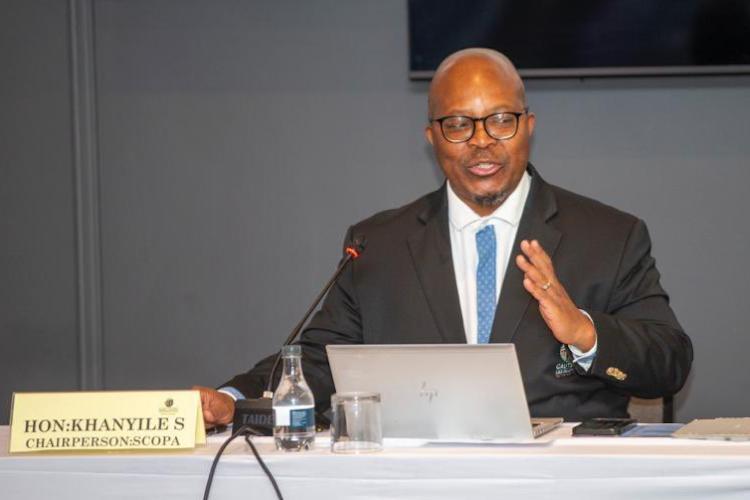
Led by chair Sochayile Khanyile, Scopa convened its annual breakaway session at the Catalyst Hotel in Sandton to allow the committee to gain deeper insights into the state of financial governance in the province.
Cebekhulu told the committee that if there was discipline in terms of attending to internal control, and heightened oversight by the executive and senior leadership of the departments and entities, it was possible to obtain clean audit opinions.
“The accounting officers need to continue to track and monitor the financial control discipline to continue to sustain these audit outcomes. Sustaining these will become absolutely critical,” he said.
The financial health of the province was viable and reflected good discipline in effective budgeting and spending, he added.
The PSC’s Vusi Mavuso, in his presentation on the state of the public service, indicated that serious defects with regard to officials charged for misconduct had been detected.
Instead of charging officials with financial misconduct, departments were sometimes charging them with general misconduct, which defeated the purpose and efforts to recover financial losses, he said.
“The whole question of the recovery of the cost is not actually done because the [officials are] charged with general misconduct. Over the past five years, there have been substantial improvements in the number of cases that have been finalised,” he said.
Mavuso said for the financial year 2022/2023 they had 37 cases, while during the previous financial year they had about 56 finalised cases of misconduct.
The PSC investigates, monitors and evaluates processes in public administration, proposes measures to be taken, and gives advice.
“In terms of the finalised cases of financial misconduct, according to the Public Finance Management Act and Treasury regulations, departments are required to report as soon as the disciplinary proceedings are finalised, to the PSC about the outcome of the cases,” said Mavuso.
During the 2022/2023 financial year, the irregular expenditure spiked from 13% to 19%, he said. Unauthorised expenditure has become a source of concern as it is higher than expected.
“If you were to look at the trajectory that has been there, there has been 0% for the past four years but in this particular financial year it has increased.”
The PSC highlighted that financial misconduct cost Gauteng about R74m in the financial year, with the bulk coming from the e-government department. The amount recovered during the financial year was more than R45,000, said Mavuso.
Committee members asked why it appeared as if there was a contradiction between the PSC and AG reports. Mavuso said it may depend on the nature of the information provided to the PSC and that provided to the AG.
“Sometimes when we probe we find out that indeed there has been unauthorised expenditure, whereas it could have been reported differently to the AG.
“Perhaps is the nature of our own investigations that elevates the kind of responses that we get. I am sure we can also have an interaction with the AG’s office and be able to find common ground on how best we can ensure that there doesn’t appear to be a contradiction,” said Mavuso.
Cebekhulu said while there may be a potential contradiction between themselves and the PSC, their point of departure was what was submitted by the departments and the entities in terms of their financial statements, annual performance reports and annual reports.
“I think let’s take the opportunity to engage with the PSC so that we can indicate areas where they need to perhaps consider looking at the information in the manner that we would have looked at it from our side,” he said.
For More News And Analysis About South-Africa Follow Africa-Press