Africa-Press – South-Africa. Although the government faces serious financial pressure, South Africans should not expect any significant announcements in the upcoming Medium-term Budget Policy Statement (MTBPS).
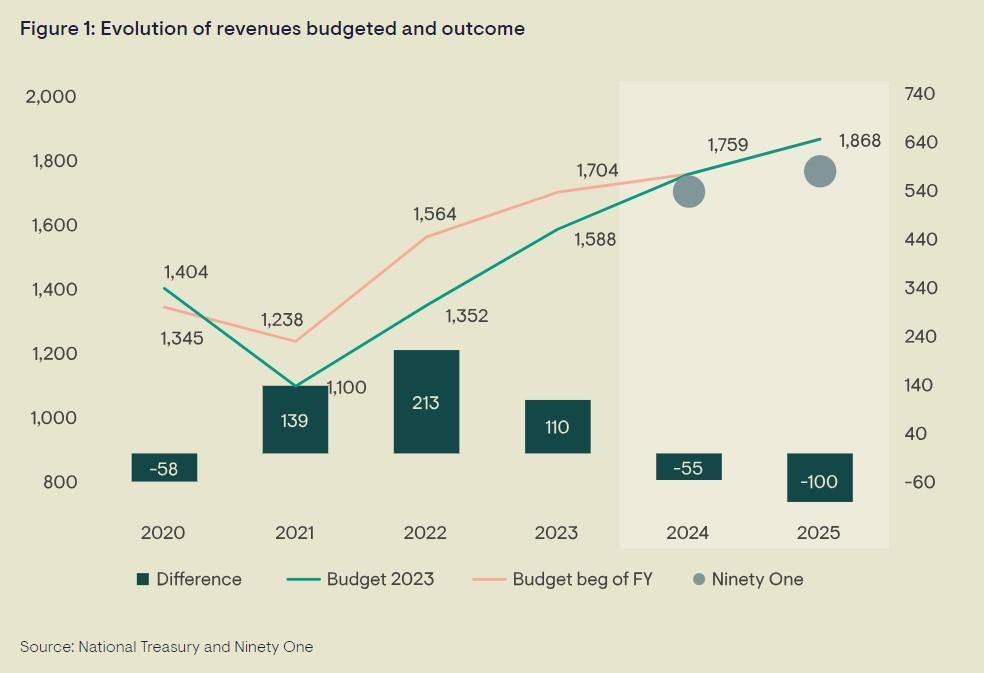
According to Sisamkele Kobus from Ninety One, the National Treasury’s budgetary projections for revenues in last year’s MTBPS were far too optimistic, as the commodity tailwind is undoubtedly over.
“Notwithstanding the stellar job that SARS has been doing to rebuild the institution and therefore increase efficiency in revenue collections, we believe National Treasury will report a negative hit to revenues in the coming MTBPS,” Kobus said,
However, the revenue slippage for this fiscal year is expected to be R50 billion, far below the group’s initial fear of a R100 billion slippage earlier this year.
This is because tax – except company income tax, which is running 115% lower than last year – has been performing relatively well, with personal income tax running at an 8% growth rate year-to-date.
Although National Treasury will still report a hit to revenue, it is better than previously feared.
The economy has also performed better than expected, as stage 6 load shedding at the start of the year created serious concerns.
“Given the intensity of load shedding, however, which was expected to persist throughout winter, it has been a lot more resilient,” Kobus said.
That said, spending is still expected to be far higher than the pencilled R2.035 trillion, as the treasury’s initial prediction of only a 1.6% wage hike ballooned to a 7.5% increase following wage negotiations in April.
“The compensation number for the fiscal year 2022/23 stood at R690 billion, which included a cash gratuity of R20-23 billion. This cash gratuity was not included in the baseline (the baseline excluding the cash gratuity for last year, is approximately R668bn),” she said.
“The expected increase is 7.5% to the base of R668bn, resulting in a wage cost of R718bn for 2023/24. Treasury’s expected budget for this year was R701bn, thus amounting to slippage of R17bn this fiscal year.”
“Thus, the total cost to Treasury can be broken down into the R20-23bn cash gratuity, which now forms part of the base, as well as the R17bn slippage.”
Spending pressure also goes beyond the wage ball, as the nation’s State-Owned Enterprises continue to be a severe drain on finances.
There is currently R30 billion in the budget for SOES – excluding the amount committed to Eskom – but it is becoming clear that they may need additional funding.
For More News And Analysis About South-Africa Follow Africa-Press