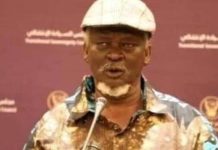
JUOL NHOMNGEK DANIEL
Africa-Press – South-Sudan. The persistent communal violence in South Sudan’s Lakes State is often described as spontaneous, cultural, or “inter-ethnic.”
This framing is misleading. What unfolds is not random disorder, but a deeply structured crisis shaped by militarisation, political neglect, economic scarcity, and the erosion of legitimate authority. The violence, centered largely among the Dinka sub-clans such as the Agaar, the Gok, the Ciec, (Aliab, which does not feature much in the communal violence), the Reel, the Beli, and the Bongo (who are not of the Dinka descent), has endured because the systems meant to regulate conflict have collapsed, while weapons and grievances have multiplied.
Decades of civil war (1983–2005) transformed traditional cattle raiding into organised, militarised violence. Youth cattle guards were armed and politicized by rival factions, leaving behind a society where firearms became normal tools of dispute resolution. This legacy entrenched a revenge-based logic. A single killing or raid rarely ends with justice, but triggers cycles of retaliation that can last for years.
Between 2013 and 2026, Lakes State witnessed repeated outbreaks of intra and inter-communal violence, particularly in Rumbek Central, Rumbek North, Cueibet, Yirol West, and Yirol East counties, and the border areas with Warrap and Unity State, leaving hundreds dead and entire communities displaced.
At the heart of these conflicts lies competition over cattle, land, and water. Cattle are not merely economic assets; they underpin social status, marriage, and identity. Exorbitant bride prices pressure young men to raid, while dry-season migration intensifies disputes over grazing routes and water points. These pressures are magnified by widespread poverty, insecurity that denies communities productivity, lack of government priorities that cause rampant unemployment, and the near-total absence of alternative livelihoods.
Where governance is weak, violence becomes a rational, if tragic, means of survival and social advancement.
Yet communal violence in Lakes State cannot be understood in isolation from the national politics. Although often portrayed as local, its intensity consistently rises during periods of elite competition and political transition. The removal of governors, factional disputes within the signatories to the Revitalised Agreement on the Resolution of the Conflict in South Sudan (R-ARCSS), and defections among military elites create power vacuums at the local level. These moments unsettle already fragile authority structures, allowing latent clan rivalries to erupt. Peace agreements in South Sudan have largely reorganised power among the elites without transforming how it is exercised or extending meaningful protection to the civilians.
Governor Rin Tueny Mabor’s tenure from 2021 to early 2026 demonstrated both the possibilities and limits of a security-first approach. His “Lakes First” agenda, combining firm law enforcement, special courts, and uncompromising public order measures, brought a level of stability unseen in years. Lakes State became one of the safest urban centres in the country. Importantly, his government derived legitimacy from extensive grassroots consultations, engaging chiefs, the youth, women, and community leaders in shaping local resolutions.
However, the system became overly personalised. Institutions remained dependent on executive authority rather than functioning independently. When Governor Rin was removed, the security architecture faltered, and violence resurfaced almost immediately in January 2026, particularly among sections of the Agaar community. This exposed the central lesson of Lakes State: Force can suppress violence, but only institutions can sustain peace.
History offers guidance. The Pankar Peace Council of 2004 showed that community-led mechanisms, early warning systems, cattle restitution, negotiated grazing rights, and empowered traditional authorities can de-escalate violence when properly supported. Today, similar principles must be institutionalised, not improvised. Peace requires aligning customary courts with constitutional standards, ensuring chiefs command genuine moral authority, and integrating youth and women into decision-making. Traditional leaders remain custodians of land, water, and social harmony, roles that state institutions alone cannot replace.
Moving forward, Lakes State needs transformative leadership that prioritizes continuity, accountability, and institutional depth over political gain. Governor Madhang Majok Meen’s pledge to sustain the “Green Book” vision must translate into strengthening courts, professionalizing local police, harmonizing intelligence with communities, and reviving early warning networks across county and state borders. Civilian disarmament must be comprehensive, credible, gradual, and accompanied by economic alternatives, agriculture and food security, healthcare and education services, and physical infrastructure that can be increased by state and self-employment programmes, and resource management. It will fail, as it has repeatedly.
Lasting peace in Lakes State will not emerge from describing violence as “communal,” or from episodic crackdowns. It will come from restoring trust in justice, rebuilding moral authority, and anchoring security in institutions that outlive individual leaders. Without this shift, the cycle of revenge will persist, quietly waiting for the next political rupture to ignite it.
Source: Radio Tamazuj
For More News And Analysis About South-Sudan Follow Africa-Press