
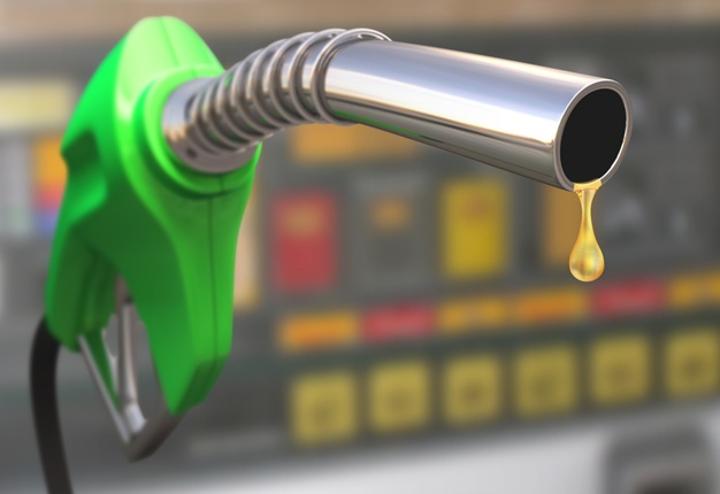
Africa-Press – Tanzania. ANALYSTS have lauded President Samia Suluhu Hassan for her bold decision to lower eight levies and charges on fuel related products, saying the move will create a huge lifeline for ordinary citizens.
They said the move will spare the country form hitting double digit inflation and will relieve Tanzanians, who would otherwise had to dig deeper into their pockets for the services.
On Tuesday, the Head of State directed government agencies that collect levies from fuel, totaling at 102bn/- annually, to reduce their levies, the directive that was immediately heeded.
Following the move, some economists welcomed the move for the levy reduction on fuel pump prices, saying without the relief, the prices would have been exorbitant and spin the country to double digit inflation.
“The wise government cuts taxes to avert the prices to hit the roof and spins the country into crisis…but the levy cut will give a short term relief to motorists in country,” Dr Hildebrand Shayo, an economist-cum-investment banker told the ‘Daily News’ on Wednesday.
Currently, globally, fuel price has increased to 80 US dollars per barrel and this led to major oil producing nation to convene to ascertain the implication of trend and what is needed to be done to control supply to the market.
“Much as users celebrate implementation of measures and directives of the President Samia to reduce unnecessary levies viewed as nuisance, it is important to bear in mind, fuel prices can only be kept at minimum up to a certain point because prices in the world market may continue to shoot up,” Dr Shayo warned.
Dr Ellinami Minja, Senior Lecturer in Finance and Economics at the University of Dar es Salaam (UDSM) pointed out that fuel prices are determined by three things, including demand and supply in the world market.
Another factor he said is transport costs from petroleum exporting countries to Tanzania. When fuel reaches the local market, now levies and other transport costs within the countries come in.
He said what the President has done to direct reduction in levies was good move to reduce prices, however, it was unfortunate that her good intention has come at a time when prices in the world market has also gone up.
“What has happened is that a good thing and a bad thing have come at the same time, and we cannot do anything over world market prices, this is why people cannot feel the impact of the President’s decision,” Dr Minja argued.
He, however, noted that if the good decision of the President could come when prices in the world market remained the same, then people could see reduction of prices in the local market.
The Association of Tanzania Oil and Gas Service Providers (ATOGS) also commended President Samia for the bold decision to lower eight levies and charges on fuel related products.
The association believes that lowering these levies and charges will among other things reduce the high costs of living that many Tanzanians have endured in the past three months due to the exorbitant rise of fuel related products, the ATOGS statement stated on Wednesday.
“ATOGS would like to congratulate President Samia for her directives to lowering of eight levies and charges on fuel related products,” the statement said.
On other hand, ATOGS believes that, lowering these levies not only create a huge lifeline for ordinary citizens but will also stimulate business and commercial activities of the economy which have been hardest hit by the upward rise of fuel products in the past three months.
“ATOGS applauds the President decision for coming up with this innovative idea, and it is our sincere hope that it will bring in some extraordinary outcomes for both Tanzanians and the business sector dealing with oil and gas,” the statement said.
According to Global Petrol Prices website, the country, despite of having a number of levies on petrol, has the lowest price in East Africa region as of last week.
The country on average petrol price was at 2,427/-, followed by Rwanda at 2,511/- and Uganda at 2,739/- a litre. Kenya had the highest at 2,848/- a litre while the second highest was Burundi at 2,772/-.
The website showed that the average price of gasoline around the world was 2759/-per litre.
“As a general rule, richer countries have higher prices while poorer countries and the countries that produce and export oil have significantly lower prices,” the website said.
The top countries with highest petrol prices are Hong Kong 5,916/-, Netherlands 4,966/- and Norway 4,987/-. One notable exception is the US which is an economically advanced country but has low gas prices at 2,163/-.
According to the Energy and Water Utilities Regulatory Authority (EWURA), some of the levies slashed on fuel products include Wharfage charges from 22/- to 15/- per litre as well as removing VAT, Railway Development levy, Customs processing fees (from 4.8/- per litre to a standard charge of 20m/- per oil vessel, instead of charging per litre), Weights and Measures fee (1/- per litre slashed to standard charges of 7m/- per oil vessel instead of charging per litre).
Others charges slashed are the Tanzania Bureau of Standards (from 1.24/- per litre to a standard charge of 12.8m/- per oil vessel), Tasac Charges (from 3.54/- per litre to a standard of 20m/- per oil vessel), Ewura Fee (from 5.54/- per litre to 3.06/- per litre), Fuel Marking (from 14/- to 7/- per litre), Demurrage costs and Surveyors’ costs.