

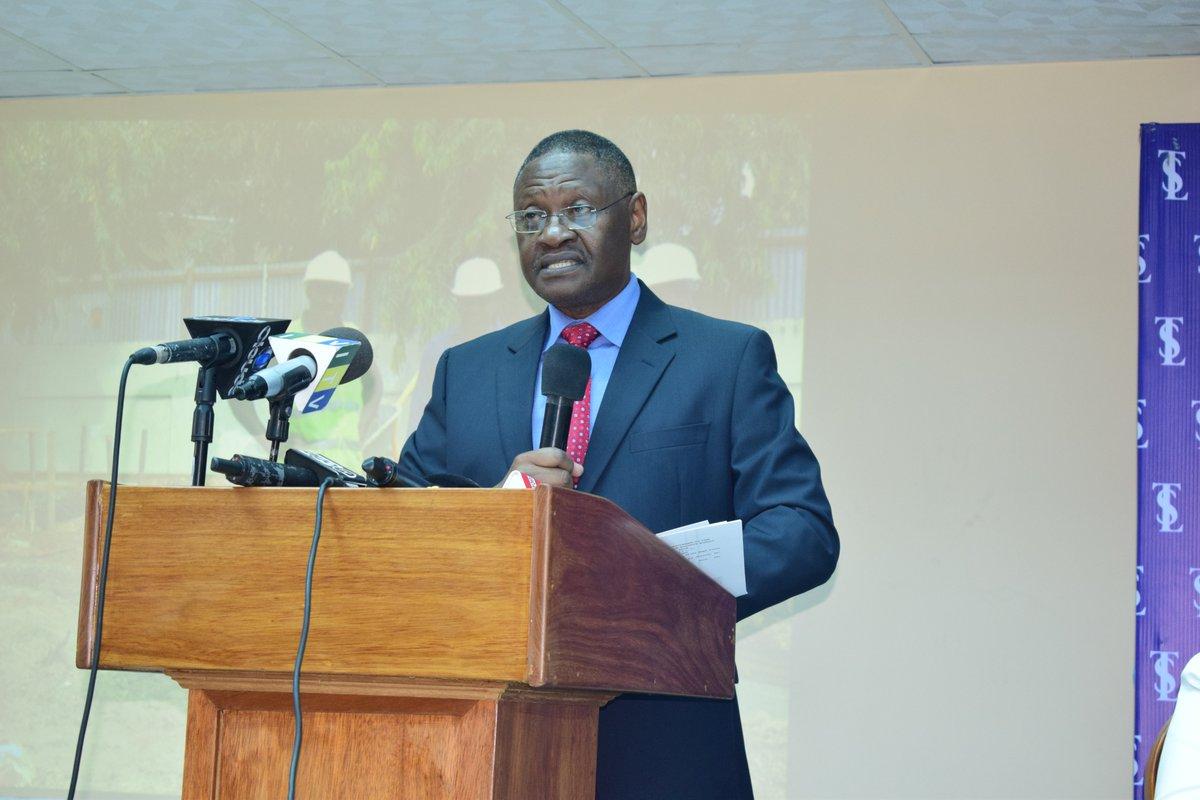
Africa-Press – Tanzania. THE Chief Justice, Prof Ibrahim Juma has appealed to all judicial officers to observe justice, while attending to people, who come to court to pursue justice regardless of their economic or social status in the country.
According to a statement issued by the Judiciary’s Information and Communication Unit yesterday, Prof Juma gave this appeal on Monday while addressing a meeting bringing together the Judicial Service Commission members and judicial staff of the High Court, Iringa Zone.
The Chief Justice, who is also the Chairman of the Commission, told the officers that the Constitution of Tanzania has given the Judiciary, as one of Pillars of State, a great role in overseeing justice issues. Therefore, he said, judicial officers must fulfill that role according to the law.
“We have a great responsibility to uphold justice and the country’s Constitution requires us not to delay access to justice without good reason.
Therefore, when you perform your duties well, you give life to the Constitution,” he pointed out. Prof Juma said that the issue of justice is an important part of the implementation of the National Development Vision, which focuses on the existence of peace in the community.
It was his view that when officers of the Judiciary fully fulfill that responsibility they will make a significant contribution to the implementation of the Vision. According to him, when Judges and Magistrates decide cases in a timely manner, they would enable the Judiciary to contribute to building the national economy as citizens would have more time to engage in other productive activities.
“Let us not forget that when we give justice in time we contribute to the development of our Nation,” stressed the chief justice, who is the head of such a third pillar of state.
Regarding the use of Information and Communication Technology (ICT), Prof Juma said that the Judiciary has invested heavily in that area, thus, there was a need for judicial officers to maximize such service to coincide with the 21st century of the Fourth Industrial Revolution.
The Chief Justice added that the use of ICT would increase transparency, efficiency and build public confidence in the Judiciary of Tanzania.
Meanwhile, the Attorney General, Prof Adelardus Kilangi, has advised all judicial officers in the country to perform their daily duties by upholding the ethical principles, which are expected from them. “We must know that every time society looks at us, it looks at how we work.
Therefore, you have to work with highest degree of professionalism, understanding and adherence to all values and norms set out in accordance with laws, regulations, procedures and even traditions,” Prof Kilangi said.
He said that if judicial officers would work ethically, they would make a positive contribution to the development of the nation as a whole and contribute to a stable society.
The leader also called on the Ethics Committees of Regional and District Judicial Officers to be guided by ethics in the performance of their duties.
Members of the Commission have begun visits to Iringa Region and will later move to Njombe, Mbeya and Songwe Regions with the aim of publicising it and educating members of the Regional and District Ethics Committees as well as Judicial stakeholders.
The Judicial Service Commission is established in accordance with Article 112 (1) of the Constitution of the United Republic of Tanzania of 1977 read together with the Judiciary Administration Act No. 4 of 2011.
It was established for the purpose of overseeing the key issues pertaining to the Judiciary.