

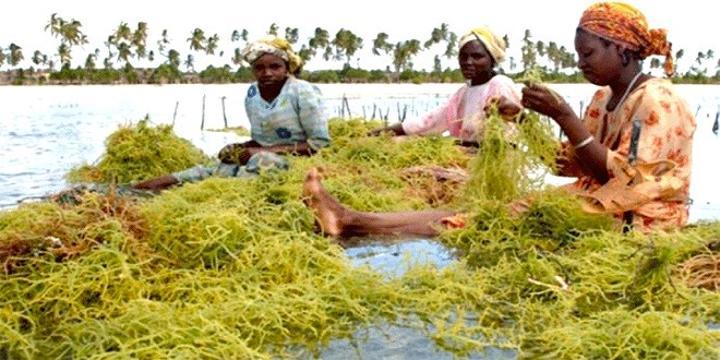
Africa-Press – Tanzania. SEAWEED farmers in Boma Subutini, Mkinga District, Tanga Region, have urged the government to intensify action against kokoro fishing, warning that the practice is harming marine life, damaging seaweed farms and slowing progress in the blue economy.
The appeal came during a dialogue session held recently in Tanga, bringing together fishers and seaweed growers under a capacity-building project implemented by the Mkinga Paralegal Association (UWASHEM) with support from 4H Tanzania and We World.
Farmers said kokoro nets, which indiscriminately sweep up small fish, corals and seagrass, pose a major threat to the district’s rapidly growing seaweed sector, which mainly employs women and youth.
According to district agricultural reports, Mkinga produces an estimated 2,500–3,000 tonnes of dried seaweed annually, contributing significantly to Tanga’s position as one of Tanzania’s top seaweed-producing regions.
The crop is a key foreign-exchange earner and an anchor commodity in the national blue economy agenda. But farmers warn that these gains are under threat.
Mwaita Miraji, a seaweed farmer from Boma, said kokoro continues to destroy seaweed lines and marine breeding sites, pushing growers into losses.
“We thank the government for cracking down on illegal fishing, but we now ask them to apply the same force to end kokoro fishing, which is destroying our crop and livelihoods,” she said.
Another farmer, Gonda Mwaita, called for tougher penalties, arguing that current fines are too low to deter offenders.
“A fisher pays only 500,000/- after destroying an entire seaweed farm. This is not a fine, it is encouragement. Penalties must be much strict and harsher to discourage offenders,” she said.
Local leaders echoed the concerns. Boma Ward Executive Officer Hadija Mganga said farmers have suffered repeated losses due to clashes with fishers using prohibited gear.
She noted that Boma is the “epicentre” of seaweed production in Mkinga, hosting a community-run drying facility and nearly a dozen active producer groups, but tensions between fishers and growers threaten stability.
“When conflicts erupt, both sides suffer and the ward’s economy suffers. Strengthening Beach Management Units (BMUs) is critical because they are the frontline institutions,” she said.
UWASHEM Project Coordinator Salehe Sokoro said the organisation has taken note of all issues raised and will work with local authorities to ensure that community structures are empowered to address illegal fishing and resource-use conflicts.
Seaweed farming is one of Tanzania’s fastest-growing blue-economy industries, employing over 30,000 farmers nationally, most of them women.
Tanga Region, particularly the Mkinga, Pangani and Muheza coastlines remains a top producer of the spinosum and cottonii varieties for export.
Farmers say protecting the crop from destructive fishing is essential not only for their incomes but also for Tanzania’s wider marine-based economic ambitions.