
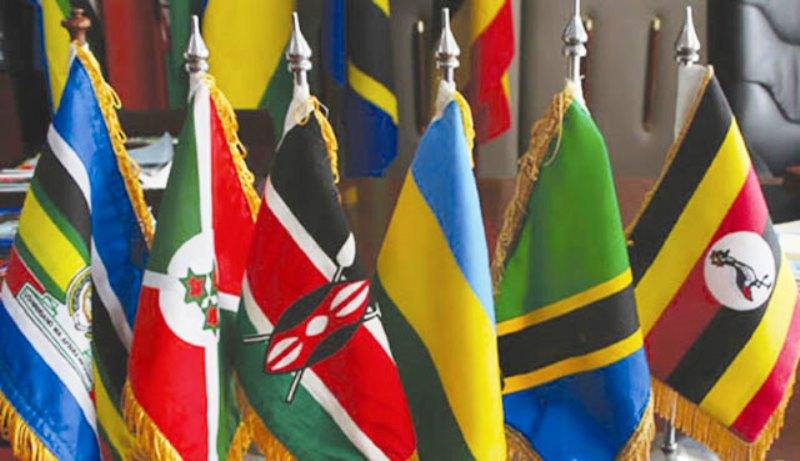
Africa-Press – Tanzania. THE incoming East African Community (EAC) Secretary General, Dr Peter Mathuki has expressed an optimism that the bloc will be transformed for better and move forward as one, with candid cooperation internationally.
On cards, according to Dr Mathuki, is enhancement of the industrialisation agenda that has already taken root in most of the six-member countries and will ensure that the Community is private-sector led and truly people-centred.
Speaking at an online event themed ‘Industrial Transformation-Opportunities’ ahead of ‘Hannover Messe’, Dr Mathuki noted that there will be a strategic road to that end, adding that EAC will need cooperation from some ‘friends’ such as Germany that has been offering support for a while.
Dr Mathuki who is currently the Chief Executive Officer (CEO) of the East African Business Council (EABC) – an apex body for the private sector in the EAC, said there will be strengthening of the institutional framework bringing in all member states to work closely.
“We have already adopted guidelines as a Community, so next we have to adapt to new circumstances …there will be a strategic road to that end and we need our German friends and we have to enhance our industrialisation process,” said Dr Mathuki whose EABC has been working closely with Germany Government’s institutions.
He said after galvanising industrial production as well as in agriculture and other areas, weight would be thrown at improving intra-EAC trade, ensuring growth in trade links in African continent and world over, by making sure that all EAC partner states read on the same page.
Touching on the Covid-19 pandemic, Dr Mathuki is of the view that there needs to be harmonisation on the way member states respond to the pandemic, in terms of tracing, testing as well as the issue of vaccination.
“Covid is true so we have to be determined on how to deal with it as a bloc because there are movements of people in the Community from one country to another.
I think vaccination is a matter of priority. Also openness is one of the important values that we should embrace as a region so that we can move forward,” said Dr Mathuki.
His comments come just a few days after Tanzanian President Mama Samia Suluhu Hassan announced that she would be setting up a Coronavirus taskforce that would look into the whole matter in its width and advise the Government on how to go about it.
Dr Mathuki said that although the Covid-19 pandemic is a huge challenge, it brought with it some opportunities that EAC has to tap.
He also said that EAC has to tap opportunities arising from skirmishes between big economies of the world.
He will be taking over the SG Office from Ambassador Liberat Mfumukeko at a ceremony that has been planned to take place at the EAC Headquarters at Arusha on April 23rd this year.
The Head of International Cooperation, Security Policy, Raw Materials and Space at the Federation of German Industries (BDI), Mr Matthias Wachter commended Dr Mathuki upon his appointment to the post of EAC SG.
Mr Wachter hailed Dr Mathuki for accomplishing a lot as EABC CEO, working well with BDI for prosperity of business in Tanzania, Kenya, Uganda, Rwanda, Burundi and South Sudan.
He said several projects went well under Dr Mathuki and is of the opinion that he will successfully steer EAC into affluence.
“Congratulations to Dr Mathuki for accomplishing a lot with them at EABC. We have done several projects under him.
I remember how he showed huge cooperation with the delegation of manufacturers from EAC who were learning German technology.
Rest assured that you have our strongest support as EAC partner states’ economy keeps growing. We want to bring German companies to EAC and work with you,” said Mr Watcher.
The webinar convened industry leaders from the EAC region and beyond to deliberate on the risks and challenges facing industries; forward-looking industrial policy; opportunities in the global network from the BDI and partnership with Global network of Business Scouts on business environment.
The Hannover Messe (Hanover Fair) is one of the world’s largest trade fairs. It is held at the Hanover Fairground in Hanover, Germany. Typically, there are about 6,500 exhibitors and 250,000 visitors.
The Hannover Messe started in 1947 in an undamaged factory building in Laatzen, south of Hanover, by an arrangement of the British military government in order to boost the economic advancement of post-war Germany.
The first fair was colloquially known as Fischbrötchenmesse (Fischbrötchen Fair) due to the exemptions in food rationing for the fair at that time.