

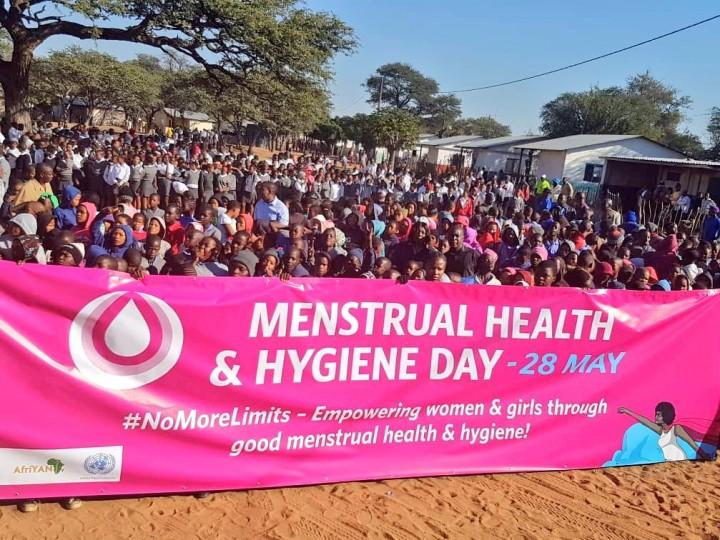
Africa-Press – Tanzania. GENDER and girls health advocates in the country plan to launch a six-month programme for sensitising the public on the importance of menstrual health among young ladies, especially school girls.
The programme is expected to start in next June and will run until December 2021.
This development comes as the country is set to join the rest of the world in marking the Menstrual Hygiene Day by the end of this month, under the coordination of the Girls Power Initiative (GPI) in association with Jane Goodhall Roots and Shoots.
“Parents usually send their daughters to boarding schools with little or no consideration of their menstrual health requirements,” said Rogathe Severe Luakaki, the Project Officer for the Girls Power Initiative (GPI), explaining that the amount of pocket money given to the girls may not be enough to cover their monthly needs for sanitary pads.
“Parents, or guardians only budget for school fees, uniforms and pocket money but never remember menstrual products,” stated Rogathe, pointing out that the budget for such items do not exceed 2,000/- per month which is just 26,000/ per year, which is quite affordable but yet hardly considered.
The World ‘Menstrual Hygiene Day’ will be commemorated globally on May 28 and here in Tanzania, there will be special events to mark the day set to be staged in Arusha, Mbeya and Dar-es-salaam regions, all targeting to reinforce awareness on the importance of ensuring girls hygiene to that effect.
Most girls, especially students of boarding schools and those residing in rural villages with no access to those absorbency menstrual pads due to unavailability, unawareness or lack of money to buy the important toiletries are resulting in some harmful ‘solutions.
Some girls and young women in the country opt to smear ‘Papier-mâché,’ clay mud while others result to shoving themselves with pieces of foam mattresses to cover their private parts during menstruation, according to GPI reports.
According to the GPI, if girls continue to expose themselves to unhealthy devices in handling menstrual cycles they risk contracting other serious infections.
In rural areas, girls sometimes resort to using leaves, especially large one from bananas or yams, plantains and other trees.
GPI has described this phenomenon as ‘Periods’ Poverty.’ The GPI organization has also been training girls on how to make their own reusable homemade sanitary napkins from locally available materials and that can be safely recycled, making them confident to face monthly circles.
Mwajabu Mniga, who is the GPI coordinator in-charge of organizing the 4th World Menstrual Day, said in Arusha region arrangements for the 28th of May event have started, noting that various organizations will participate at the pantomime to be staged at Elerai Secondary School grounds.