

What You Need to Know
In Kibondo, Tanzania, agricultural cooperatives are revolutionizing farming for local farmers. By providing training, access to quality seeds, and structured markets, these cooperatives empower farmers to achieve stable incomes and improve their livelihoods. The success of the Kibondo Agricultural Marketing Cooperative Society highlights the importance of community collaboration in enhancing food,
Africa-Press – Tanzania. IN the Sun-drenched fields of Kibondo, western Tanzania, a quiet revolution is underway.
Rows of bright yellow beans stacked neatly in cooperative warehouses are not just crops, they represent opportunity, stability and hope for local farmers.
For many, joining agricultural cooperatives linked to structured markets has transformed the way they farm, earn and plan for the future.
These cooperatives provide farmers with more than just a place to sell their produce; they offer training on modern farming techniques, access to quality seeds and fertilisers and guidance on sustainable practices that improve both yield and soil health.
Farmers who were once at the mercy of fluctuating market prices now enjoy predictable income streams, allowing them to invest in their families’ education, healthcare and even expand their farms.
Cooperative membership also strengthens community ties, as farmers share knowledge, pool resources and collectively negotiate better prices for their harvests.
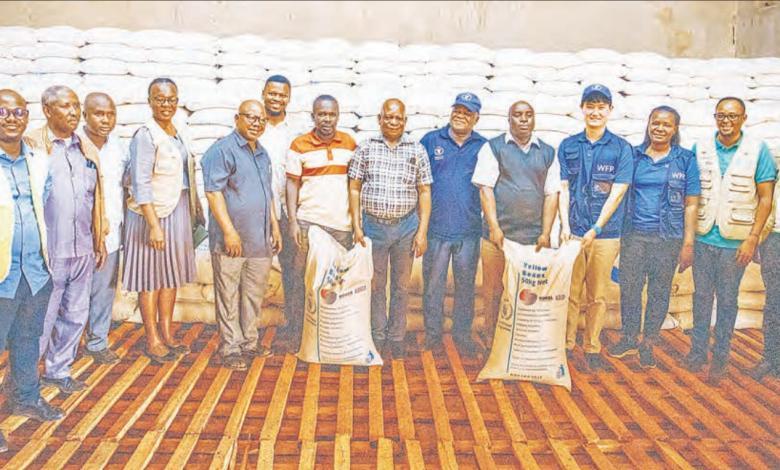
Currently farmers gathered at the Kibondo Agricultural Marketing Cooperative Society (AMCOS) warehouse, standing proudly beside rows of neatly stacked bags of yellow beans.
The farmers have come together to celebrate the aggregation of 865 metric tons of the beans that will be used by the World Food Programme (WFP) for its refugee operation in Tanzania.
Beyond economic gains, these structures encourage resilience, equipping farmers to better withstand climate-related stocks such as droughts or floods.
In Kibondo, the cooperative model has become a catalyst for empowerment turning small plots of land into engines of economic growth and transforming individual ambition into collective progress.
Here, agriculture is not just about crops it’s about building a future. Head of WFP in Kasulu Office, Mr Saidi Johari, narrated that the support enables farmers to improve the quality of their produce to meet market standards, enabling them to access broader and more profitable markets.
“This, in turn, increases their income and strengthens their food security. Through targeted training, post-harvest handling support, and access to structured markets, farmers are better equipped to reduce losses, maintain consistent quality and respond to buyer requirements with confidence.
“One of the main aims of the KITIKI Project is to build peaceful coexistence between host communities and refugees. By purchasing beans directly from local communities, WFP strengthens local food systems while creating shared economic opportunities that benefit both groups,” he said.
“This approach fosters resilience among local farmers, ensures a steady supply of nutritious food at affordable prices for humanitarian operations and improves household incomes.
“At the same time, it reduces competition over resources, promotes social cohesion and demonstrates how market based solutions can contribute to long-term stability and self reliance in refugee-hosting areas.”
One of the farmers, Mr Andrew Simon who has benefited from this project narrated: “I have never earned that much in a single sale. And the most surprising part is that I didn’t have to chase buyers or bargain over prices; everything was organised, transparent and fair.”
That experience marked a turning point for Mr Simon, transforming him from a cautious observer into a fully registered and committed member of the Kibondo Cooperative Society.
Through the project, he gained access to a reliable market, fair pricing mechanisms and technical support that enabled him to plan his farming activities with confidence.
The assurance of a guaranteed buyer not only increased his income but also reduced uncertainty and stress, allowing him to focus on improving productivity and quality.
“The importance of this project lies in its ability to transform smallholder farming from a survival activity into a reliable and dignified source of livelihood. By linking farmers to structured and guaranteed markets through cooperatives, the project eliminates one of the biggest challenges faced by rural farmers: market uncertainty.
“Farmers no longer struggle to find buyers or accept exploitative prices from middlemen. Instead, they benefit from transparent pricing systems, timely payments and predictable demand, which allows them to plan production, invest in better inputs and improve overall productivity.
“Beyond income generation, the project strengthens food security at both household and community levels. With improved earnings, farming households are better able to afford nutritious food, healthcare and education, reducing vulnerability to shocks such as droughts or price fluctuations. Training in post-harvest handling and quality control also minimises losses, ensuring that more food reaches the market and contributes to stable local food systems,” he noted.
Mr James Peter, the Regional Agriculture Advisor, narrated that the growth of AMCOS, composed of farmers, is a direct result of Korea International Cooperation Agency (KOICA) and WFP’s efforts.
He firmly believes that result will serve as a foundation for sustainable income and resilient livelihoods for farmers.
“The importance of this achievement lies in its sustainability. By building AMCOS as a functional and well-managed cooperative, the project goes beyond short-term assistance and creates a lasting foundation for income generation.
“Farmers are equipped not only to sell their produce but also to manage their businesses, adapt to market demands and withstand economic or climaterelated shocks. This contributes directly to resilient livelihoods, where farmers can maintain stable incomes even in challenging conditions,” Mr Peter noted.
Furthermore, the success of AMCOS reflects a shift toward self-reliance and long-term development.
Rather than dependency on external aid, farmers become active participants in local and national food systems.
This progress lays the groundwork for sustainable income, food security and inclusive economic growth, ensuring that farming communities continue to thrive long after the project support has ended.
Equally important is the project’s role in fostering social cohesion, particularly in refugee-hosting areas.
By sourcing produce directly from host communities, the initiative promotes peaceful coexistence between refugees and local populations, reducing competition over resources while creating shared economic benefits.
This market-based approach builds resilience, empowers farmers, and demonstrates how inclusive agricultural development can support long-term stability, self-reliance and sustainable rural growth.
The achievement is part of the Kilimo Tija Kigoma (KITIKI) Project, funded by KOICA and implemented by WFP.
Running until 2027, the project aims to strengthen agricultural value chains, promote gender equality and foster peace in Tanzania’s refugee-hosting districts.
The project supports Tanzanian farmers, many of whom are women, through training on good agricultural practices, postharvest handling and market access.
WFP is working with World Vision Tanzania and Good Neighbours Tanzania to train farmers in agricultural techniques and improve AMCOS management and marketing.
Farmers also gain better access to loans through connections with financial institutions.
For decades, Kigoma’s farmers have faced fluctuating markets, unpredictable buyers and limited bargaining power.
The aggregation of 865 metric tons of yellow beans proves what farmers can achieve when they are linked to reliable and structured markets.
For the farmers of Kigoma, the bean aggregation is more than a statistic.
It is a testament to their resilience, their ability to grow quality produce when equipped with the right tools and their commitment to improving their livelihoods.
Kibondo, located in western Tanzania, has a rich agricultural history, primarily relying on smallholder farming. Over the years, farmers faced numerous challenges, including fluctuating market prices and limited access to resources. The introduction of agricultural cooperatives has significantly transformed the landscape, enabling farmers to unite, share knowledge, and access better market opportunities. This shift has not only improved individual livelihoods but has also fostered community resilience and food security.
The Kilimo Tija Kigoma (KITIKI) Project, funded by the Korea International Cooperation Agency (KOICA) and implemented by the World Food Programme (WFP), aims to strengthen a