
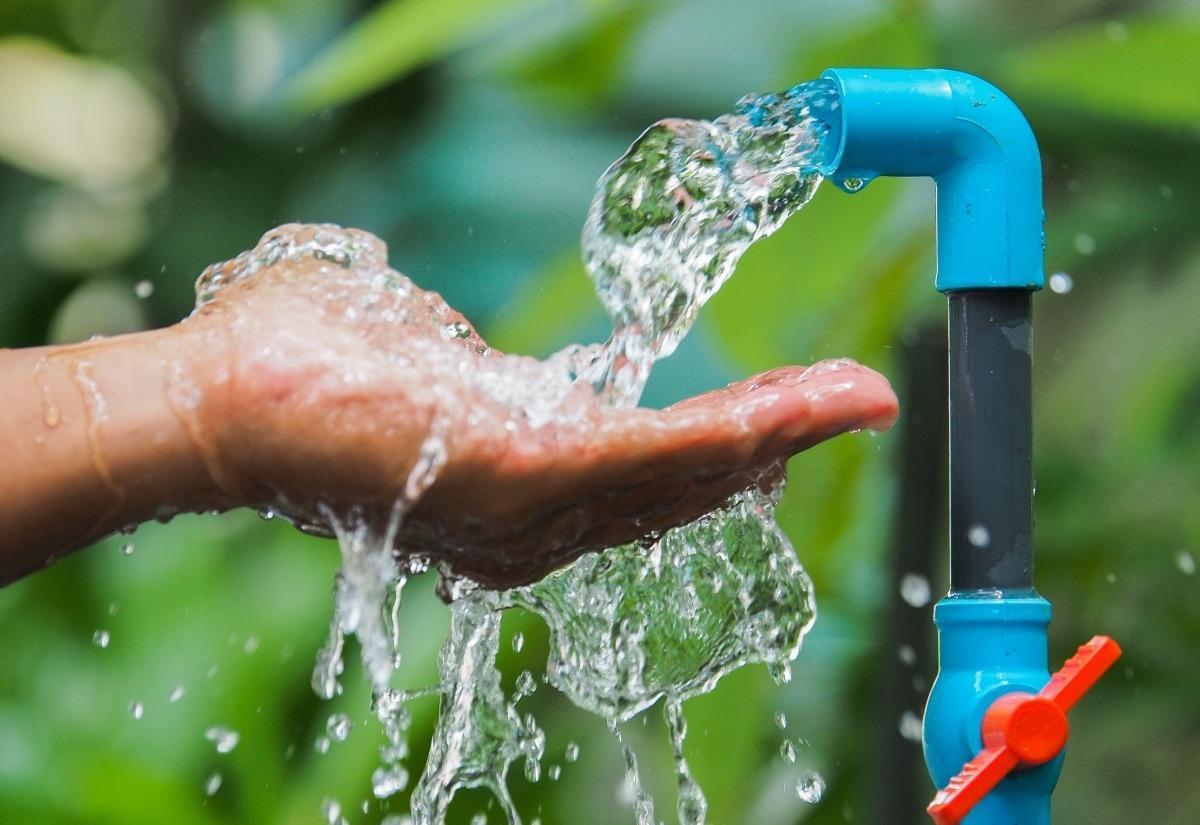
Africa-Press – Tanzania. WATER is a vital resource for human life and overall social development. Without water, there can be no agriculture, no industry, and no safe living. In today’s world, where climate change and rapid population growth continue to affect access to water, its importance in boosting the economy and protecting public health has become even greater.
Water is also a backbone of the economy, especially in the agricultural sector, which employs a large proportion of people in Tanzania. Agriculture depends on water for irrigation of crops such as rice, maize, vegetables and fruits.
Reliable access to water increases productivity, raises farmers’ incomes and stimulates trade in both rural and urban areas. Similarly, the livestock sector benefits from access to water for animals, which contributes to the production of meat and milk.
Water is a key pillar in the industrial and energy sectors. Industries use water in production processes, cleaning and cooling of machines. Furthermore, the generation of hydroelectric power depends on rivers and dams. Reliable electricity enables the growth of industries, businesses and employment, thereby strengthening the national economy.
a health perspective, clean and safe water prevents dangerous diseases such as cholera, typhoid and diarrhoea. Communities with access to safe water reduce medical costs and increase productive working time, which in turn contributes to economic growth. Environmental sanitation also improves when water is available for household use and in health facilities.
Water is also crucial for economic, social and political development, and the progress of any society in the world depends on the availability of sufficient and quality water services. In its natural state, water is also part of the environment, and its quantity and quality help guide decisions on how this resource can be used.
Water is the foundation of sustainable development. The government, private sector and citizens must work together to protect water sources, invest in infrastructure and use water responsibly.
is also essential for all living organisms. It should be understood that without water there is no life living beings would perish, leading to income poverty and hindering national economic growth, since water is a key driver of production and creates employment opportunities, especially in rural areas.
Because of this importance, during a recent visit to Mwanza, Prime Minister Dr Mwigulu Nchemba assured residents of Nyamagana District and Mwanza region that the project to construct water pumping stations, main transmission pipelines and storage tanks will be completed on time.
He urged officials to observe public service ethics, unity and collective responsibility to ensure that all ongoing water projects in Mwanza city are completed as scheduled.
He made the remarks during the foundation stone laying ceremony for the construction of water pumping stations, main pipelines and storage tanks in Nyamagana District, Mwanza Region.
He said that for water to reach citizens, several stages must be implemented. He said the first is the construction of a water source, which the government has already completed by building the Butimba water intake.
The second stage according to the Premier is the construction of storage tanks, while the third stage will be water distribution so that residents can access water in their homes.
“I will closely supervise and ensure that this project is completed on time so that water reaches the people,” said Dr Nchemba, while urging citizens to continue safeguarding peace in the country.
Minister for Water, Mr Jumaa Aweso, said that he and his team at the Ministry of Water will not be an obstacle to residents of Nyamagana and Mwanza in accessing water.
He said the water project is expected to be completed by December this year, on schedule. He explained that the contractor has no excuse for delaying the project because funds are available, and that his main responsibility is to increase manpower.
The Managing Director of the Mwanza Water Supply and Sanitation Authority (MWAUWASA), Ms Neli Msuya, said the project began in December 2024 and is expected to be completed in December this year.
It will benefit approximately 450,000 residents of Mwanza city and the districts of Magu and Misungwi, including Nyegezi, Mkolani, Buhongwa, Nyahingi, Luchelele, Sahwa, Kishiri, Igoma, Kisesa, Bujora, Kanyama, Fela and Usagara.
“This project is costing about 46.2 billion shillings and involves the construction of two water pumping stations, five storage tanks and major water transmission pipelines,” she explained.
Stakeholders’ views
Councillor for Lwanhima Ward, Mr Chanila Mwakyoma, said that in his ward there is a water shortage in 18 streets, and residents buy a 20-litre container of water for 500/-.
“Imagine a family of five or six how much water would that provide? It reduces household income. We believe this project will solve the water shortage challenge for residents,” he said, urging the government to complete the project so that people can access water services.
Isamilo Ward Councillor, Mr Charles Nyamasiriri, acknowledged that the implementation of the project will solve water challenges in Mwanza city, which is largely hilly.
“I urge residents, as this project continues, to conserve the water whenever it becomes available. I believe the project will be completed on time and to the required standards. My call to the contractor is to work day and night and increase the pace, because we need water it is life,” he explained.
Sahwa resident, Mr Nyakerongo Nyitika, said the project will help them greatly because they currently struggle to fetch water from wells, which sometimes dry up.