
What You Need to Know
The Mwalimu Nyerere Leadership School (MJNLS) is seen as crucial for revitalizing six political parties from former liberation movements in Southern Africa. The school aims to enhance leadership skills and mobilization efforts, enabling these parties to effectively lead their nations towards economic liberation. The CPC emphasizes the importance of this renewal process for the parties’ relevance.
Africa-Press – Tanzania. AS eagles grow older, they undergo a molting process, shedding old, worn-out feathers and growing new ones.
This renewal typically takes between 12 and 36 months. By the end of this period, eagles regain a full set of strong feathers, enabling them to fly even higher and improve their ability to hunt, feed themselves and ultimately survive and thrive.
Similarly, a “molting process” is necessary for the six friendly political parties that co-own the Kibaha-based Mwalimu Nyerere Leadership School (MJNLS).
Such renewal would strengthen their mobilization efforts, expand their membership base, enhance party vitality and reinforce their relevance to the masses.
It would also improve their capacity to lead governments effectively and compete successfully in the increasingly competitive multi-party electoral systems across the six countries led by former liberation movements.
This perspective was shared by Comrade Xu Sujiang, a representative of the Communist Party of China (CPC) at MJNLS.
He stated, “When leaders of the former Southern African liberation movements, now political parties, namely the National Front for the Liberation of Mozambique (FRELIMO–Mozambique), the African National Congress (ANC–South Africa), the Popular Movement for the Liberation of Angola (MPLA–Angola), the Zimbabwe African National Union– Patriotic Front (ZANU-PF– Zimbabwe), the South West Africa People’s Organisation (SWAPO) and their host Tanzania’s Chama Cha Mapinduzi (CCM), sought support from the Communist Party of China (CPC) for the construction of the school, they shared a common objective: to enable cadres from the six parties to undergo ideological, leadership and development management re-training. The goal was to reset their mindset and prepare them to take charge of their parties’ crucial struggle, the struggle for economic liberation.”
Comrade Xu Sujiang, who was speaking at a recent event marking the fourth anniversary of the Mwalimu Nyerere Leadership School (MJNLS) at its Kibaha Kwa Mfipa campus, emphasised that, much like the moulting process in eagles, where birds shed old, worn-out feathers and grow new ones to fly higher and hunt more effectively, the same renewal is necessary for the six parties.
The Communist Party of China (CPC) strongly believes that, through the effective use of the Mwalimu Nyerere Leadership School (MJNLS), the institution will be able to equip party cadres and leaders with modern leadership knowledge. This, in turn, will enable them to transform their nations from low-income economies into higher-income countries with well-developed industrial, scientific and technological sectors.
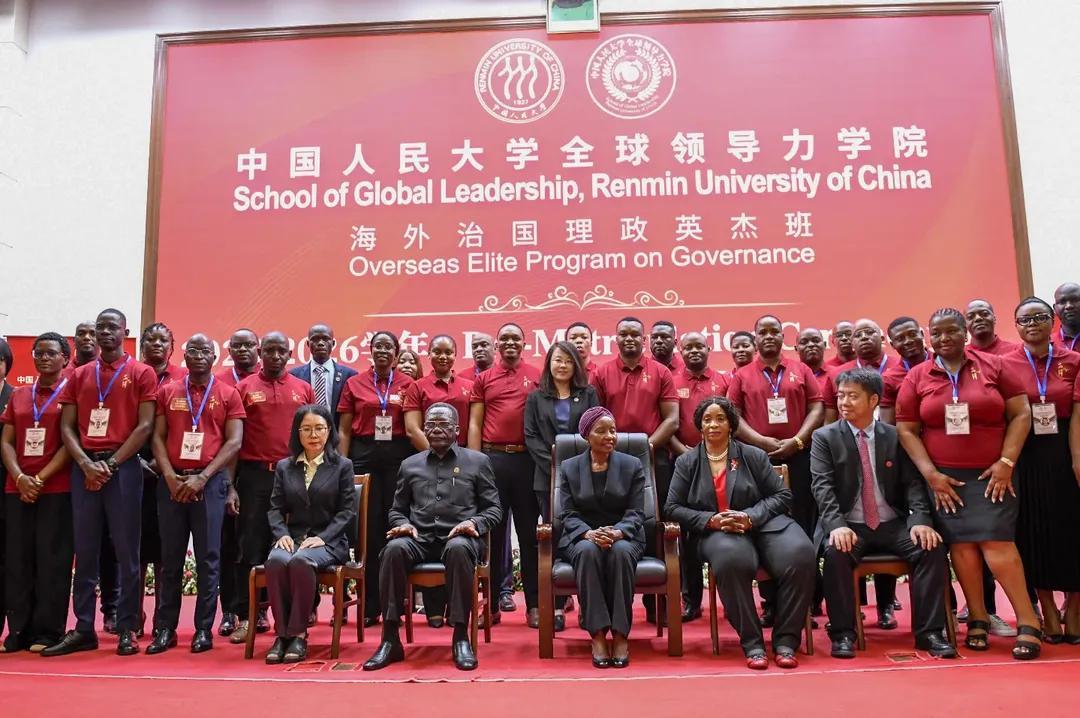
Overseas Elite Programme on Governance
He cited the introduction of the Overseas Elite Programme on Governance at the Mwalimu Julius Nyerere Leadership School as a timely and strategic initiative.
The programme, launched last year in collaboration with the Global Leadership School of Renmin University of China (RUC), is expected to provide leaders from former liberation movements with top-tier leadership skills essential for the next phase of the struggle for economic liberation.
Under this programme, jointly implemented by MJNLS and the Global Leadership School at RUC, a number of mid-level cadres from CCM, ANC, SWAPO, ZANU-PF, FRELIMO and MPLA will undergo a twoyear training programme leading to the attainment of Master’s and PhD degrees.
He further called on the leadership of CCM, ANC, SWAPO, ZANU-PF, FRELIMO and MPLA to make full use of MJNLS in transforming their parties into effective agents of change.
Such transformation, he emphasised, would strengthen the parties’ ability to lead and oversee governments in their respective countries, Tanzania, South Africa, Namibia, Zimbabwe, Mozambique and Angola.
“I was present when the first step in the construction of the school was taken on this very land where we stand today. I was part of the team that was handed the plot designated for the school’s construction. At the time, the area was completely undeveloped, covered with natural vegetation.
I witnessed the entire construction process, from the laying of the foundation stone to its completion, culminating in the inauguration ceremony held on January 22, 2022, which was graced by President Dr Samia Suluhu Hassan,” noted the Chinese representative to MJNLS.
Furthermore, Xu revealed that he has witnessed history in the making, as the collective efforts of CCM, ANC, FRELIMO, SWAPO, ZANUPF and MPLA resulted in the establishment of well-built facilities. These structures now serve as a hub where cadres access advanced leadership knowledge delivered by qualified and highly experienced scholars from various universities and higher learning institutions, as well as retired political, state and military leaders from Tanzania and beyond.
MJNLS Fourth Anniversary
Xu stated that the celebration of four years since the establishment of MJNLS and, importantly, its success in delivering a range of training programmes for cadres from the six friendly parties, demonstrates that the institution is on the right path in fulfilling its founding mission.
He further noted that the successful establishment of its three key governance organs, the Board of Trustees, the Governing Board and the top management, underscores the school’s strong institutional foundation.
As of January 2026, the school had recruited two directors, one from Mozambique and another from Zimbabwe. This development demonstrates that the institution’s management is in capable and competent hands under the leadership of the School Principal, Professor Marcelina Chijoriga.
“The official inauguration of the school by Her Excellency, the President of the United Republic of Tanzania, Dr Samia Suluhu Hassan, in February 2022 marked the culmination of what can be described as a ‘long walk to freedom,’ similar to the journey reflected in the memoir of South Africa’s first democratically elected President. This ‘long walk to freedom’ should now enable Africa to achieve economic liberation, which represents the continent’s second major struggle after the attainment of political independence,” noted the CPC representative to MJNLS.
Xu further explained that, just as the training facilities in Bagamoyo once provided both basic and advanced military training to the armed wings of ZANU-PF, SWAPO, ANC and FRELIMO, preparing combatants to proceed to the frontlines with courage and tactical skills, MJNLS is expected to play a comparable role in the new era of economic transformation.
In this new phase, the school will equip cadres from the six parties with essential ideological, leadership and development management knowledge required to lead the ongoing struggle for economic liberation.
Bagamoyo, Kongwa and Mgagao
“The military training facilities at Bagamoyo, Kongwa and Mgagao, located in the Coast, Dodoma and Iringa regions respectively, served as vital centres for training the armed wings of ZANUPF, SWAPO, FRELIMO and ANC.
They will forever remain the cradle of the historic armed liberation struggle in Southern Africa; there is no doubt about that. However, we must acknowledge that we have moved beyond that stage, when we shared trenches across various battlefields. Today, our modern trenches for economic liberation are here at the Mwalimu Julius Nyerere Leadership School. It is here that we must acquire new knowledge and transform our mindsets so that we can fight with purpose, intelligence and strategy, ultimately emerging victorious in this second phase of liberation: the struggle for economic freedom,” stated Comrade Xu.
He identified poverty, unemployment, preventable and treatable diseases, as well as inherited colonial education systems in the six countries as major challenges that must be addressed.
He emphasised the need for strong leadership within the governments led by the six friendly parties in Tanzania, South Africa, Namibia, Zimbabwe, Angola and Mozambique to transform their economies, create employment opportunities and establish conducive socio-economic environments that empower citizens to generate wealth for themselves and their nations.
“We have MJNLS as our stronghold for acquiring modern and advanced ideological, leadership and development management knowledge. This should serve as our backbone in the decisive struggle for economic liberation. We are duty-bound to provide the leadership needed to lift our nations and people out of persistent poverty and unacceptable underdevelopment,” Xu declared to applause from the audience.
The Chinese representative at MJNLS also pointed to the 1,860-kilometre Tanzania-Zambia Railway Authority (TAZARA), commonly known as the Freedom Railway, which was completed in July 1976, as a lasting symbol of genuine China–Africa partnership.
“Although China initially provided TAZARA to Tanzania and Zambia, its impact extended far beyond these two countries. It played a crucial role in transporting arms and freedom fighters to liberation war fronts in Zimbabwe, Namibia, South Africa and Angola. These arms originated from China and other Eastern Bloc countries aligned with the former Soviet Union.
Today, as we commemorate the fourth anniversary of MJNLS, I am pleased to note that TAZARA continues to serve Africa’s aspirations. We have recently entered into an agreement with Tanzania and Zambia to rehabilitate the railway so that it can once again play a pivotal role in advancing the region’s economic liberation,” he said.
TAZARA to reach Cape Town
Xu concluded his speech by emphasising that both TAZARA and MJNLS are cornerstones of China–Africa cooperation. He noted that there are ongoing plans to connect TAZARA to the railway networks of Namibia and South Africa, ultimately linking it to the Port of Cape Town to facilitate smoother trade flows between China and the Southern African sub-region.
“For us to achieve our goals, we must make full use of both TAZARA and MJNLS. While TAZARA will support trade between China and Southern Africa, MJNLS will play a critical role in honing leadership and ideological skills among cadres from CCM, ANC, ZANUPF, SWAPO, MPLA and FRELIMO. This will enable them to master the competencies required to lead effectively in the phase of economic liberation,” Xu concluded.
MJNLS a Key Asset
For his part, FRELIMO Secretary-General, Comrade Chakil Felizardo Passadas Aboobacar, described MJNLS as a key asset for the six parties that own the institution. He proposed that the school be developed into a centre of excellence for ideological, leadership and development management training in Southern Africa, with a long-term vision of serving the entire African continent.
Comrade Aboobacar expressed confidence that, given the school’s smooth operations, anchored in strict adherence to global academic standards under the supervision of the School Principal, Professor Marcelina Chijoriga, along with its strong infrastructure, MJNLS is well-positioned to deliver high-quality, progressive political leadership education.
He noted that the institution has the potential to benefit not only the six founding parties but also the broader African continent.
“Indeed, I would like to commend the leadership of the Communist Party of China (CPC), under Comrade Xi Jinping, for supporting the six parties by responding positively to our request to fund the construction of the school. Today, we are witnessing the strategic importance of MJNLS, particularly through initiatives such as the Global Leadership Programme. Under this programme, cadres from CCM, ZANU-PF, MPLA, SWAPO, ANC and FRELIMO are participating in the joint MJNLS–RUC Global Leadership Training Programme, which is equipping them to become transformative leaders within our parties,” concluded the FRELIMO Secretary-General.
The Mwalimu Nyerere Leadership School (MJNLS) was established to provide ideological and leadership training to political parties from former liberation movements in Southern Africa. This initiative reflects a broader effort to equip leaders with the skills necessary for navigating contemporary political and economic challenges. The school serves as a hub for fostering collaboration and knowledge sharing among these parties, which have historically played significant roles in their respective countries’ struggles for independence.
As these parties transition from liberation movements to governing entities, the MJNLS aims to facilitate a new phase of leadership that focuses on economic and,