
Africa-Press – Tanzania. MEMBERS of Parliament have called for a shift in road financing, citing inadequate funding, poor connectivity and unequal allocation of resources as major constraints to economic growth and service delivery.
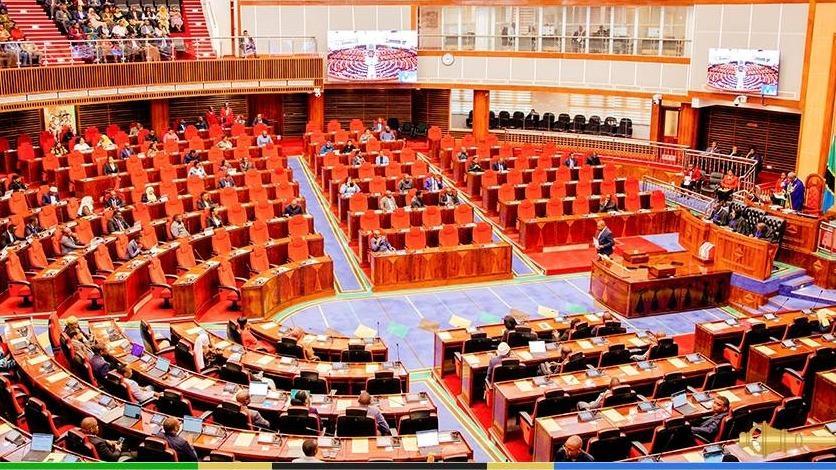
Contributing to the 2026/27 Prime Minister’s Office budget estimates in the National Assembly, legislators proposed new financing approaches, including allowing local authorities to borrow from financial institutions, to accelerate road construction and rehabilitation.
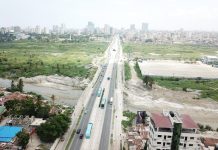
Kinondoni Member of Parliament, Abbas Tarimba said despite some progress, road coverage remains inadequate, especially in urban areas experiencing rapid population growth.
“Kinondoni has a road network of 198.34 kilometres, but only 58 kilometres are paved, that is just 29 per cent,” he said.
“Roads are a key driver of development, yet the budget allocated is still too small and not all funds reach constituencies.”
He called for stricter financial discipline, saying funds allocated for roads must be protected and used as intended.
“If funds are ring-fenced for roads, they must be used for that purpose. We need a legal framework to ensure this,” he said.
MP Tarimba also proposed that local authorities be allowed to seek financing to speed up infrastructure development.
“We should be allowed to borrow from financial institutions. If Kinondoni can secure financing, we could build at least 100 kilometres of roads each year and become a model for others,” he said.
Gairo MP, Ahmed Shabiby said while agencies such as Tanzania National Roads Agency (TANROADS) and Tanzania Rural and Urban Roads Agency (TARURA) are performing, funding shortages remain the biggest obstacle.
“TANROADS and TARURA are doing their job, but the real challenge is money,” he said.
“If possible, the government should look into borrowing from banks or accessing affordable loans to accelerate road construction.”
Kilolo MP, Ritta Kabati said poor road conditions are directly affecting livelihoods, especially in rural areas.
“Many roads are impassable, inputs do not reach farmers on time, and produce like tomatoes ends up rotting because transport is disrupted,” she said.
“Budget allocation is also not fair, areas with similar road networks receive very different funding.”
Morogoro South East MP, Hamis Taletale said the frequency of road-related complaints reflects the scale of the problem.
“It is embarrassing that almost every MP stands to speak about roads, but that shows how serious the problem is,” he said.
“Without roads, even economic activities cannot succeed.” Tabling the budget on April 1, 2026, Prime Minister Mwigulu Nchemba said the government will continue prioritising strategic road infrastructure.
He said the government will implement construction, rehabilitation and maintenance of strategic roads to open up economic opportunities, including those linking regional and district headquarters as well as neighbouring countries at tarmac level.
“The government will also implement bypass, ring and rapid transit road projects to reduce congestion in fast-growing cities, while strengthening ferries and bridges,” he said.
On financing, he directed the Ministry of Finance to strengthen revenue sources for the Road Fund and ensure funds are remitted directly as approved in the budget.
Meanwhile, MPs also raised concerns over Monitoring and Evaluation (M&E), saying weak followup is affecting implementation of government directives.
Special Seats MP, Engineer Mwanaisha Ulenge said stronger systems are needed.
“Without monitoring and evaluation, we cannot ensure projects are implemented effectively or on time,” she said, calling for a clear policy and legal backing.
Makete MP, Festo Sanga said lack of accountability at lower levels is undermining service delivery.
“A government without strong monitoring and evaluation cannot expect positive results,” he said, adding that directives often fail due to weak follow-up.
Responding to the concerns, Prof Kitila Mkumbo said the government already has an M&E system in place within the Prime Minister’s Office and across ministries, though improvements are ongoing.
Other issues raised included youth employment and access to financing.
Kisarawe MP, Dr Suleiman Jaffo proposed temporary employment programmes for young people to help them gain experience, while Tabora Urban MP Hawa Mwaifunga raised concerns over inequality in the distribution of interestfree loans, particularly affecting women.
Overall, the debate underscored roads as the most pressing issue, with MPs urging the government to adopt new financing approaches to address infrastructure gaps.