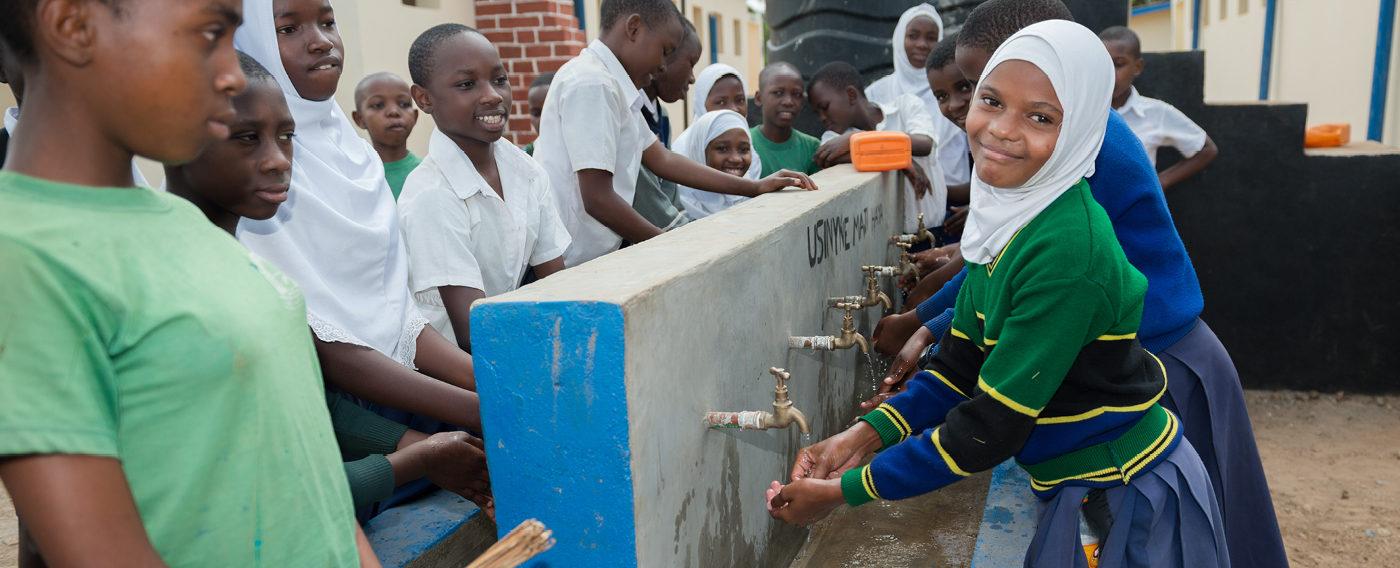
Africa-Press – Tanzania. THE National Bureau of Statistics (NBS) has released the 2018 School Water, Sanitation and Hygiene Assessment (SWASH) results in Lake Zone, stating that 55 per cent of schools in the country had basic drinking water services.
The findings were conducted by the NBS in partnership with others stakeholders, including the Office of the Chief Government Statistician Zanzibar and was funded by the United Nations Children’s Fund (UNICEF) and the Tanzanian government.
The NBS Principal Statistician, Mr Mlemba Abassy said that SWASH involved a sample of 2,396 primary and secondary schools (2,240 in Tanzania Mainland and 156 in Zanzibar).
The findings show that 68.2 per cent of schools had an improved source of drinking water, 17.6 per cent used unimproved water, while 14.2 per cent didn’t have any source of water.
“Schools in urban areas seemed to have better access to an improved source than those in rural areas, 84.2 percent against 163.8 percent respectively,” he said.
Commenting on hygiene services, the Principal Statistician said that SWASH found 89 per cent of schools with improved toilet facilities, regardless of the quality.
The three most common types of toilet facilities were pit latrine with washable slabs (41.8 per cent), flush to pit latrine (19.7) per cent and ventilated improved pit latrine (14.0 per cent).
However, general results showed that only 30 per cent of schools had basic/standard sanitation services, meaning improved single-sex toilet facilities and with privacy to a user.
“Standards include also the proportion, which is one latrine pit for 25 male students and one for 20 females.
Unfortunately, only 27 per cent of schools met this requirement. And, a school should have at least one usable toilet accessible to pupils with physical disability and youngest children,” he said.
SWASH found only 12 per cent for disabled and 26 per cent for youngest children, calling up on more efforts to sanitation improvements for betterment of those two groups.
The finding recommended more action to be taken to address limited access to adequate Water, Sanitation and Hygiene (WASH) services in schools.
They should also establish a solid process and effective management model to address sustainability and inequity issues.
Officiating at the event, the Acting Regional Administrative Secretary, Mr Emil Kasagara said that SWASH results will help the government and other stakeholders to follow-up and assess the implementation of various plans and policies in the education sector.
“As you all know, education sector is among the important sectors in our society following its contribution to humans’ wellbeing, national economic and poverty reduction.
These findings result, therefore, will play a key role to let the sector smoothly implement all its planned projects in the targeted time frame. Don’t keep them in shelves…. disseminate them” he said