

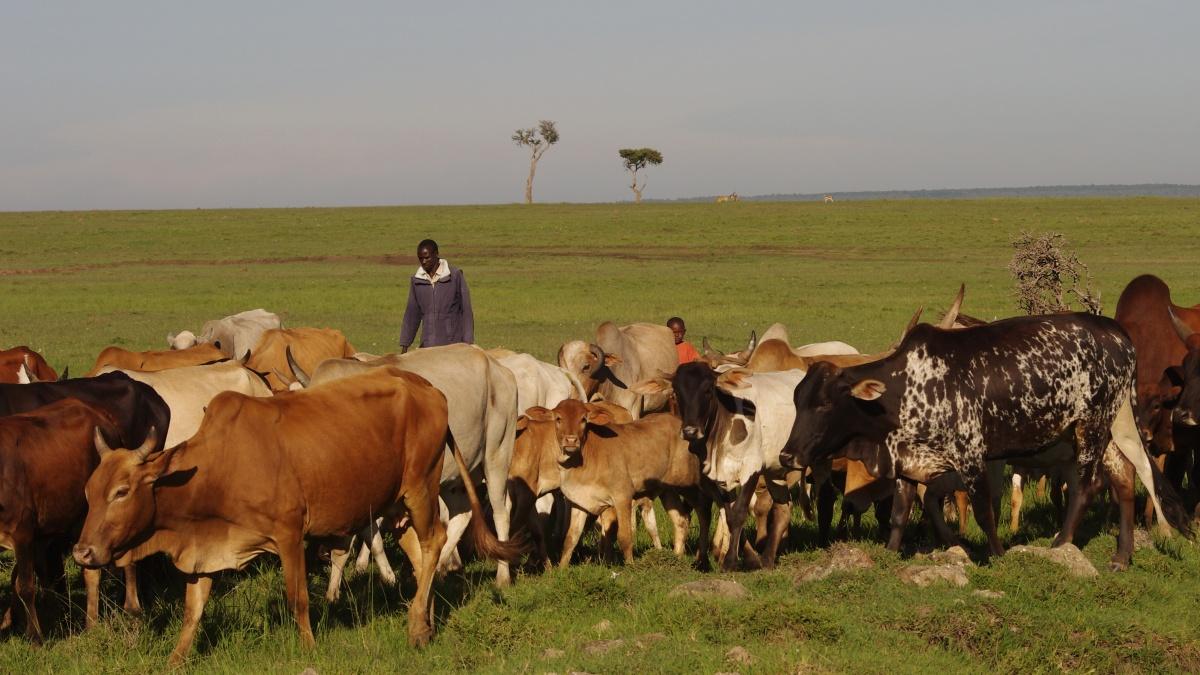
Africa-Press – Tanzania. THE Tanzania Livestock Research Institute (TALIRI) is finalizing a process to introduce a special regulation seeking to monitor conduction of livestock research within the country.
Under the envisaged rule, all researchers who are not under the shadow of TALIRI will not be allowed to perform any research without getting permission from the state-owned institute.
TALIRI’s Principle Researcher, Dr Jonas Kizima, said during an interview with the Daily News that the development was targeted to help improve performance of livestock researches within the country.
“Livestock research is a very sensitive exercise and that’s why we want to assure all researches being conducted are meeting the required standards, but also, they reflect the set regulations,” he explained.
For his part, the Institute’s Director General (DG), Prof Erick Komba, said his institution was planning to continue implementing a number of useful researches with a goal to improve productivity of beef breeds through strategic crossbreeding.
He informed that the focus was also to improve livelihoods among the livestock farmers by heightening income and food security through breeding suitable beef cattle that fit pastoral and agro-pastoral production environments.
“We’re working round the clock to ensure the impressive development of the livestock sector within the country, not only through research, but also through encouraging the rural smallholder pastoralists to embrace hybrid cattle as well as adhering to recommended livestock keeping practices,” Prof Komba insisted.
Apart from that, the Institute’s boss explained that the institute would continue to conduct thorough research and disseminate key technologies for the betterment of the livestock keepers.
“There are several strategies and options that need to be embraced so as to have a bouncing and mushrooming livestock industry that is bound to contribute more to the household and national economies. Briefly, orientation of physical, financial and intellectual resources has to do with increase in levels of investment that is over and above the current levels,” he observed.
With its headquarters in Dodoma, the TALIRI is an institute responsible for the development and dissemination of appropriate technologies for the improvement of the livestock industry in Tanzania.
The livestock industry in Tanzania plays an important socio-economic roles that include contributing to building a strong national economy, household food supplies and incomes, employment opportunities as well as nurturing natural resources.
The livestock industry in Tanzania plays important socio-economic roles that include contributing to building a strong national economy, household food supplies and incomes, employment opportunities as well as nurturing natural resources.
The country has a total area of 945,000km2, whereby 62,000km2 of the surface area is covered with water, and 60 million hectares is rangeland that is suitable for livestock production.
The available rangeland resources and varied forage and fodder resources are suitable for grazing to the available 33.4 million cattle; 21.3 million goats and 5.65 million sheep, more than 1.85 million pigs, 47.4 million indigenous poultry and other non-conventional species such as donkeys and rabbits.
As per the 2012/13 National Panel Survey, 50 per cent of all households keep livestock (4.6 million households), 62per cent of which are rural and 23 per cent urban, with ownership patterns dominated by chickens (86pc households), goats (48pc), cattle (35pc), pigs (9pc) and other livestock 10 per cent.
Agro-pastoralists households’ account for 80 per cent of livestock production, pastoral communities 14 per cent and remaining 6 per cent comes from the commercial ranches and dairy sector.