

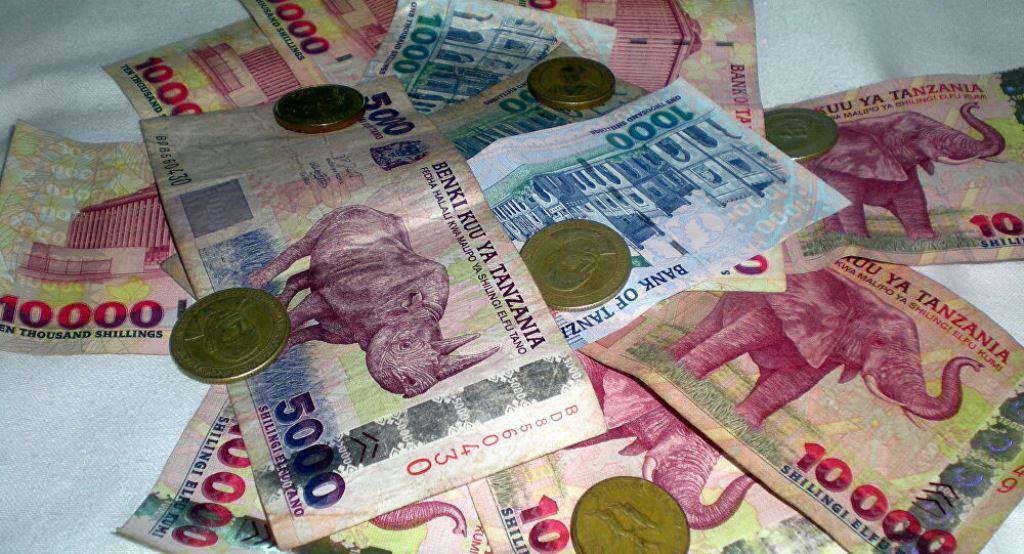
Africa-Press – Tanzania. TANZANIAN shilling has maintained its stability since the beginning of the year after fluctuating by merely less than one per cent, thanks to agricultural export inflows.
The shilling constancy is a major concern for the Central Bank since it defines in terms of the stability of the value of money to warrant a good domestic purchasing power—the price level.
The Bank of Tanzania (BoT) foreign exchange data showed that the shilling opened the year selling at 2,228/58 against a US dollar before it depreciated minutely to 2,309/09 yesterday.
An economist-cum-banker Dr Hildebrand Shayo said almost for the entire year the country had a very strong shilling.
“We need to understand that one of the hallmarks of a thriving economy is a ‘strong and stable currency’,” Dr Shayo told ‘Daily News’ on Wednesday.
The shilling stabilisation economically is good news for markets, because any volatility could have a major impact on the businesses trading internationally.
“Domestic companies stand to benefit from the shillings strength against other currencies,” he said.
On the other hand, the stronger shilling nonetheless can lead to both positive and negative effects on SMEs, depending on whether they import or export goods from Tanzania, and how well they are prepared for fluctuations on either side.
“While some businesses reap the rewards of a strong shilling we shouldn’t forget in any economy that there will be businesses that blame currency headwinds for diminishing profits,” Dr Shayo noted.
The shilling was stable due to being consistent with adequate foreign reserves and implementation of prudent monetary policy.
NMB Bank’ Quarterly Market Digest issued mid-year that BoT participated as a net seller for liquidity management purposes to maintain orderly money market conditions.
“The…shilling trades as quiet as a mouse. Looking ahead to the upcoming quarter(s), the expectation is for further currency stability,” NMB, one of the largest lenders said.
The lender attributed the stability to inflows from cotton, coffee and tobacco to match the demand from importers with the central bank continuing to actively participate in the market to maintain orderly market condition.
However, mid-year, the shilling had depreciated to around 2,319/- being one highest level in the year.
“In the Interbank Foreign Exchange Market (IFEM), the local unit traded sideways with limited volatility for the entire quarter under review due to tightness in foreign currency liquidity,” NMB said
In quarter two, the shilling was slightly unstable due to coronavirus but thanks to the central bank market quelling initiative that stabilised the local currency.
In the quarter under question, the shilling opened at 2,313/- to the dollar and depreciated slightly to 2,319/- which was ‘the quarter high before appreciating to 2,314/-where the pair entered a period of consolidation,’ NMB said.
“From there it managed to hold its ground well for the remainder of the quarter,” the bank said.
BoT said in its five-year of President Magufuli administration, price stability was largely achieved due to implementation of prudent monetary policies, strict control on government expenditure, stable foreign exchange rates against the shilling, and increased production of food in the country.
“The inflation is expected to remain within single digit in future due to expected stability of the shilling against foreign currencies,” BoT report said.