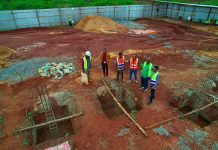


Africa-Press – Tanzania. IN a significant step towards sustainable water resource management, the Nile Basin Initiative (NBI) has handed over eight state-of-the-art hydrological monitoring stations to Tanzania.
The stations are expected to play a crucial role in monitoring and collecting data on water levels, flow rates, and other essential parameters to enhance water management practices.
The Nile Basin Regional Hydrological Monitoring System is designed to strengthen regional hydrological monitoring activities and facilitate the collaborative generation of basin-wide data. This initiative aims to support sustainable water resource management across the Nile Basin member states.
The eight newly installed hydrological monitoring stations are strategically positioned at key locations, including Mara River at Kogatende, Mara River at Nyansurura, Grumeti River at M Bridge, and Mbalageti River at Ndabaka.
Others are Ruvuvu River at Kasharazi, Kagera River at Rusumo Falls, Kagera River at Kyaka Ferry, and Simiyu River at Lumeji.
Speaking during the handover ceremony in Dodoma on Thursday, the Permanent Secretary in the Ministry of Water, Engineer Mwajuma Waziri, expressed the government’s appreciation for the fruitful collaboration between the Ministry of Water and the NBI.
“This partnership has been instrumental in enhancing water management practices and fostering a harmonious relationship among the Nile Basin member states,” she said.
The regional hydrological monitoring system comprises 43 upgraded stations and a data management system covering nine Nile Basin countries—Burundi, the Democratic Republic of Congo, Ethiopia, Kenya, Rwanda, South Sudan, Sudan, Tanzania, and Uganda.
According to Engineer Waziri, since its inception, the NBI has played a pivotal role in spearheading collaborative projects that address pressing regional water challenges.
“The completion of this project is a testament to the dedication and hard work of all stakeholders. I extend my heartfelt gratitude to the Executive Director of NBI, Dr. Florence Adongo, and her team for their unwavering commitment to effective water resource management,” she added.
The Tanzania-based system, as part of the broader 43-station network, is expected to empower the Nile Basin in assessing and quantifying water resources.
It will support the strategic allocation of water for competing interests, including industry, agriculture, energy, domestic use, and environmental conservation.
Additionally, the stations will play a key role in flood and drought monitoring, providing early warning information for disaster preparedness and risk reduction.
They will also assess water quality to address pollution concerns within the Nile Basin.
Emphasizing the importance of maintaining the newly constructed stations, Engineer Waziri directed the Lake Victoria Basin Water Board (LVBWB) Director, Mr Renatus Shinhu, to ensure that all facilities are adequately maintained and utilized to meet their intended objectives.
“It is imperative that we remain focused on our goals. The sustainability of these projects depends on our commitment to their upkeep and the responsible management of our water resources. Let us all commit to cooperation, accountability, and innovation as we enhance our water management systems for the benefit of our communities and future generations,” she urged.
NBI Executive Director, Dr. Florence Adongo, highlighted the capabilities of the hydromet system, which collects real-time data from the 43 upgraded stations and transmits it to NBI offices.
“While each country operates its own station, the goal is to ensure continuous data-sharing among member states. Through peer-to-peer learning, trust and confidence are built, enhancing cooperation under NBI protocols,” she explained.
Dr Adongo noted that transboundary projects under the NBI have provided tangible solutions to regional challenges.
She cited the Rusumo Hydropower Project as an example of successful cooperation between Burundi, Rwanda, and Tanzania.
“This project stands as a testament to regional collaboration. Tanzania’s national grid has gained an additional 27 megawatts of power over the past year, directly benefiting communities and various sectors of the economy,” she said.
The field handover of all the stations to the government took place on March 4, 2025, at Kyaka Ferry hydrological station.
The project, funded through the joint efforts of the Federal Ministry of Economic Cooperation and Development of Germany (BMZ) and the European Union (EU), aims to address the critical need for real-time data and information to ensure sustainable water management across the Nile Basin.
For More News And Analysis About Tanzania Follow Africa-Press