
Africa-Press – Tanzania. UNITED Nations Deputy Secretary General, Amina Mohammed, has commended Tanzania for its long-standing record of peace and stability, describing the country as a model of tranquility in Africa.
Ms Mohammed also acknowledged President Samia Suluhu Hassan’s efforts in strengthening institutional systems and addressing national challenges through dialogue and reconciliation.
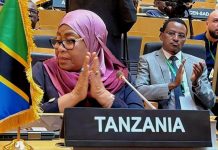
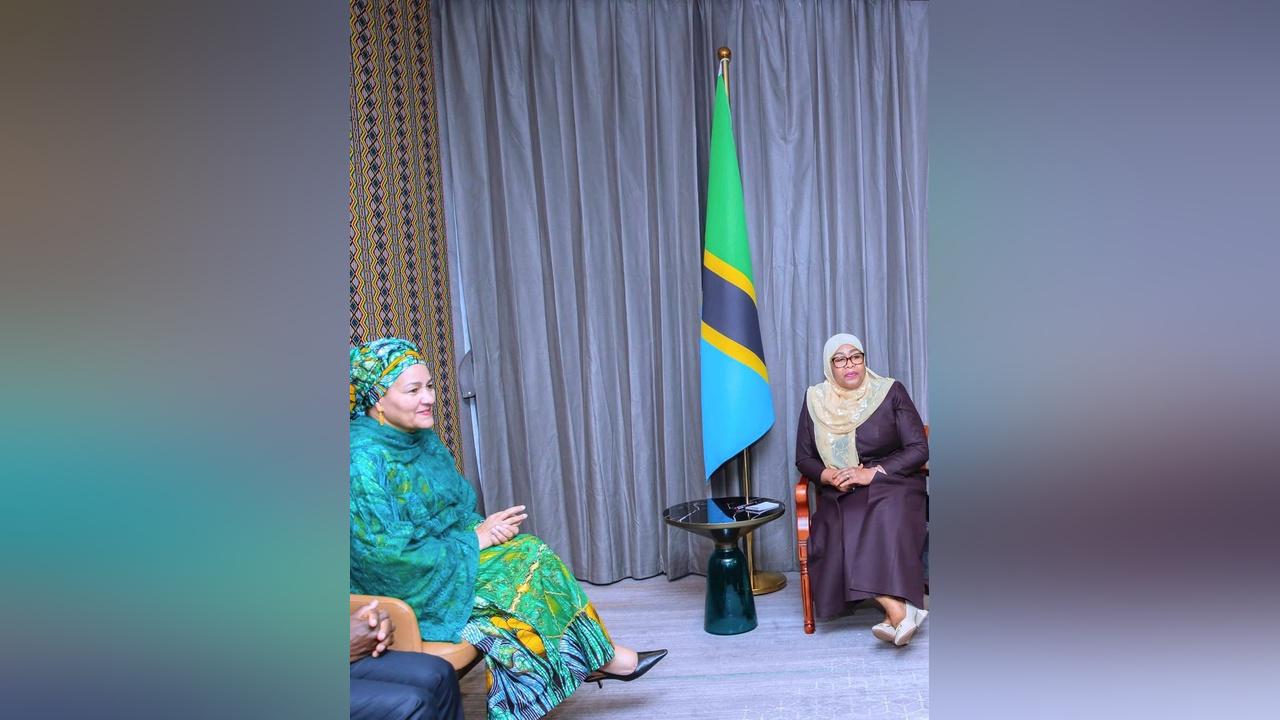
The UN Deputy Secretary-General made the statement yesterday in Addis Ababa, Ethiopia, while delivering a message from UN Secretary-General António Guterres to President Samia Suluhu Hassan during their meeting and discussions.
She noted that Mr Guterres highly values Tanzania’s close cooperation with the United Nations and continues to regard the country as an exemplary beacon of peace in Africa.
Their discussions touched on reforms within the UN system, the importance of youth participation in development and enhancing coordination between the United Nations and the African Union.
President Samia, reaffirmed Tanzania’s commitment to advancing economic and administrative reforms and strengthening collaboration with the UN in implementing the Sustainable Development Goals (SDGs).
She highlighted sectors that directly impact citizens’ lives, including health, education, clean water, sanitation and poverty reduction.
The President also expressed appreciation for the contribution of the UN and its agencies in supporting Tanzania’s development efforts, particularly in diplomatic cooperation and development assistance.
Furthermore, President Samia indicated the government’s readiness to receive a special UN envoy who has requested to visit Tanzania to deliver a message from Mr Guterres.
In December last year, Mr Guterres reaffirmed Tanzania’s reputation as a beacon of peace and social cohesion, calling the country “a reference point for peace in Africa and the world,” even amid political challenges.
He noted that Tanzania’s status was tested during the October 29, 2025, General Election but praised the nation’s resilience in maintaining unity, stability and social harmony despite the unrest experienced during that period.
The UN SecretaryGeneral made these remarks at UN Headquarters in New York while receiving a Tanzanian delegation led by the Minister for Foreign Affairs and East African Cooperation, Ambassador Mahmoud Kombo, who delivered a message from President Samia.
He emphasised the need for a meaningful and inclusive national dialogue to address the root causes of election-related violence and to implement measures preventing similar incidents in the future.
He also reaffirmed the UN’s full support for Tanzania’s ongoing initiatives, including assistance during and after the mandate of the Commission of Inquiry established to investigate the October 2025 unrest.
Early in November 2025, President Samia established an independent Commission of Inquiry following post-election unrest.
The Commission has begun collecting evidence through public hearings, hearing testimonies from victims injured or who lost family members during the violence.
This marked a shift from earlier closed-door sessions with stakeholders as part of evidence gathering.
Meanwhile, more than 500 Tanzanian peacekeepers serving in the Central African Republic were awarded United Nations Peacekeeping Medals on October 6, 2025, in recognition of their contribution to the UN peacekeeping mission, MINUSCA. The troops, part of the Eighth Battalion of the Tanzania People’s Defence Forces (TANBAT 08), were honoured in a parade in Berberati.
The ceremony, presided over by Deputy Force Commander Major General Maychel Asmi, praised the battalion’s discipline, leadership and community engagement. Battalion Commander Lieutenant Colonel Theofil Nguruwe said the medals reflected the professionalism and dedication of the troops, whose service remains an honour for the Tanzania People’s Defence Forces and the nation.
Tanzania has remained a key contributor to UN peacekeeping missions for more than three decades, reinforcing its international reputation as a champion of peace, unity and multilateral cooperation.