
What You Need to Know
A Presidential Commission of Inquiry in Tanzania is set to investigate the political and social tensions following the October 2025 General Election. Citizens await the report, which aims to clarify events and address public concerns, thereby fostering trust in institutions and promoting national unity. Experts emphasize that good governance is essential for national development.
Africa-Press – Tanzania. GOOD governance is not measured only in times of success and stability, when principles such as accountability, transparency, the rule of law, inclusiveness and development are most visible.
Rather, the true test of leadership emerges in time of crisis, when a nation faces uncertainty and stands at a crossroads.
In such moments, a capable leader does not ignore challenges or hide behind authority, but instead, demonstrates the courage to open space for dialogue, listen to all sides and prioritise national interests above personal gain.
This is essential for guiding a country safely through adversity, while preserving unity and cohesion.
Like many nations, Tanzania has experienced periods of tension, particularly during and after general elections.
These moments have at times been marked by political and social strain, making it necessary to examine events carefully in order to establish a clear understanding of what transpired.
The unrest surrounding the October 29, 2025 General Election stands out as a moment that called for calm, measured leadership to guide the country safely through adversity, while preserving unity and social cohesion.
In response, a Presidential Commission of Inquiry was established to investigate these occurrences in depth with expectations to produce an official report.
At present, the nation awaits this report with great anticipation.
Citizens hold high expectations that it will provide a clear and authoritative account of events during and after the General Election.
The report is expected to serve as a vital source of truth, helping to address lingering questions and uncertainties among the public.
The Commission, which was mandated to examine the political and social tensions of that period, is expected to present findings grounded in credible evidence.
Its primary aim is to respond to public concerns and reduce the mistrust that has emerged.
Furthermore, the report is anticipated to play a key role in addressing grievances that have persisted across various sections of society.
By documenting facts and identifying systemic shortcomings, the report will help counter misinformation that has contributed to division.
Analysts suggest that establishing a shared understanding of events is an essential step towards rebuilding public confidence in institutions and ensuring long-term national stability.
The essence of establishing Presidential Comission of Inquiry is an essence symbolic to good governance.
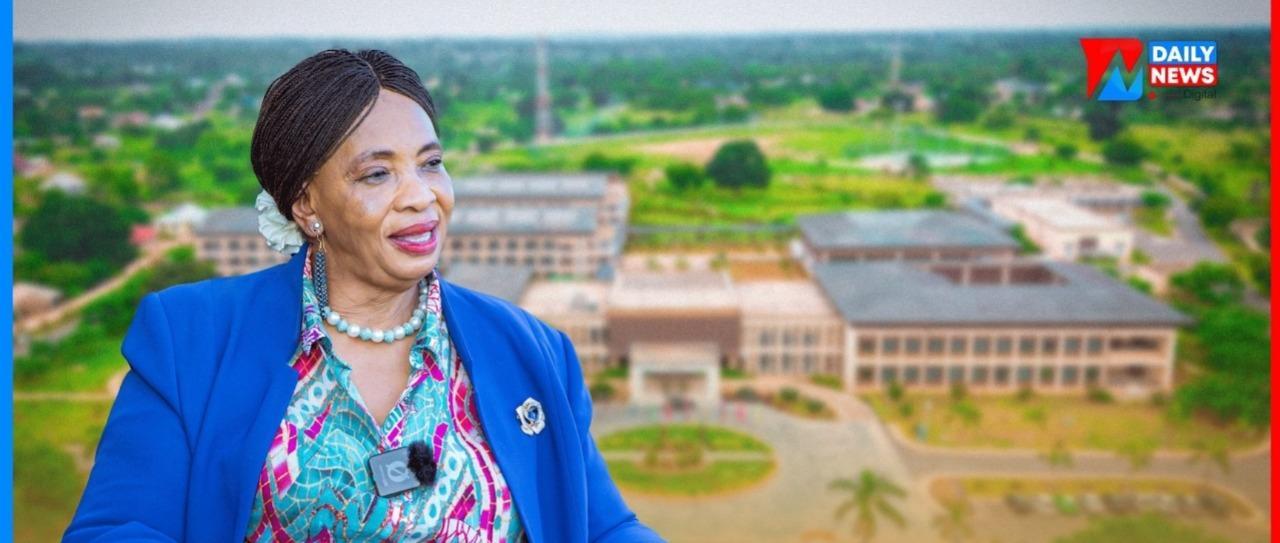
In a recent exclusive interview, the Principal of the Mwalimu Nyerere Leadership School, Professor Marcelina Chijoriga, elaborated on the concepts of good governance and good leadership.
The media delegation including journalists from Daily News, Habari Leo and Daily News Digital under the Tanzania Standard (Newspapers) Limited (TSN) visited the institution located in Kibaha, Coast Region.
She explained that effective leadership requires the willingness to make decisions that serve the broader national interest rather than personal ambitions.
According to Prof Chijoriga, a good leader is one who actively seeks solutions during challenging times.
Such a leader is prepared to open avenues for reconciliation and dialogue in order to resolve differences, rather than perpetuating blame or focusing on identifying those at fault.
“Leadership is fundamentally about caring for the people. A leader is, above all, a servant to those they govern and must, therefore, place the welfare of citizens at the centre of every decision,” said Prof Chijoriga.
From her perspective, the establishment of commissions of inquiry is itself a positive step, as it creates an opportunity for citizens to be heard, whether their experiences are positive or painful.
Listening to the public, she noted, is a critical step towards national progress and a clear indication of leadership maturity.
She further observed that Tanzania’s development visions, including those for 2000–2025 and 2025–2050, underscore the importance of good governance, peace, security and stability as foundational pillars of development.
These priorities are not tied to any single political party, but rather represent a shared national agenda.
Prof Chijoriga highlighted that the Development Vision 2050 does not belong to any one party, ethnic group or segment of society.
Instead, it reflects a collective aspiration for national progress.
She stressed that development transcends political affiliation and that achieving the vision requires unity and cooperation among all citizens.
She also acknowledged that mistakes are an inevitable part of human experience.
However, the wisdom of a good leader lies in recognising errors, making corrections and guiding the nation towards improvement.
Ignoring problems or remaining silent in the face of challenges only risks exacerbating them.
In addition, she spoke about the importance of having a clear vision and welldefined strategies for national development.
A good leader must lead by example and possess the ability to involve citizens in the implementation of development plans.
Such inclusiveness fosters a sense of ownership and enhances the effectiveness of policies and projects.
Prof Chijoriga further advised that leaders should be sincere and ensure that their words reflect their true intentions.
This authenticity, she said is essential for building trust between leaders, institutions and the public.
On the broader concept of governance, she explained that good leadership forms the foundation of good governance.
Where strong leadership exists, effective governance is more likely to follow.
Conversely, without sound leadership, achieving good governance becomes extremely difficult.
She also stressed the importance of legal and constitutional frameworks that allow for the establishment of mediation mechanisms such as commissions of inquiry.
These structures enable a nation to reflect on its actions, correct its course and move forward without deepening divisions.
Addressing the principle of inclusiveness, she noted that development must benefit all citizens, regardless of religion, ethnicity or political belief.
Major development projects, including infrastructure, education and healthcare, should serve the entire population equitably.
She pointed out that feelings of marginalisation often arise when development initiatives fail to address people’s real needs.
It is, therefore, essential that development plans are both responsive and inclusive, ensuring that citizens are actively involved in shaping and benefiting from them.
Furthermore, Prof Chijoriga observed that the process of formulating the Development Vision 2050 has itself been inclusive, allowing various groups within society to contribute their views.
She said the move reflects a commitment to building a nation that values the voices of its people.
She also noted that the prevailing peace, stability and security in the country are strong indicators of good governance.
Moreover, she said good leadership and good governance remain central pillars of national development, the responsibility of leaders to foster an environment characterised by transparency, inclusiveness and justice, by safeguarding national unity and advancing sustainable development for both present and future generations.
Tanzania’s experience underscores a timeless truth: Moments of political tension test not only institutions, but the collective resolve of a nation.
By choosing calm over confrontation and dialogue over division, the country can transform periods of uncertainty into opportunities for renewal strengthening unity, deepening trust and safeguarding its democratic future.
Tanzania has faced political and social challenges, particularly during election periods. The unrest following the October 2025 General Election highlighted the need for effective leadership and governance. In response, a Presidential Commission of Inquiry was established to investigate these tensions, aiming to provide clarity and restore public trust. This initiative reflects a broader commitment to good governance and national cohesion, essential for the country’s development goals. The establishment of such commissions is seen as a positive step towards addressing grievances and fostering dialogue among citizens.