
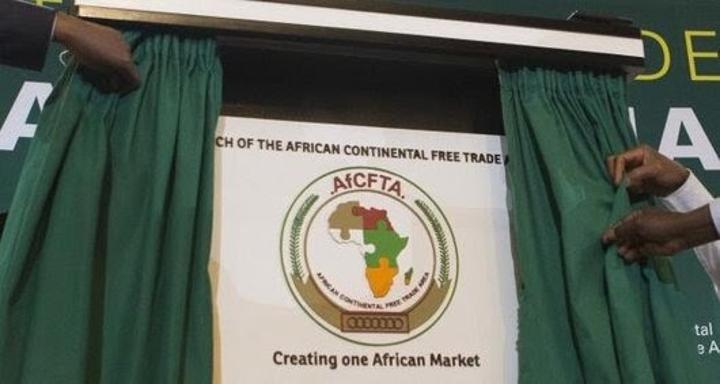
Africa-Press – Tanzania. TANZANIA has been chosen among seven countries to start trading under the African Continental Free Trade Area (AfCFTA) framework in a pilot phase.
Tanzania joins Rwanda, Cameroon, Egypt, Ghana, Kenya and Mauritius in the pilot phase, which seeks to test the environmental, legal and trade policy basis for intra-African trade, according to the AfCFTA secretariat.
Countries picked to participate in what is known as the AfCFTA Initiative on Guided Trade were announced during the 9th meeting of the AfCFTA Council of Ministers in Accra on Monday.
They were selected from the 36 that had expressed interest in trading under the pilot phase. Each of the applicants had submitted its tariff schedule.
According to the AfCFTA modalities, 90 per cent of tariff offers fall under category A, which covers products that were liberalised in 2021. This will progressively be reduced over 10 years.
Seven per cent get liberalised over 15 years while three per cent of products are excluded from tax exemption.
According to the AfCFTA Secretariat, the initiative seeks to demonstrate that AfCFTA is functioning and send a political message to countries that are yet to submit their provisional schedules of tariff concessions in accordance with agreed modalities.
The initiative will identify companies, products, customs procedures, and logistics processes required to enable a trade to happen under the AfCFTA, officials said.
May 26, this year President Samia Suluhu Hassan said the AfCFTA presents Africa with the biggest opportunity for growth and prosperity, Tanzanian
She made the remarks during a visit to the AfCFTA secretariat.
The trade area presented an opportunity to accelerate intra-African trade and use trade more effectively as an engine for growth and sustainable development, said President Samia.
“As most African countries are recovering from the economic shocks resulting from Covid-19, the implementation of the AfCFTA will hasten a quick economic recovery with a free-trade area of over 1.2 billion people,” Samia stated.
Recently, the Economic Commission for Africa (ECA) launched a comprehensive tool that measures how easy, or hard, it is to do business between African countries.
Known as the AfCFTA Country Business Index (ACBI), it is expected to assess the perceived impact of the continental trade area on the private sector’s ability to trade and invest across African borders once the free-trade framework is operational.
On September 9, 2021, Tanzania became the 39th country in Africa to deposit its instrument of ratification of the African Continental Free Trade Area (“AfCFTA”), joining other East African Community (EAC) member countries Kenya, Rwanda, Uganda and Burundi.
And in January, this year Tanzania officially submitted the instruments of its ratification of the AfCFTA agreement to the Afri- can Union Commission (AUC).
“The establishment of the AfCFTA is an opportunity and a very important step in expanding business opportunities, attracting investors and increasing exports of Tanzanian products, particularly agricultural products,” the Ambassador of Tanzania in Ethiopia, Innocent Shiyo, who is also the country’s Permanent Representative to the African Union said when he instruments of ratification.
He revealed that the opportunity also acts as a crucial catalyst for economic growth and trade between member states (intra-African trade) by promoting African participation in world trade and building its capacity to add value to products through sound technological, innovative and competitive policies.
For More News And Analysis About Tanzania Follow Africa-Press