

Africa-Press – Tanzania. TANZANIA has for the past 60 years fought well a war against disease, as signified by significant increase in number of health services provision facilities at all levels.
Disease was among three enemies of social development declared by founding father of the nation Mwalimu Julius Nyerere that had to be defeated at all costs. Others included poverty and, ignorance.
Statistics unveiled by the Ministry of Health, Community Development, Gender, Elderly and Children indicate that number of health facilities has significantly gone up to 8,537 currently, from only 1,343 when the country attained independence 60 years ago.
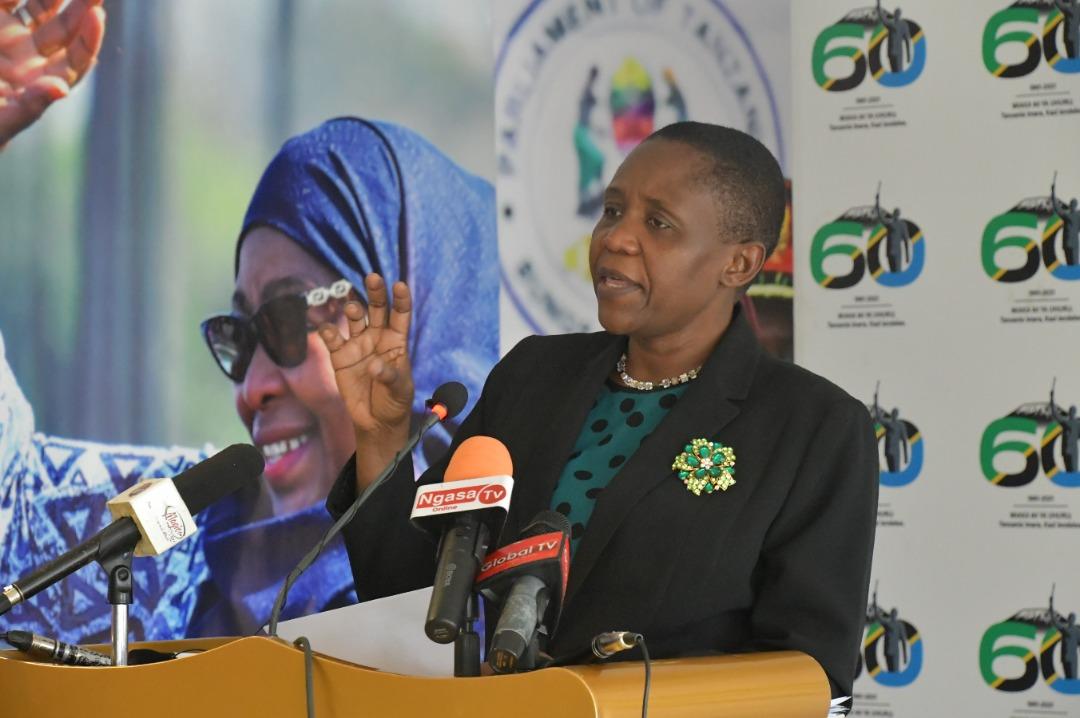
Minister of the docket, Dr Dorothy Gwajima, outlined that 64 per cent of those facilities are under the government; while 27 per cent are private owned and the rest 9 per cent are under religious institutions.
Dr Gwajima on Monday explained that the high increase of the facilities has enabled bringing health services closer to wananchi.
“These achievements are results of good and strong foundation which had been kept by the first President Mwalimu Julius Nyerere who invested a lot of energy in fighting three big enemies; ignorance, poverty and disease,” remarked Dr Gwajima as she detailed on achievements made in health sector since Tanzania got independence.
Giving a breakdown, she said out them 7,242 are dispensaries, 926 health centres, 178 district hospitals, 28 specialized hospitals at regional level, six zonal hospitals, and one national hospital, among others.
The facilities have a total of 90,488 beds, which is equivalent to an increase of 71,656 beds in the past six decades.
With such remarkable achievement in construction of health facilities, the country has managed reduce a ratio of health facility to population.
When Tanzania gained independence in 1961, one facility served between 40000 and 50000 people (1:40000-50000) but currently one facility serves 6,751 people (1:6751).
Therefore, Tanzania has managed to reach UN targets of availability of health services by considering population and geographical factor.
Again, even looking at a ratio of bed to population, currently is one bed to 637 people unlike previously when it was a one bed to 1000 people.
She said by 2020, statistics show that a bed to patient ratio was one bed to 19 patients (1:19).
As for human resources, including specialist doctors, nurses, medical doctors, radiologists, laboratory technicians, and pharmacists, the number has clocked 71,365 compared to 435 during independence.
“This is a milestone to be well celebrated at the 60th independence anniversary, we have recorded tremendous success in having the needed number of professionals to serve the health sector,” she insisted.
The move has facilitated improved health services delivery at all levels and at some areas they have engaged community health workers to offer services at dispensaries and health centres.
Speaking about health services equipment, she said, the country has managed to purchase several equipment that led to reduction in referrals for treatment abroad.
In the period between July 2020 and June 2021 only two patients were referred abroad compared to 554 patients during the same period in 2015/16, which is a major revolution in the sector.
She named some of the specialist and super specialist services which have been introduced in the country as dialysis, Renal Transplant, Cochlear Implant, Interventional Radiology, among others.
These were some of treatments which Tanzanians had to travel abroad to seek them.
The minister said they have equipped regional zonal referral hospitals with equipment to bring services closer whereas patients do not need to travel a long way in search of services like CT scan, Ultra Sound, fluoroscopy, Digital X-ray, ultrasound and “GeneXpert” 239 for tuberculosis diagnosis.
She went further highlighting on strides made in availability of drugs, mentioning that the establishment of the Medical Stores Department (MSD) is a success story as the country is celebrating 60th independence anniversary.
The MSD, which now orders medicines directly from the manufacturers at lowest prices, has led to improved availability of drugs and medical devices by 55 per cent.
After the MSD had started purchasing medicines and medical devices directly from manufacturers, the move resulted into reduction of costs for purchasing key medical machines such as dialysis machines by between 50 and 100 per cent.
This is expected to help the government save 9.7bn/- annually.
She also said the government has facilitated the MSD to construct four pharmaceutical industries to save 33bn/- that would have been spent on purchasing the medicines and medical supplies.
She mentioned other achievement as eradicating Acute Flaccid Paralysis and reducing the number of maternal deaths from 112 per every 1000 live births in 2004/2005 to 50 deaths in 2020.
Also, the number of deaths of pregnant women has gone down to 321 deaths per every 100,000 women in 2020 from 870 in 1990.
Moreover, Dr Gwajima said malaria prevalence has decreased from 50 per cent in the 90’s to 7.5 per cent in 2017.
On the way forward, the Minister said the government was determined to make more investment to further boost service delivery.
She said the government has put in place a conducive investment infrastructures and environment that will attract more private sector players to inject their money in the health sector.
In the current sixth phase government, President Samia Suluhu Hassan has continued with efforts to improve the health sector, with latest development of securing 1.36tri/- stimulus package to fight effects of Covid-19.
Out of it, about 254bn/- is going to strengthen emergency services, and Intensive Care services (ICU).
Another 111.5bn/- will be spent on improving laboratory services, radiology and telemedicine.
Dr Gwajima also said the ministry will spend 41.8bn/- on improving centres for provision of health services.
For More News And Analysis About Tanzania Follow Africa-Press