
What You Need to Know
Women seaweed farmers in Pemba, Zanzibar, have received significant support through the Zanzibar Joint Programme, which includes boats, production equipment, and solar-powered drying facilities. This initiative aims to improve product quality and reduce post-harvest losses, benefiting 57 farmers, primarily women, and enhancing their income opportunities.
Africa-Press – Tanzania. WOMEN seaweed farmers in Micheweni Pemba have received a major boost under the Zanzibar Joint Programme following the handover of boats, production equipment, a solar-powered drying facility and a seaweed storage facility aimed at reducing losses and improving product quality.
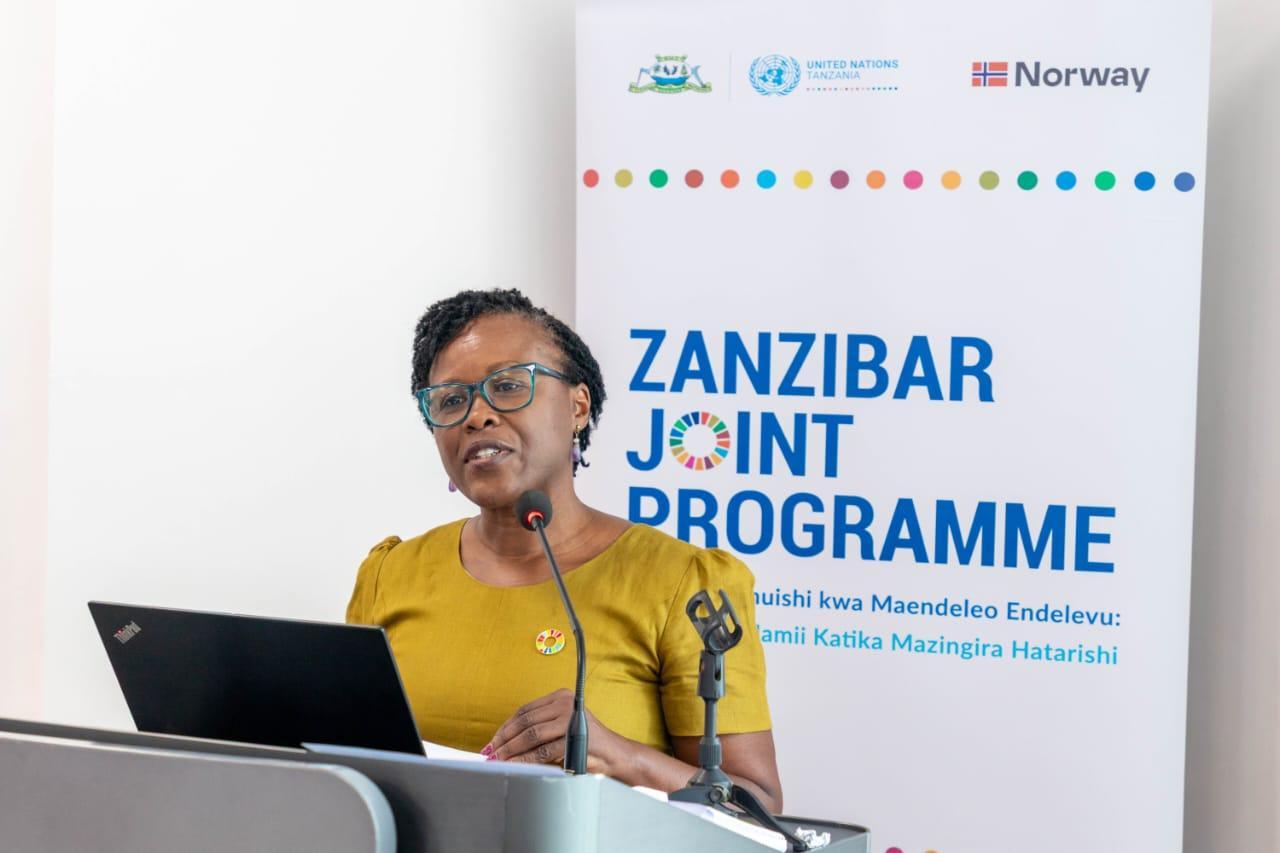
The handover took place recently during a field visit involving the Ambassador of Spain to Tanzania, the UN Resident Coordinator, government officials and development partners, who toured project sites in Pemba to see how the programme is beginning to deliver practical results for communities in northern Zanzibar.
The Zanzibar Joint Programme, launched in 2025, is a joint initiative of the Revolutionary Government of Zanzibar and the United Nations, supported by a USD 3.5 million (about 9.1bn/-) contribution from the Royal Norwegian Embassy through the Tanzania SDG Acceleration Fund.
The programme focuses on food systems transformation, climate adaptation for coastal communities, human capital strengthening, and efforts to end violence against women and children in Unguja North and Pemba North.
At Makangale in Micheweni, the delegation saw how improved drying and storage facilities are helping women seaweed farmers protect the value of their harvest by reducing post-harvest losses and maintaining quality.
The support is part of wider efforts to strengthen the seaweed value chain and help farmers move toward more reliable incomes and stronger market opportunities.
Under the programme, two modern seaweed storage facilities and two solar drying units have already been established, benefiting 57 farmers, 90 per cent of them women.
The visit also highlighted other results from the programme’s integrated approach.
In Tumbe, the delegation visited a care centre supporting women and the wider community with childcare, digital literacy, food processing skills, information on prevention and reporting of violence against women and children and gender-based violence, and training in more efficient and sustainable briquette-making.
The centre is helping women save time, build skills and explore new income-generating activities.
In a related development, participants visited Kinyikani Health Facility where they inspected a rainwater harvesting system designed to improve water availability for health services in a context where freshwater access is increasingly under pressure.
Programme results showed that 16 health facilities were assessed for water demand, six climate-resilient rainwater harvesting systems were constructed, and around 22,000 beneficiaries have been reached.
The final stop was Micheweni A Primary School, where students are being trained on what constitutes gender-based violence, the different forms it can take and how to report it.
The Zanzibar Joint Programme, initiated in 2025, represents a collaborative effort between the Revolutionary Government of Zanzibar and the United Nations, with financial backing from the Royal Norwegian Embassy. This program aims to transform food systems, adapt to climate change, and empower local communities, particularly focusing on women’s rights and economic opportunities in coastal regions.
The initiative has already established modern facilities to support seaweed farmers, addressing challenges such as post-harvest losses and market access. By enhancing the seaweed value chain, the program seeks to create sustainable livelihoods for farmers and improve community resilience against a