
Africa-Press – Tanzania. ZANZIBAR government has unveiled an ambitious budget of over 6.804tri/- for the 2025/2026 fiscal year, marking a 31 per cent increase from the previous year’s budget of 5.182tri/-.
These estimates are based on various policy reforms and revenue mobilisation strategies that the government plans to implement during the 2025/2026 financial year.
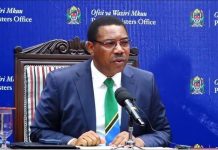
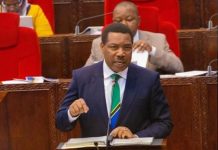
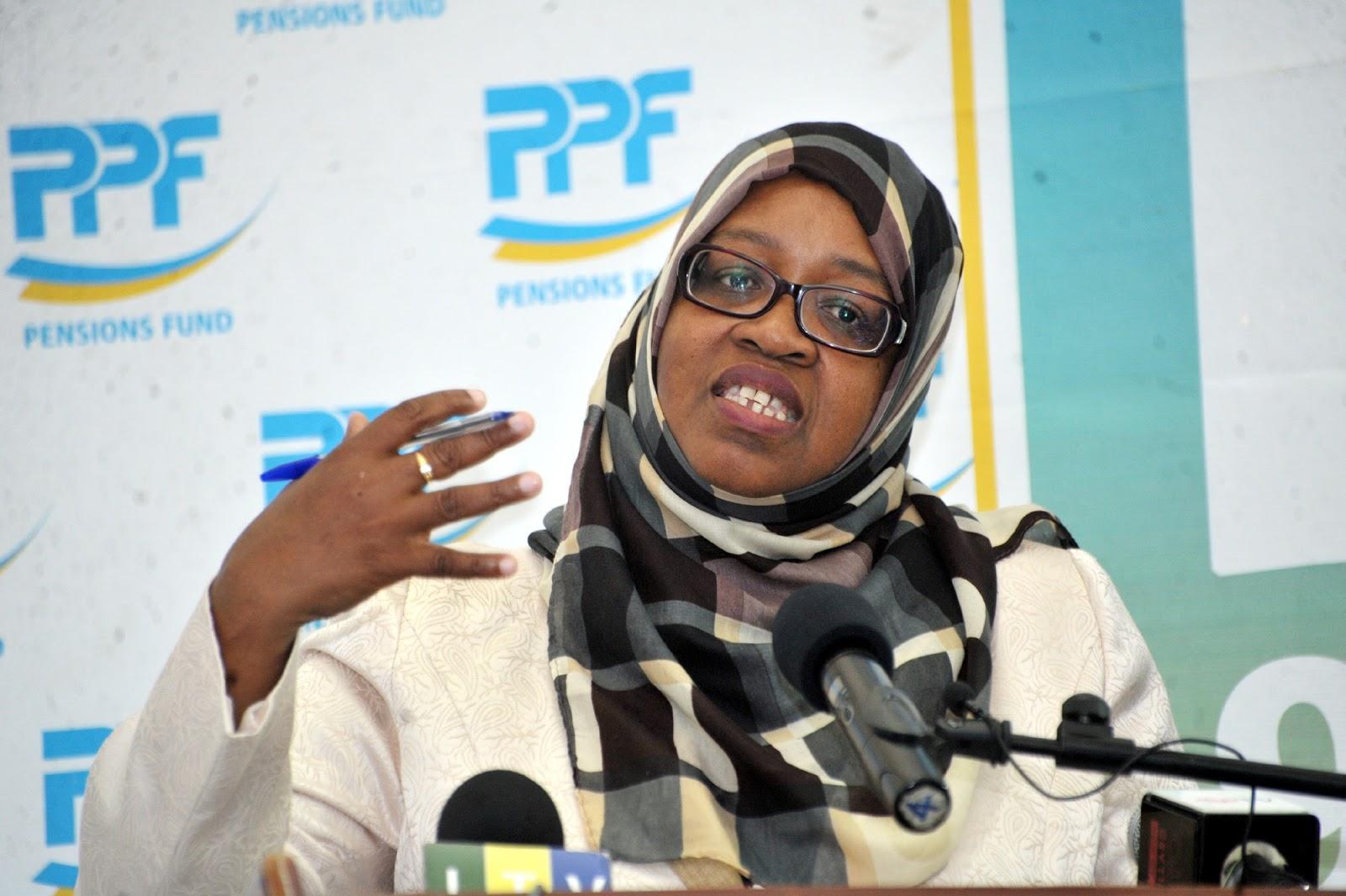
Presenting the government’s budget and development plan for 2025/2026, the Minister of State in the President’s Office (Finance and Planning), Dr Saada Mkuya Salum said that the sources of funding for the budget include 2.104tri/- from domestic revenue sources.
She added that 2.460tri/- will come from domestic and external loans to fund development projects According to the minister a sum of 1.966tri/- will be sourced from development partners.
This includes 1.429tri/- in concessional loans, 416.64bn/- in grants, 280m/- from the Development Partners’ Joint Fund, and 120bn/- as budgetary support.
“More than 27.5bn/- will come from local government authorities’ revenue sources, including fees and charges and 245.8bn/- from self-financing government institutions,” she said.
Dr Salum said the proposed allocation of the 6.804tri/- budget will include a total 2.370tri/- for recurrent expenditure (34.8 per cent of the total budget), including 901.09bn/- for salaries, 640.33bn/- for operational expenses and 566.98bn/- for expenditures under the Government’s General Fund.
She said that 15.8bn/- would be allocated for local government authorities’ operational costs from internal revenue and 245.8bn/- for self-financing institutions. Development expenditure will total 4.434tri/-, which represents 65.2 per cent of the total budget, including 2.577tri/- from the government (comprising 1.227tri/- for new strategic projects, 312bn/- for the debt financing fund and 1.038tri/- for ongoing projects).
She said that development expenditure also includes 1.845tri/- from development partners, which comprises 1.429tri/- in loans, 416.3bn/- in grants and 11.7bn/- from local government authorities’ development funds.
The minister outlined the key budget priorities for 2025/2026, which include essential expenditures for public servants’ salaries, government obligations under the General Fund, ongoing development projects and projects funded by development partners.
The priorities also include national and presidential priority projects, such as ongoing and new strategic initiatives in infrastructure, tourism, the blue economy and social services.
She stressed the importance of ensuring efficient use of implemented projects to enhance service delivery and sustainability. Dr Salum also noted the allocation of special funds for revenue collection in ministries and government institutions, including the procurement of necessary equipment as well as preparations for the 2025 General Election.
Another focus is on enhancing development projects in line with Zanzibar’s participation in hosting the 2027 Africa Cup of Nation (AFCON) finals. Priority areas will also include empowering youths, women and people with special needs, as well as environmental conservation and climate change mitigation, particularly in marine and forest conservation.
The government also plans to utilise technology in production and service delivery to accelerate economic growth and address gender equality concerns in national programmes. Dr Salum also briefed the House of Representatives on strategies for resource mobilisation to finance strategic government plans, particularly projects that drive economic growth while ensuring debt sustainability.
“The Zanzibar government has already opened a window for issuing SUKUK bonds for the domestic market, allowing Tanzanians, companies and civil society organisations to invest in these bonds,” she said.
The minister added that to finance the budget deficit, the government will continue securing concessional loans from domestic and external sources for financing projects that accelerate economic growth, while ensuring the sustainability of public debt.
She further stated that Zanzibar’s budget dependency has been decreasing due to improved domestic revenue collection.
“For the fiscal year 2025/2026, the budget dependency rate is projected to be 6.1 per cent, which remains sustainable and within the limits set in the ruling party CCM 2020-2025 Election Manifesto, aiming for a single-digit dependency rate,” she said.
Dr Salum also proposed strategic focus areas for 2025/2026, including leveraging blue economy opportunities and developing infrastructure for marine-based industries and tourism. A total of 471.17bn/- will be allocated for programmes and projects, including construction of Mangapwani Integrated Port, expansion of Mkoani and Shumba ports and construction of the Mpigaduri Passenger Terminal and Kizimkazi and Shumba fishing ports.
Other projects include investment in island tourism projects, beachfront sports facilities and sea taxi services as well as acquisition of fishing vessels and the establishment of seafood processing industries.
Regarding transport and energy infrastructure, a total of 754.22bn/- will be allocated for construction of Pemba Airport, Terminal II at Abeid Amani Karume international Airport (AAKIA) and Nungwi Airport.
On land transport infrastructure the budget proposal will allocate funds for expansion of major roads, urban, rural and hotel-access roads and construction of bus stations.
Other plans include completion of safe water supply infrastructure, increased water production, expansion of renewable energy production, strengthening electricity distribution and connectivity and promoting the digital economy and innovation.
Dr Salum announced that 207.22bn/- would be allocated for Strengthening the Digital Economy and Innovation, which includes expanding ICT infrastructure, utilising undersea communication cables, establishing a 100MW electricity link from Mainland Tanzania, setting up a Tier III data centre and digitising government financial and operational systems.
The budget will also support business and industrial development, including the development of business and industrial zones, expansion of trade and exhibition centres in Zanzibar and enhancement of agricultural productivity.
Key focus areas will include agricultural reforms to boost production, food production and storage infrastructure, spice farming for export markets and agricultural infrastructure development for domestic food security
For More News And Analysis About Tanzania Follow Africa-Press