Africa-Press – Uganda. For many Persons with Disabilities (PWDs) in Uganda, the digital world has long felt distant—defined by barriers of access, limited skills, and low confidence.
But across several districts, a quiet transformation is unfolding. Through the ICT for Persons with Disabilities (ICT4PWDs) programme, technology is no longer a source of fear or exclusion. Instead, it is becoming a bridge to dignity, independence, and hope.
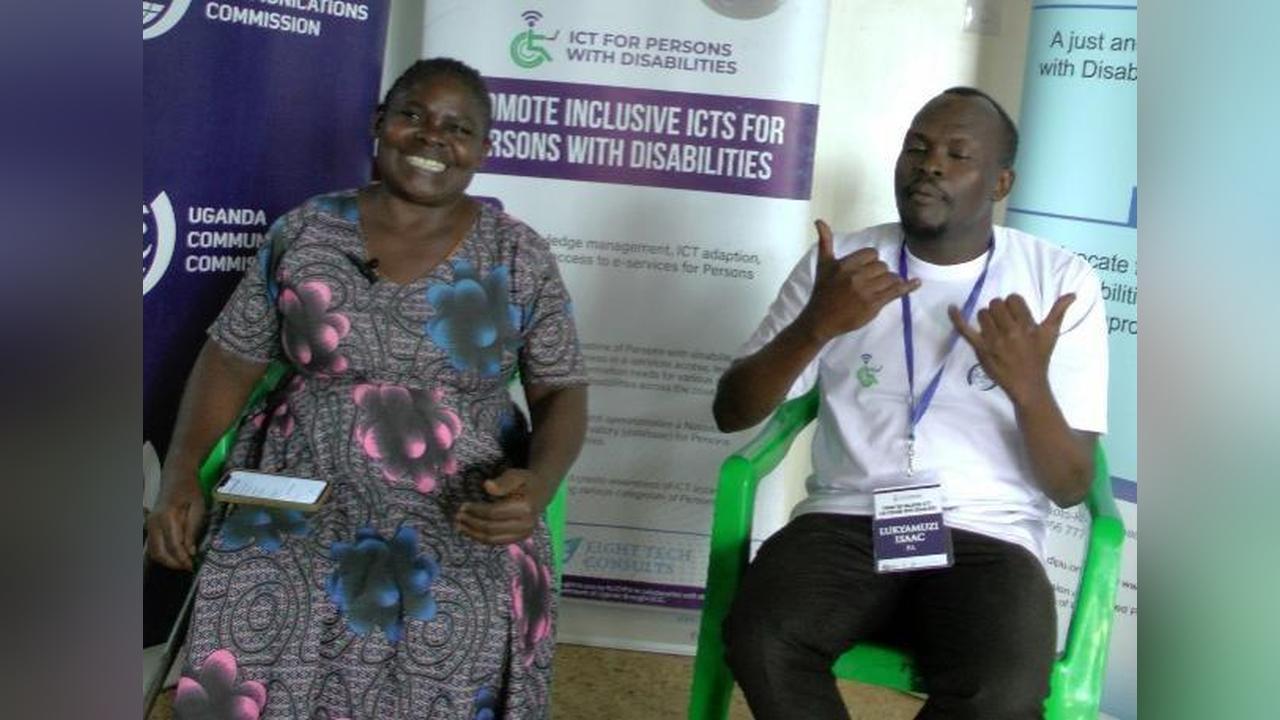
Implemented with support from the Uganda Communications Commission (UCC) in partnership with the National Union of Disabled Persons of Uganda (NUDIPU) and Eight Tech, the programme places PWDs at the centre of Uganda’s digital transformation.
Its goal is simple but powerful: to ensure that no one is left behind in the digital age.
Across the country, participants say the impact goes far beyond learning how to use a computer or a smartphone. It is about reclaiming confidence, voice, and connection in a society increasingly shaped by technology.
In Mukono District, Dorothy Namuwonge, a woman with a physical impairment, recalls how unfamiliar and intimidating technology once felt. Before joining the ICT4PWDs digital skilling training, she had never touched a computer.
“Technology felt very far from me,” she said. “I had never used a computer in my life.”
Through inclusive, hands-on training designed to meet the needs of persons with disabilities, Namuwonge learned basic computer skills and how to use digital tools in her daily life. Today, she speaks with confidence and pride.
“I am truly happy that I got this chance,” she said.
Her journey reflects the programme’s wider impact—showing that with the right support, age, disability, or background need not be barriers to learning. For Namuwonge, digital inclusion has opened doors to independence and renewed self-belief.
In Kayunga District, Umaru Malinze, who is visually impaired, describes digital skills as life-changing. Before the training, he depended heavily on others to use his mobile phone. Simple tasks such as making calls or sending messages required assistance.
That changed after he was introduced to accessible technologies such as TalkBack, WhatsApp, and other audio-based applications designed for persons with visual impairments.
“Step by step, I learned how to use my phone on my own,” Malinze said.
Today, he confidently sends voice messages, listens to music, and accesses information independently.
“For the first time, my phone truly feels like it belongs to me,” he said.
For Malinze, the training restored more than technical ability. It restored dignity, autonomy, and a sense of belonging in the digital space.
Believing in the Future Again
Another participant, Godfrey Kimuli, also visually impaired, says limited digital skills once made him feel excluded from opportunities in an increasingly digital world. Accessing information, applying for opportunities, or competing equally felt out of reach.
Through ICT4PWDs, Kimuli learned how to use computers, smartphones, and accessible applications to navigate online platforms independently. The change, he says, has been profound.
“I now believe in my future,” he said. “I can look for information and opportunities like anyone else.”
Beyond personal empowerment, Kimuli has taken on a leadership role by becoming a trainer within the visually impaired community. By sharing his skills, he is helping to extend the programme’s impact and ensure sustainability.
His journey illustrates how digital inclusion not only empowers individuals but also creates new leaders within the disability community.
Breaking Communication Barriers
For Mansule Ssekaja, who is hard of hearing, digital platforms once felt intimidating and inaccessible. Communication barriers made online engagement difficult, often leaving him excluded from conversations and opportunities.
The ICT4PWDs programme adopted an inclusive training approach, using visual guidance, demonstrations, and communication methods tailored to deaf participants.
Over time, Ssekaja gained confidence in using messaging applications and social media platforms.
“The training was friendly to us as deaf people,” he said. “I can now use messaging apps and social media without fear.”
His experience highlights the importance of designing digital training that responds to different forms of disability. For Ssekaja, technology has become a tool for connection rather than exclusion.
Perhaps one of the most emotional testimonies comes from Charles Bwekwaso, a visually impaired participant from Mpata in Mukono District. Before the training, using a laptop independently felt impossible.
Through guided support, he learned how to use a screen narrator, enabling him to access digital content, read documents, and browse information on his own.
“I am glad that I have finally learned how to use a narrator on my laptop,” Bwekwaso said. “This training has rescued my life.”
For him, digital access is deeply tied to dignity and self-worth.
“Being able to access information and services gives me joy. It reminds me that I matter,” he added.
Across districts, ICT4PWDs is replacing fear with confidence, isolation with connection, and uncertainty with opportunity.
The programme focuses on enhancing digital skills, ICT adaptation, access to e-services, and knowledge management, ensuring that Persons with Disabilities can participate fully in Uganda’s digital society.
NUDIPU has played a critical role in amplifying the voices of PWDs and ensuring community-driven implementation, while Eight Tech has delivered accessible and practical digital solutions on the ground.
Together, these partnerships are not only bridging the digital divide but also restoring hope and unlocking potential.
As Uganda continues its digital journey, the message from ICT4PWDs participants is clear: when inclusion leads the way, no one is left behind.